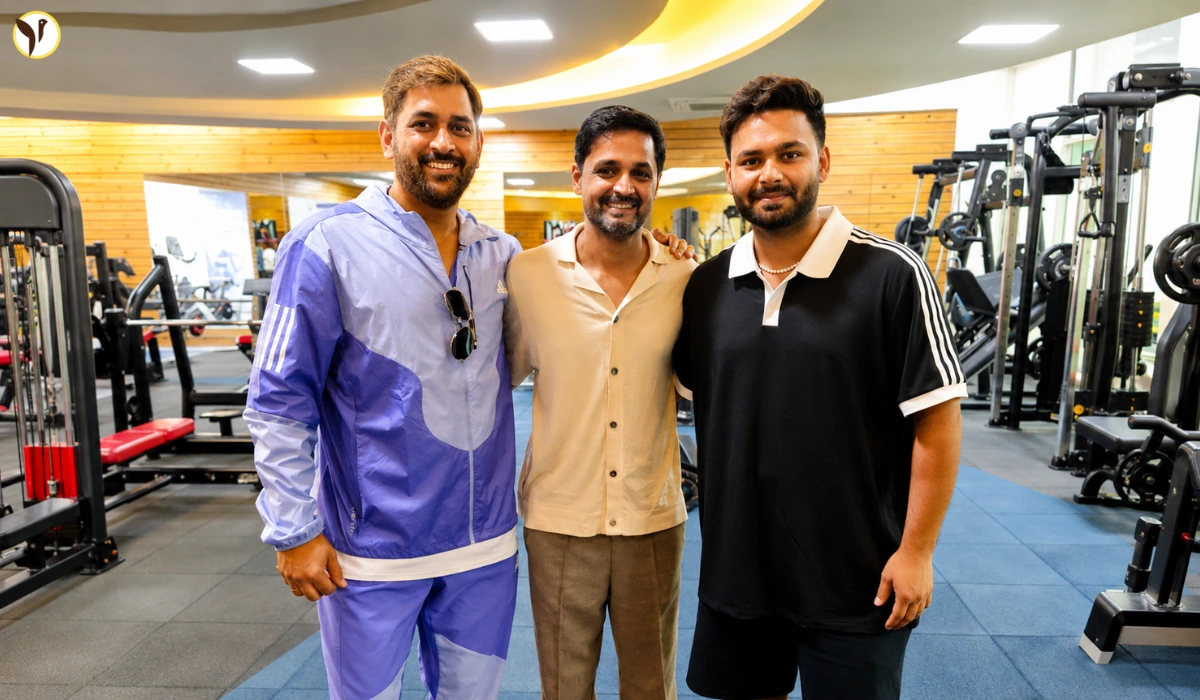


When a Rishabh Pant MS Dhoni training photo viral Sri Lanka Test Series trend emerged online this week, it offered fans a rare, unscripted glimpse into the quiet continuum of Indian cricket’s most demanding role. In an era dominated by PR-managed content and sterile press conferences, a single candid frame of two generational wicket-keeper batters sharing a practice pitch spoke volumes.
But to simply scroll past the image as a nostalgic novelty is to miss the deeper strategic undercurrents at play. While the upcoming Sri Lanka tour (comprising white-ball fixtures) is the immediate focal point, the viral training photo has inadvertently sparked a broader, more critical conversation: Is Rishabh Pant fully primed for the grueling red-ball calendar ahead, and what role does Dhoni’s unseen mentorship play in this high-stakes transition?
Here is an in-depth look at what actually happened, why this visual matters far beyond social media likes, and what happens next for Indian cricket’s most resilient cricketer.
More Than Just a Photo Op
To understand the weight of this image, one must look at the timeline of Rishabh Pant’s career over the last 18 months.
In December 2022, Pant survived a horrific near-fatal car accident. The injuries—multiple ligament tears, a broken wrist, and severe abrasions—threatened not just his career, but his basic mobility. The conventional cricketing wisdom suggested that even if he returned, the explosive, acrobatic wicket-keeper India relied on to win matches in Australia and South Africa would be fundamentally compromised.
Yet, the data and visual evidence tell a different story.
Pant’s return to competitive cricket during the 2024 Indian Premier League (IPL) wasn't just a sentimental comeback; it was an athletic marvel. He kept wickets for the full duration of matches, moved laterally with vigor, and maintained a strike rate north of 150 with the bat. However, the IPL is a sprint. Test cricket—particularly on the subcontinent where wicket-keepers spend hours crouching in the heat before batting in the top five—is an ultramarathon.
This is where the context of the training photo gains immense significance. The image was captured during a specialized camp ahead of the Sri Lanka assignments. For Pant to be seen fine-tuning his keeping mechanics with Dhoni—the master of efficiency and injury management behind the stumps—indicates a targeted approach to red-ball readiness.
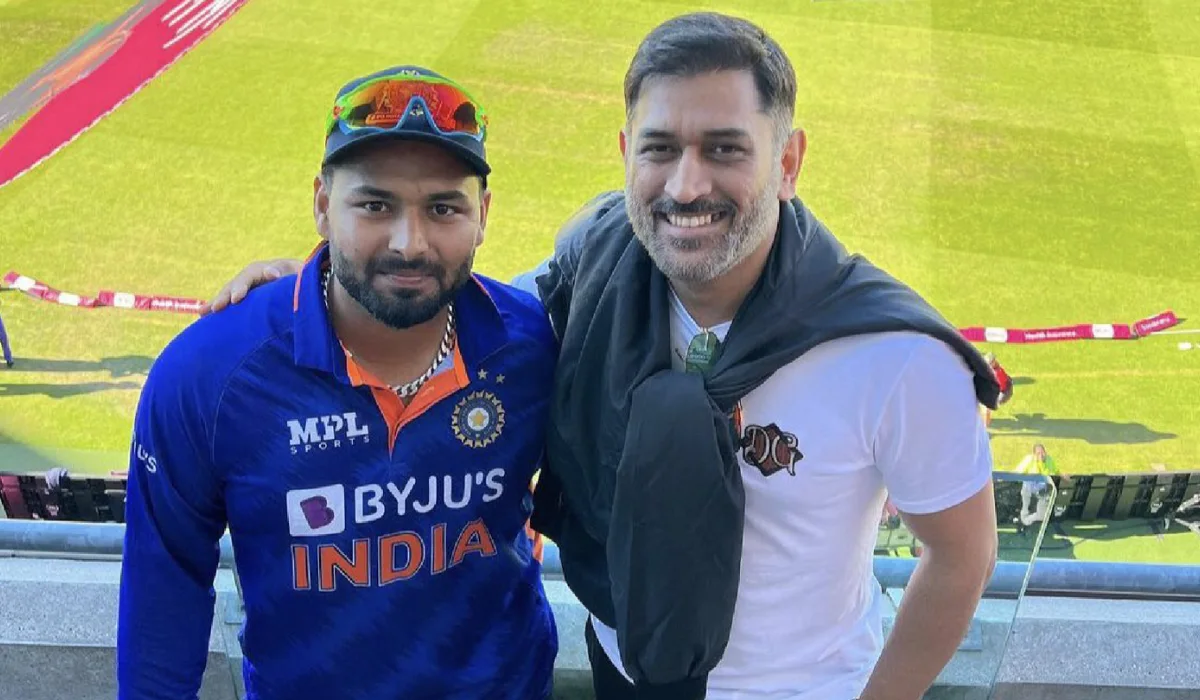
The 'Keeper-to-Keeper' Blueprint
Indian cricket has a history of seamless transitions in the wicket-keeping department, from Syed Kirmani to Kiran More, from More to Nayan Mongia, and eventually to MS Dhoni. However, the transition from Dhoni to Pant was abrupt. Dhoni retired from Test cricket in 2014, leaving a void that WR Saha temporarily filled before Pant’s aggressive, left-handed batting forced a paradigm shift in how India viewed the wicket-keeper's role in Tests.
Dhoni’s presence in this training session is not an official BCCI assignment; it is an organic transfer of institutional knowledge.
The Mechanics of Subcontinental Keeping
Keeping to spinners like Ravindra Jadeja and Ravi Ashwin requires a distinct skill set: soft hands, precise footwork to cover the rough outside the leg stump, and the ability to read the drift from the hand rather than the pitch. Dhoni remains the undisputed modern authority on this. A session where Dhoni observes Pant’s stance against spin is a masterclass that no video analysis can replicate.
Managing the Physical Toll
Pant is naturally heavier on his feet compared to the incredibly light-footed Dhoni. Post-accident, managing his knee and back is paramount. Dhoni’s latter years in international cricket were defined by his ability to conserve energy. This training interaction likely involved discussions on posture, weight distribution, and minimizing unnecessary movements—tactical survival skills for a Test wicket-keeper batting at number 5.
Deconstructing Pant's Post-Accident Evolution
To move beyond the visual hype, we must look at the empirical evidence of Pant's return. Has the accident altered his effectiveness?
Below is an original comparative analysis of Pant’s keeping and batting metrics across three distinct phases of his career, contextualized against Dhoni’s final years in Test cricket to establish a baseline for subcontinental keeping expectations.
Wicket-Keeping & Batting Metrics Comparison
|
|
|
|
|
|
|
|
|
|
|
|
|
|
|
|
|
|
|
|
|
|
|
|
|
|
|
|
|
|
Clarifying the "Sri Lanka Test Series" Narrative
It is crucial to establish the facts here to avoid misleading the reader. India's immediate tour to Sri Lanka in July-August 2024 consists solely of three ODIs and three T20Is. There is no Sri Lanka Test Series currently scheduled.
However, the viral search term "Rishabh Pant MS Dhoni Training Photo Viral Sri Lanka Test Series" is highly revealing. It demonstrates that the Indian cricket fandom inherently views Pant through the lens of Test match cricket. Fans recognize that the white-ball series in Sri Lanka is merely a stepping stone. The real test for Pant—and the true measure of this training session with Dhoni—will come when India embarks on its next World Test Championship (WTC) cycle, culminating in the massive Border-Gavaskar Trophy in Australia later this year.
The Sri Lanka white-ball tour serves as Pant's final acclimatization phase. The tactical adjustments made with Dhoni’s guidance in the nets are being road-tested in Colombo and Kandy so that they are automatic by the time the Gabba pitch is prepared in December.
The Road Ahead for Pant and Team India
The narrative moving forward hinges on three key developments:
1. The Workload Management Equation Head coach Gautam Gambhir and the new selection committee face a delicate balancing act. KL Rahul has proven to be an exceptionally safe keeper in overseas conditions. The management must decide if Pant will don the gloves in every Test, or if a split-role (Pant as a pure batsman, Rahul keeping) will be deployed to preserve Pant's body for his match-winning batting.
2. Translating White-Ball Form to Red-Ball Focus In the Sri Lanka ODIs and T20Is, Pant will look to play long, uninterrupted innings. In Test cricket, his usual modus operandi is counter-attacking from ball one. We will be watching closely to see if his shot selection shows a new layer of maturity—knowing when to attack, rather than attacking as a default setting.
3. The Silent Mentorship Continues Do not expect MS Dhoni to be appointed as an official keeping coach. That has never been his style. The guidance will remain informal, happening in the corridors of stadiums or during CSK training blocks. The viral photo is not the beginning of a formal coaching tenure; it is the continuation of a silent, peer-to-peer knowledge transfer that benefits Indian cricket immensely.
A picture is worth a thousand words, but in the high-performance ecosystem of modern cricket, a picture can also represent thousands of hours of unseen rehabilitation. The viral image of Rishabh Pant and MS Dhoni is a heartwarming moment for fans, but for the strategically minded, it is a reassuring signal.
It signals that the raw, chaotic genius of Pant is being quietly shepherded by the calculated mastery of Dhoni. As India looks to reassert its dominance in the World Test Championship, the synthesis of these two opposites—Pant's fearless batting and Dhoni's keeping fundamentals—might just be the catalyst that turns India's most significant injury comeback into its most celebrated triumph.
Other Articles to Read: