
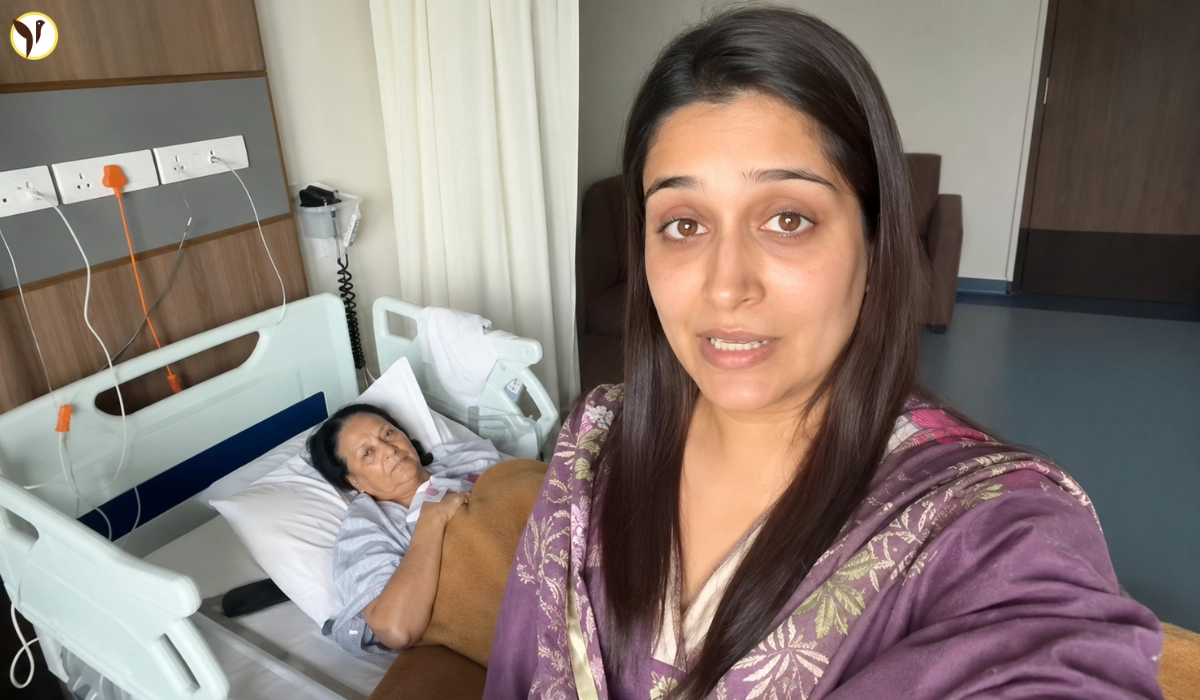


When a sudden medical crisis strikes a family, the glare of the public eye can be both a source of support and an immense burden. Recently, the news that Dipika Kakar's mother in hospital facing unbearable abdominal pain sent a wave of concern through the actress’s extensive fanbase. Shared candidly by her husband, Shoaib Ibrahim, via his YouTube vlog, the update was not merely a piece of celebrity gossip—it was a raw glimpse into a universally relatable family crisis.
For millions of viewers who have followed Kakar’s journey from television stardom to her life as a daughter and wife, the distressing news brought an immediate question: What exactly is going on?
Beyond the headlines and the understandable anxiety of fans, this situation opens a broader, highly relevant conversation about acute abdominal pain in older adults. When a senior family member is rushed to the hospital with severe stomach pain, it is rarely a simple matter. It requires rapid, methodical medical intervention. This article breaks down the verified facts of the situation, provides crucial medical context regarding such symptoms, and explores the emotional toll on caregivers.
The Timeline of Events: How the Crisis Unfolded
The situation came to public light through Shoaib Ibrahim’s daily vlog, a medium the couple uses to stay connected with their audience. Unlike traditional press releases, the vlog format offered an unfiltered, somber look at the family's immediate reality.
According to the vlog, Dipika Kakar’s mother experienced a sudden and severe onset of abdominal pain. The pain was described as unbearable, prompting the family to seek emergency medical care immediately. Shoaib was seen managing the logistics of the hospital admission, while Dipika, who has been dealing with her own health complexities recently, was visibly distressed but focused on her mother's care.
It is important to note that out of respect for the family's privacy, specific details regarding the exact hospital or immediate diagnostic results were not disclosed publicly. What was clear, however, was the severity of the pain and the urgency with which the medical team was treating the case.

The Medical Reality: Decoding "Unbearable Abdominal Pain" in Seniors
When a younger person experiences severe stomach pain, it is often attributed to food poisoning, a gastric flare-up, or a muscle spasm. However, when an older adult—like Kakar’s mother—presents with "unbearable" abdominal pain, the medical algorithm shifts dramatically.
Geriatricians and emergency room physicians treat acute abdominal pain in the elderly as a high-priority scenario. As humans age, the nervous system's response to pain can sometimes be blunted, meaning that if a senior patient is actively complaining of unbearable pain, the underlying physiological issue is likely highly advanced or acute.
Common Culprits Behind Acute Abdominal Pain in Older Adults
To understand the gravity of the situation—and why hospitals often keep patients for extended observation—requires looking at the differential diagnosis for this demographic.
|
|
|
|
|
|
|
|
|
|
|
|
|
|
|
|
|
|
|
|
|
|
|
|
|
|
|
|
Because the symptoms of these conditions can overlap, emergency rooms rely on a battery of tests—including Complete Blood Counts (CBC) to check for infection, Comprehensive Metabolic Panels (CMP), abdominal ultrasounds, and CT scans—to pinpoint the exact cause before initiating treatment.
Dipika Kakar’s Own Health Journey: The Compounding Stress of Caregiving
To fully grasp the weight of this current crisis, one must look at the recent timeline of Dipika Kakar’s personal health. A few months prior to this incident, Kakar made the deeply personal decision to halt her In Vitro Fertilization (IVF) treatments.
IVF is a physically and emotionally grueling process, involving daily hormone injections, frequent blood tests, and the psychological toll of uncertainty. Kakar stepped away from the treatment because her body was reacting adversely, causing severe discomfort and a depletion of her physical reserves. She prioritized her immediate health over the pursuit of parenthood at that specific time.
Now, thrust into the role of a primary caregiver for an ailing parent, Kakar is experiencing a scenario familiar to many "sandwich generation" adults: caring for an aging parent while still recovering from their own medical traumas. The psychological burden here is twofold:
- The Anxiety of the Unknown: Waiting for a loved one's diagnosis in a hospital hallway induces severe stress, which can trigger flare-ups in pre-existing conditions.
- The Caregiver’s Paradox: The instinct to be strong for the parent often forces the caregiver to suppress their own physical exhaustion.
Shoaib Ibrahim’s steady presence in managing the hospital logistics—allowing Dipika to sit by her mother’s side—highlights a healthy dynamic where the caregiving load is shared, a critical factor in preventing caregiver burnout.
The Role of Social Media in Modern Family Crises
There is a distinct shift in how public figures handle personal crises today. A decade ago, a celebrity’s family illness would be guarded by PR teams, resulting in vague statements to the press. Shoaib Ibrahim and Dipika Kakar have chosen a different route: radical, albeit bounded, transparency.
By addressing the situation in a vlog, Shoaib achieved several things simultaneously:
- Managing the Narrative: By showing the reality of the situation, he preempted the rumor mill. There was no space for fake news or exaggerated speculation because the truth was delivered directly from the source.
- Channeling Support: The comment sections of these vlogs become digital prayer circles. For a family under stress, reading messages of hope from thousands of well-wishers can provide a genuine, albeit small, emotional boost.
- Setting Boundaries: While acknowledging the hospitalization, the couple smartly withheld private medical data, drawing a clear line between public acknowledgment and medical privacy.
What Happens Next: The Road to Recovery
When an elderly patient is admitted to the hospital with acute, severe abdominal pain, the immediate next steps follow a strict medical protocol. Based on standard emergency procedures, the timeline for Kakar’s mother likely involves:
- Stabilization Phase: Managing the pain through controlled analgesics and ensuring the patient's vitals (blood pressure, heart rate, oxygen levels) are stable.
- Diagnostic Phase: Completing the necessary imaging and blood work to rule out surgical emergencies (like a ruptured organ or bowel obstruction).
- Intervention Phase: Depending on the diagnosis, this could mean anything from intravenous antibiotics for an infection, to an endoscopic procedure to remove a gallstone, to traditional surgery.
- Observation Phase: Older adults recover differently than younger patients. Hospitals often keep them under observation for a longer period to ensure their kidneys, heart, and other systems handle the stress of the illness and the treatment.
For the family, the next few days require immense patience. The emotional rhythm of a hospital wait—hours of monotony punctuated by brief, stressful updates from doctors—is notoriously exhausting.
Why This Story Resonates Beyond Celebrity News
It is easy to dismiss this as just another update from a television celebrity's life. However, the reaction to the news of Dipika Kakar's mother in hospital proves otherwise. It resonates because it strips away the glamorous facade of entertainment.
Illness is the great equalizer. When a parent is in pain, the fact that their daughter is a famous actress offers zero comfort or medical advantage. The fear in Shoaib’s voice and the worry on Dipika’s face are reflections of what happens in hospital waiting rooms across the country every single day. By understanding the medical seriousness of acute abdominal pain in seniors, the public can transition from mere curiosity to genuine empathy.
We wish Dipika Kakar’s mother a speedy and complete recovery, and we commend the family for handling this difficult chapter with grace and transparency.
Other Articles to Read: