
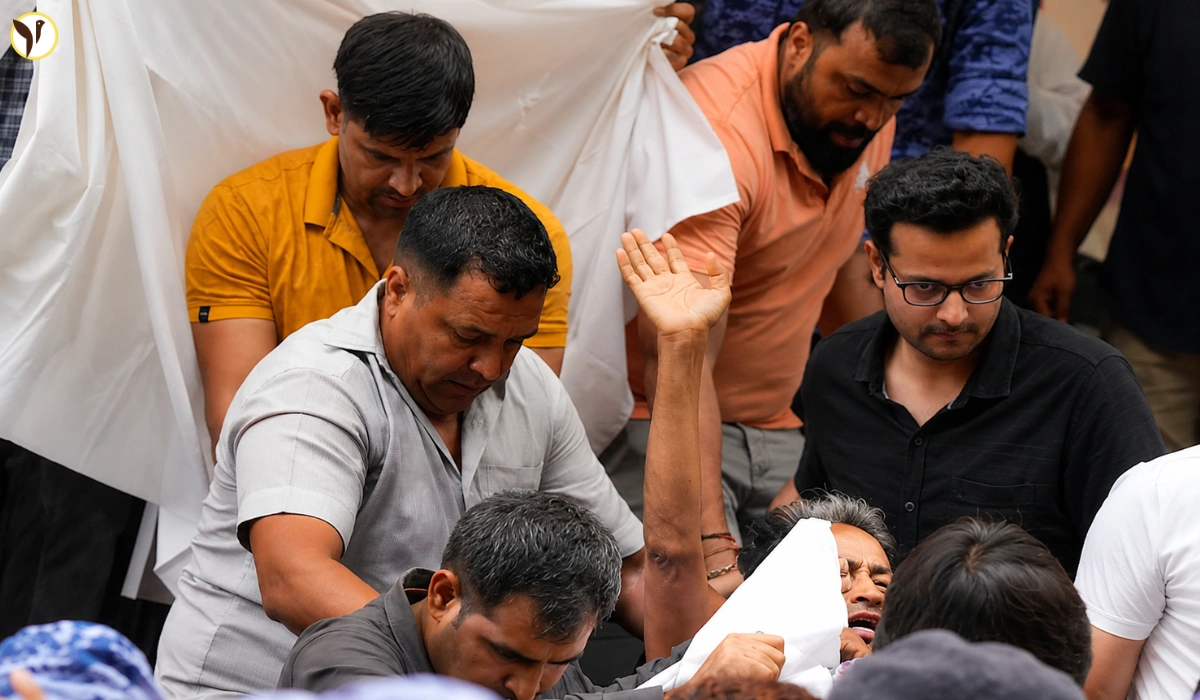


The physical toll of sustained climate activism has reached a critical juncture in the high Himalayas. Sonam Wangchuk hospitalized has become the focal point of a escalating standoff between Ladakh’s civil society and the Indian administration. Following a 21-day hunger strike and subsequent detention during a border march, the renowned engineer and activist’s health has deteriorated sharply. Now, his wife, Sonam Dolkar, has issued a public appeal demanding an immediate hospital transfer to a facility capable of handling the complex medical fallout of a three-week fast.
This is not merely a health bulletin. It is a flashpoint in a years-long struggle over the ecological and political future of one of the world’s most fragile environments. To understand the gravity of the current situation, one must look past the immediate headlines and examine the intersection of climate science, constitutional law, and grassroots protest.
The Incident: What Led to the Hospitalization?
Sonam Wangchuk, whose life’s work inspired the Bollywood film 3 Idiots, began his hunger strike on February 26, 2024. His demands were clear and rooted in constitutional safeguards: the inclusion of Ladakh under the Sixth Schedule of the Constitution to protect tribal lands, statehood for the Union Territory, and two separate parliamentary seats for Leh and Kargil.
On March 18, after completing 21 days of his fast, Wangchuk—along with over 100 supporters—attempted to march to the Pangong Tso lake area near the Line of Actual Control (LAC) to highlight the ecological threats posed by unchecked commercialization and military infrastructure.
They were intercepted by local police at the Nubra valley checkpoint. Following his detention, Wangchuk’s vitals dropped drastically. The combination of sub-zero temperatures, the physical exertion of a march at high altitudes, and three weeks of surviving only on water and salt, led to his hospitalization at a Primary Health Centre (PHC) in Diskit, Nubra.
The Urgent Appeal: Why the Hospital Transfer is Critical
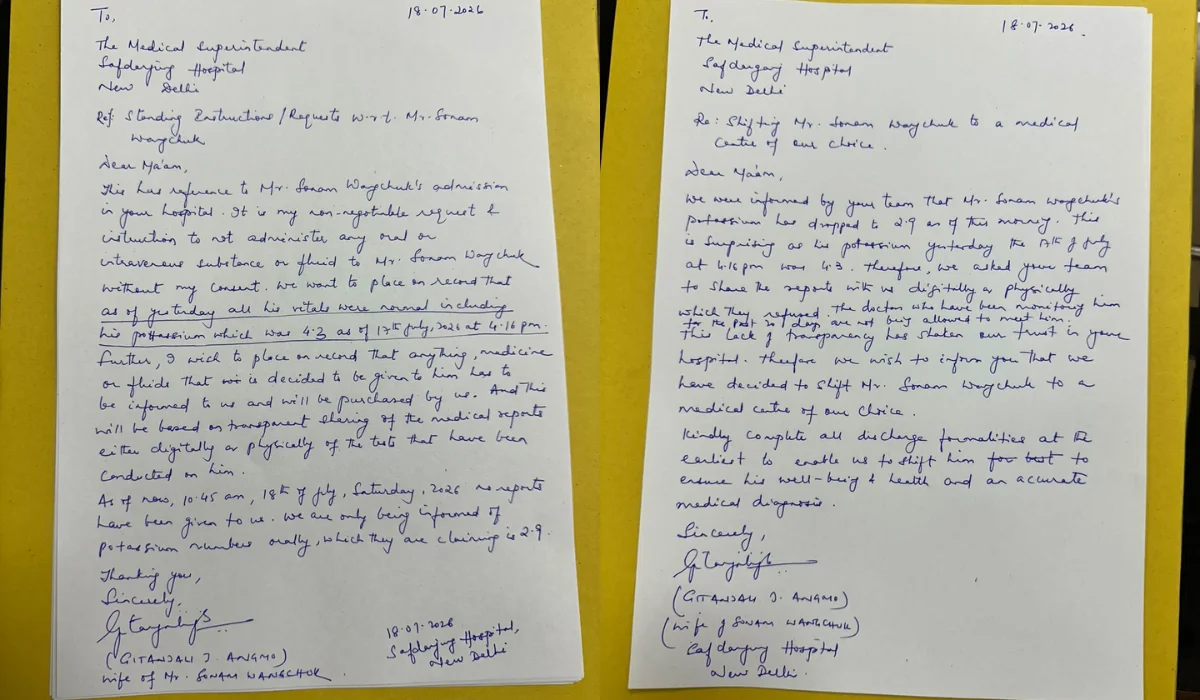
Currently, Wangchuk is being held at the PHC in Diskit. However, his wife, Sonam Dolkar, has publicly stated that this facility lacks the specialized equipment and medical personnel required to manage the severe physiological stress his body is under.
Her appeal for a hospital transfer—specifically requesting he be moved to the SNM Hospital in Leh or a specialized facility in Delhi—is grounded in acute medical necessity. After a prolonged fast, the body undergoes severe metabolic shifts. Reintroducing nutrition or managing electrolyte imbalances without intensive care monitoring can lead to fatal complications. A border-area PHC, while vital for primary care, is not equipped for post-fast intensive resuscitation.
The administration's hesitation to transfer him has added a layer of political friction to a purely medical emergency, raising serious questions about the duty of care owed to a detainee whose health is visibly failing.
Timeline of Escalation: The Ladakh Protest Data Table
To understand how we arrived at this critical juncture, it is necessary to view Wangchuk’s hospitalization not as an isolated event, but as the climax of a prolonged movement. The table below outlines the key escalation points over the past year.
|
|
|
|
|
|
|
|
|
|
|
|
|
|
|
|
|
|
|
|
|
|
|
|
|
|
|
|
|
|
|
|
|
|
|
The Bigger Picture: Why This Matters for Ladakh
For the uninitiated, it might seem counterintuitive that an environmentalist is demanding a constitutional amendment (Sixth Schedule). However, in Ladakh, ecology and governance are inextricably linked.
When the special status of Jammu and Kashmir was abrogated in 2019, Ladakh was carved out as a Union Territory without a legislature. Locals, who had historically enjoyed protections under the state laws of J&K, suddenly found themselves vulnerable.
The core of Wangchuk's argument rests on two pillars:
- Ecological Fragility: Ladakh is a cold desert. Its carrying capacity is incredibly low. The push for massive solar parks, unchecked tourism, and heavy militarized infrastructure threatens its delicate glacial ecosystems and water security.
- Economic Marginalization: Without a local legislative body, outsiders can buy land and set up businesses, marginalizing the indigenous tribal population and threatening their traditional pastoral and agricultural livelihoods.
The Sixth Schedule would grant Ladakh autonomous district councils with the power to make laws regarding land, water, and forests, effectively acting as a shield against rampant exploitation. Wangchuk’s hospitalization has forced the nation to look at these demands through the lens of a man willing to sacrifice his life for them.
[Image Placeholder: A graphic showing a map of Ladakh, highlighting the Nubra Valley, Pangong Lake, and Leh, to give geographical context to the border march.] Image Source: Maps of India / Adapted for journalistic context
Expert Framing: The Medical Reality of Prolonged Fasting at Altitude
To fully grasp the danger of Wangchuk’s current state, one must understand the physiological double-burden he subjected himself to.
Fasting for 21 days depletes the body’s glycogen stores, forcing it into ketosis and eventually breaking down muscle tissue for energy. The body loses crucial electrolytes like potassium, magnesium, and phosphate.
When you combine this with the hypoxic (low-oxygen) environment of the Himalayas—where Nubra valley sits at roughly 10,000 feet above sea level—the cardiac and renal systems are placed under extreme stress.
The Danger of "Refeeding Syndrome": If a patient who has fasted for this duration is not monitored in an ICU setting with controlled intravenous nutrition, the sudden reintroduction of carbohydrates can trigger a massive shift of electrolytes back into the cells. This can cause sudden heart failure, respiratory failure, or seizures.
This is precisely why Sonam Dolkar’s appeal for a hospital transfer from a rural PHC to a tertiary care center is not a political stunt—it is a medically urgent, life-saving requirement. Denying this transfer on administrative grounds borders on medical negligence.
In the morning, as per directions of Hon’ble High court as well as a routine daily scheduled check up, doctors arrived for medical examination of Shri Sonam Wangchuk. There was obstructions caused by some protestors. This created some commotion also.
— DCP New Delhi (@DCPNewDelhi) July 18, 2026
Considering the delicate…
What Happens Next: The Road Ahead
The immediate future hinges on two parallel tracks: the medical and the political.
1. The Medical Track: If the administration capitulates to the wife's appeal and transfers Wangchuk to SNM Hospital in Leh or the All India Institutes of Medical Sciences (AIIMS) in Delhi, it will take several days to stabilize his metabolic panels. His recovery will be slow, and he will likely be advised against any future extreme forms of protest given his age and the altitude factors.
2. The Political Track: Wangchuk’s hospitalization has already galvanized the movement in a way his fast alone was beginning to struggle to do. Youth groups in Ladakh are mobilizing. National political leaders, including those from the opposition, have seized upon the imagery of a detained, hospitalized activist to attack the government's handling of the border region.
The MHA is now in a difficult position. Ignoring the demands risks turning Wangchuk into a martyr, which would invite severe international scrutiny, especially given his global profile as a climate activist (he was briefly considered for the Nobel Prize). Conversely, conceding to the Sixth Schedule demand sets a precedent that other ecologically sensitive regions across India might demand.
Conclusion
The scene at the Diskit PHC is a somber reflection of modern democratic dissent. Sonam Wangchuk’s hospitalization is a stark reminder that when institutional doors close, activists often turn to their own bodies as the last remaining avenue of protest.
Sonam Dolkar’s appeal for a hospital transfer is a fundamental request for basic human dignity and medical care. How the administration responds in the next 24 to 48 hours will not only determine the health outcomes of one of India’s most brilliant minds but will also define the political legacy of how the state handles ecological and tribal dissent in its most sensitive border regions. This is no longer just a Ladakh issue; it is a test of democratic empathy and constitutional duty.
Other Articles to Read: