


When a public figure steps out of the curated glamour of their profession to reveal a raw, unfiltered reality, it forces society to pause. For months, the public has followed Hina Khan’s battle with stage three breast cancer through carefully worded Instagram posts and poised public appearances. However, her recent, more candid admission about the grueling physical toll of the treatment shifted the narrative from one of silent stoicism to pragmatic survival.
Addressing her audience directly, Khan detailed the visceral side effects of chemotherapy—the exhaustion, the physical degradation, and the mental fog—and made a striking confession: it was not just medical science, but a deep, newly discovered sense of spirituality that kept her anchored.
For anyone who has faced a severe illness, or watched a loved one endure it, Khan’s revelation is not merely celebrity news. It is a window into the often-ignored psychological landscape of cancer recovery, highlighting a critical truth about oncology: treating the disease is only half the battle; treating the patient's spirit is the other.
The Unfiltered Reality of the Treatment Room
Chemotherapy is a blunt instrument. While it is highly effective at eradicating rapidly dividing cancer cells, it does not discriminate, taking a heavy toll on healthy tissue. Khan’s recent descriptions of her experience strip away the sanitized versions of cancer recovery often portrayed in media.
She spoke of a profound, bone-deep fatigue that sleep cannot cure. There is the lingering nausea, the cognitive dysfunction commonly referred to as "chemo brain," and the emotional volatility that comes from hormonal fluctuations induced by the drugs.
What makes Khan’s account particularly impactful is her admission of vulnerability. In an industry that demands perpetual perfection, admitting that she struggled to get out of bed, or that she felt mentally defeated at times, dismantles the toxic positivity often associated with "brave" cancer battles. She did not just endure the chemo effects; she acknowledged their power to break a person down, which makes her subsequent coping mechanism all the more significant.
Beyond Personal Battles: The Urgent Call to End the "Educational Mafia"
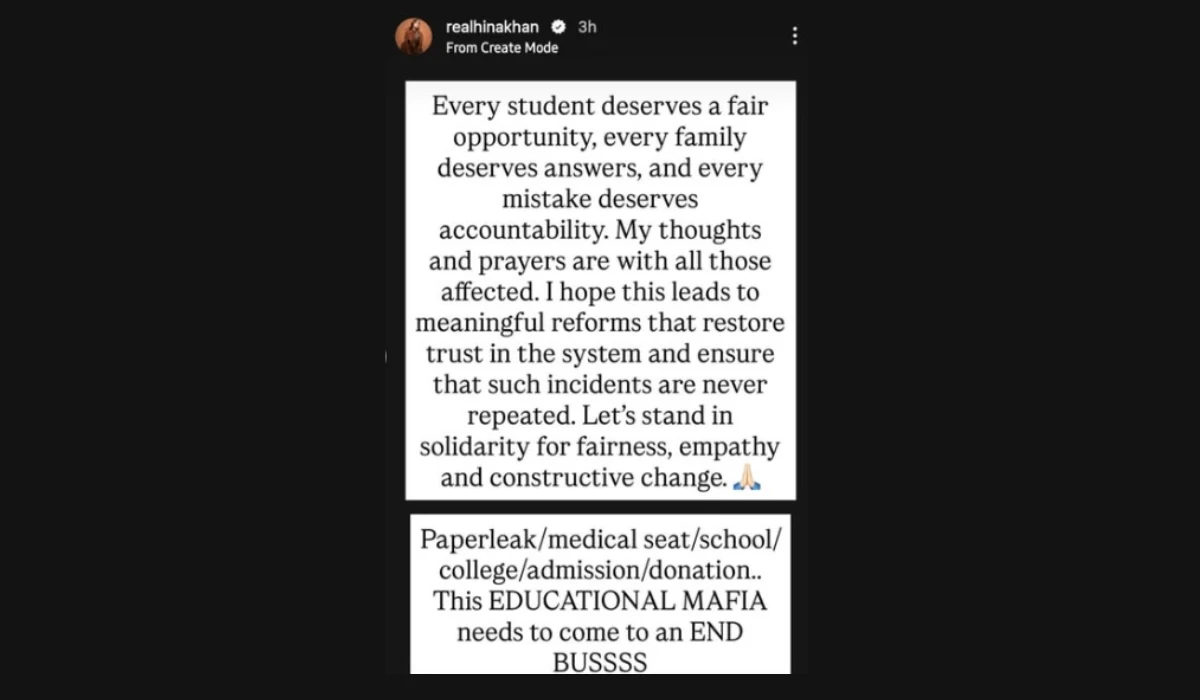
While public figures navigate profound personal health crises, a parallel and equally intense battle is raging across social media regarding the systemic failures in the education sector. A recent, widely circulated post captures the growing public outrage, highlighting a deep fracture in the trust between institutions and the families they are supposed to serve.
The discourse goes beyond mere complaints, focusing on a demand for foundational equity: ensuring fair opportunities for students, providing transparent answers to anxious families, and enforcing strict accountability for administrative mistakes. There is a palpable cry for empathy and constructive change rather than defensive posturing from those in power. However, the frustration has culminated in a direct, unfiltered condemnation of deeply rooted corruption. As the post boldly declares, the stranglehold of the "Educational Mafia"—the entrenched nexus of profiteers, unethical coaching centers, and corrupt systemic barriers that exploit students—must be decisively dismantled. Restoring faith in the education system requires more than superficial policy tweaks; it demands an end to the institutionalized exploitation of academic aspirations.
The Shift Inward: Why Spirituality Became the Anchor
When conventional medicine reaches its limits in providing daily comfort, patients often look elsewhere for a lifeline. For Khan, spirituality became that lifeline. It is crucial to understand what she means by this—it is not necessarily about organized religion, but rather a shift in internal perspective.
In psycho-oncology (the study of psychological aspects of cancer), spirituality is increasingly recognized as a vital coping tool. When a patient faces a life-threatening diagnosis, they experience a profound loss of control. The medical team dictates the schedule, the drugs dictate the physical state, and the future becomes entirely uncertain. Spirituality offers a framework to reclaim agency.
Khan noted that relying on a higher power and engaging in spiritual practices allowed her to detach from the immediate panic of her physical symptoms. Instead of asking, "Why me?"—a question that leads to a psychological dead end—spiritual framing allows the patient to ask, "What can I learn from this?" This cognitive shift is not just philosophical; it has measurable physiological benefits, including lowering cortisol levels and reducing the heart rate, which actively helps the body tolerate toxic treatments better.
Timeline of Resilience: Mapping Hina Khan’s Journey
To understand the weight of her recent statements, one must look at the trajectory of her public disclosure. Khan did not rush to share her diagnosis; she took time to process it before bringing the public into her confidence.
Below is a timeline mapping her journey, demonstrating the evolution from private struggle to public advocacy.
|
|
|
|
|
|
|
|
|
|
|
|
|
|
|
|
|
|
|
|
|
|
|
|
The Medical Perspective: Faith as an Adjunct, Not a Substitute
While discussing spirituality in healthcare, it is vital to separate fact from fiction. Khan’s journey must be viewed through a clinically sound lens. No reputable medical professional will claim that prayer or spirituality cures cancer.
However, major oncological institutions, including the Mayo Clinic and Memorial Sloan Kettering, integrate spiritual care and psychological support into their treatment protocols. Why? Because a patient who is psychologically defeated may skip doses, reject food, or develop severe clinical depression—all of which actively hinder medical treatment.
Khan’s use of spirituality functioned as an adjunct therapy.
- It reduced treatment distress: By finding peace in her spiritual practice, the anxiety preceding each chemo session likely decreased.
- It improved compliance: A strong will to live, often bolstered by spiritual grounding, helps patients endure agonizing regimens.
- It provided community: Spiritual beliefs often connect patients to a supportive community, buffering the isolation that Khan, despite her fans, undoubtedly felt in the treatment room.
The Celebrity Paradox: Visibility vs. Vulnerability
There is a unique paradox in being a celebrity with a severe illness. On one hand, Khan has a massive platform that can educate millions about early detection and the reality of chemotherapy. On the other hand, the expectation to be a "warrior" can be suffocating.
By pivoting her narrative to spirituality, Khan subtly rejected the "warrior" trope. The "cancer warrior" stereotype demands constant bravery, a smiling face through pain, and an inspirational quote for every hospital visit. It is exhausting. Admitting that her strength came from surrendering to a higher power, rather than fighting every moment with clenched fists, is a profoundly mature stance. It gives other patients permission to be tired, to be weak, and to lean on something outside themselves when their own strength runs out.
Hina Khan has spoken out on the ongoing concerns surrounding the education system, urging for transparency, accountability, and meaningful reforms. Sharing her thoughts on social media, the actress said that every student deserves a fair opportunity, every family deserves… pic.twitter.com/Iy7EtWLMyD
— The Filmy Charcha (@thefilmycharcha) July 25, 2026
What Happens Next: The Road Beyond Chemotherapy
Chemotherapy is typically a finite process, but cancer recovery is a marathon that extends far beyond the last IV drip. As Khan transitions out of the acute phase of chemotherapy, her reliance on spiritual and psychological grounding will be more important than ever.
Patients often report that the post-chemo phase is psychologically harder than the treatment itself. During treatment, you are actively fighting; afterward, you are left in a state of "scanxiety"—the pervasive fear of recurrence every time a follow-up test approaches.
For Khan, the next steps will likely involve:
- Surgical Interventions (if required): Depending on the tumor's response to chemo, surgical removal of remaining tissue is a standard next step, bringing a different set of physical recoveries.
- Hormonal Therapy: If her cancer was hormone-receptor positive, she may face five to ten years of daily medication, which comes with its own side effects like joint pain and mood swings.
- Reclaiming Identity: Moving from "cancer patient" back to "actress and public figure" is a complex psychological transition. The spiritual foundation she has built will be the scaffolding for this new iteration of her life and career.
The Broader Takeaway for Readers
Hina Khan’s transparency about the chemo effects and her spiritual coping mechanism is a masterclass in authentic communication. It strips away the glamour, respects the severity of the medical reality, and offers a genuine lifeline to others navigating similar dark waters.
Her story reinforces a critical lesson for both patients and caregivers: Do not neglect the mind while treating the body. Whether it is through formal religion, meditation, nature, or a profound philosophical shift, finding an internal anchor is not a luxury during cancer treatment—it is a medical necessity.
Other Articles to Read: