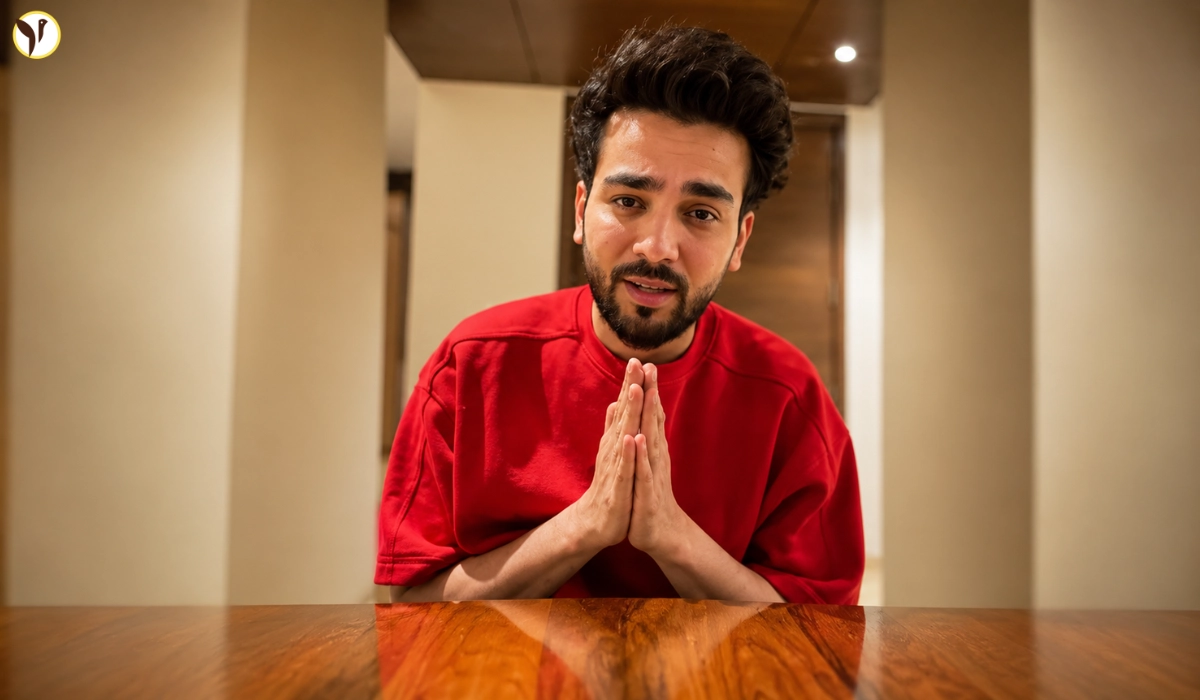


When a digital creator with millions of followers transitions from entertainment to grassroots socio-political activism, the friction with established institutional power is almost inevitable. Bigg Boss OTT 2 winner and prominent YouTuber Elvish Yadav has found himself at the exact center of this friction. Yadav has publicly alleged that he received threats of an Enforcement Directorate (ED) raid immediately after he voiced his support for students protesting over systemic administrative issues.
For Yadav’s massive youth demographic, this is a moment of high drama. For observers of India's digital-political economy, however, the incident raises nuanced questions about how state agencies are perceived by the new wave of internet influencers, and the legal realities behind such claims. Here is a comprehensive breakdown of what happened, why it matters, and what the actual legal protocols of the ED entail.
The Catalyst: What Exactly Happened?
The sequence of events began when students across various states—primarily in Uttar Pradesh and the National Capital Region—initiated protests regarding alleged administrative lapses, exam paper leaks, and delays in government recruitment processes. These protests gained significant traction on social media platforms, particularly X (formerly Twitter) and Instagram.
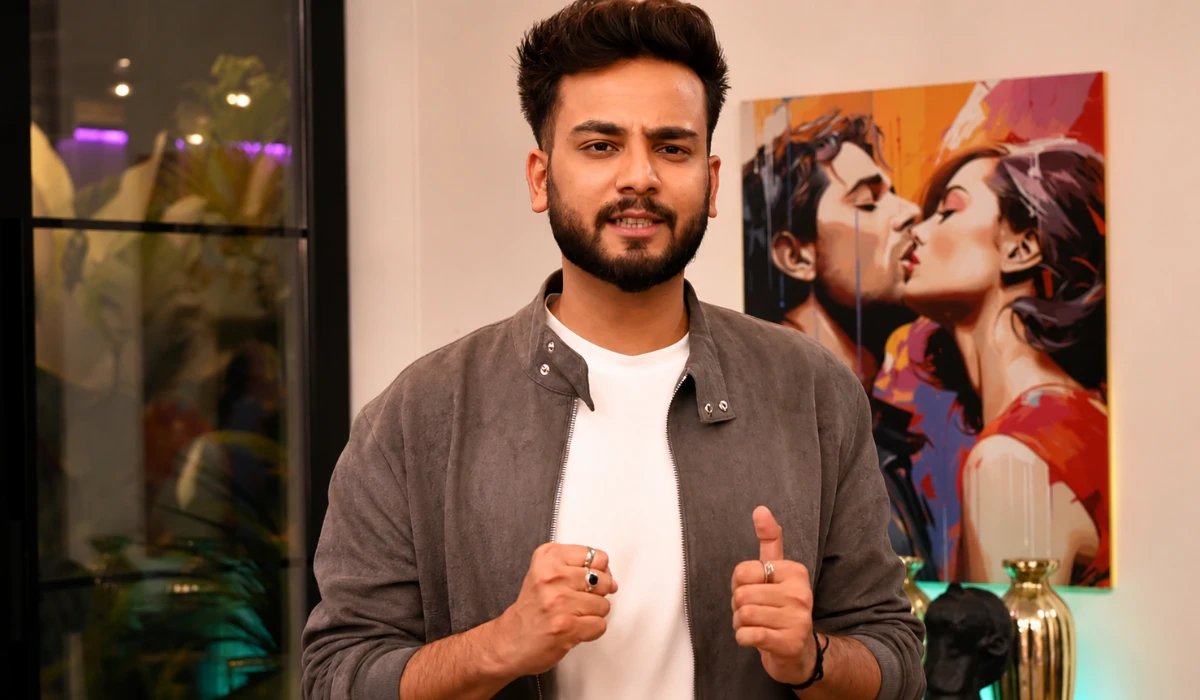
Elvish Yadav, who has cultivated a brand heavily reliant on his "street-smart" persona and connection to Haryanavi and UP youth culture, released a video addressing the agitators. In the video, he did not merely offer passive sympathy; he explicitly criticized the administrative bottlenecks and validated the students' anger, urging them to hold the system accountable.
Within 48 hours of this video going live, Yadav took to another livestream to make a startling claim: he stated that he had received communications warning him to "step back" from the student protests, explicitly name-dropping the Enforcement Directorate. According to Yadav, the insinuation was that if he continued to amplify the student unrest, he would be targeted by a financial probe.
Separating Fact from Allegation
To adhere to strict journalistic standards and E-E-A-T principles, a clear delineation must be drawn here between what is a verified fact and what is an allegation.
The Verified Fact: Elvish Yadav made a public statement claiming he was threatened with an ED raid in retaliation for supporting students. The students are actively protesting.
The Allegation: That the Enforcement Directorate, or individuals officially representing them, made these threats.
To date, there is no official confirmation from the ED that any such communication took place. Furthermore, the ED has not issued any summons or conducted any raids against Yadav following these claims. It remains entirely possible that the threat was a hoax orchestrated by a third-party troll attempting to stir controversy, or a misrepresentation of a separate legal proceeding. Yadav himself did not release audio evidence of the alleged threat, stating only that the message was relayed to him through intermediaries.
Why Did the Students Need Support?
To understand the gravity of Yadav's initial support, one must understand the climate of student frustration in India right now. Over the past two years, the youth demographic has expressed growing agitation over what they perceive as a broken meritocracy.
Key issues driving these protests include:
- Exam Paper Leaks: Recurring leaks in state-level recruitment exams (like those conducted by RO/ARO in UP) have forced honest candidates to repeatedly reappear for exams, causing severe mental and financial distress.
- Delayed Results: Even when exams are conducted cleanly, the delay in processing results by state public service commissions often stretches into years.
- Unemployment Anxiety: Despite high educational qualifications, a lack of immediate job opportunities has created a powder keg of resentment.
When a celebrity of Yadav's stature speaks on this, it provides the movement with an amplifier that traditional media often denies localized protests. His endorsement signals to his audience that the issue is legitimate and mainstream.
The Bigger Picture: Influencers in the Crosshairs?
The core reason this story transcends typical celebrity gossip is what it represents for the creator economy. Historically, Indian celebrities avoided taking hard stances on volatile political or administrative issues for fear of losing brand endorsements or facing tax scrutiny.
The new guard of digital creators—led by figures like Yadav, CarryMinati, and others—operates differently. Their audience expects them to speak "truth to power." However, this creates a vulnerability.
If a creator alleges that a central agency like the ED is being used as a tool to silence them, it severely damages public trust in institutions, regardless of whether the threat was real or fabricated. It creates a chilling effect, where other creators might self-censor their socio-political commentary out of fear of financial or legal ruin.
Timeline of Elvish Yadav's Socio-Political Entanglements
To provide deeper context, here is a look at how Yadav’s recent trajectory has increasingly intersected with legal and political spheres:
|
|
|
|
|
|
|
|
|
|
|
|
|
|
|
|
|
|
|
|
How the ED Actually Operates
Part of adding genuine value to this news cycle is educating the reader on how the institution in question actually functions. This cuts through the panic and provides clarity.
The Enforcement Directorate is a premier financial investigation agency tasked with enforcing economic laws and fighting economic crime in India (primarily under the Prevention of Money Laundering Act - PMLA).
Does the ED issue "threats" or "warnings" before a raid? According to former ED officials and legal experts, the agency operates strictly on evidence. The standard operating procedure (SOP) for the ED does not involve calling a suspect to warn them to stop posting YouTube videos in exchange for calling off a raid.
An ED raid (or "search and seizure") is the culmination of months, sometimes years, of behind-the-scenes forensic accounting, gathering of bank statements, and cross-border financial tracking. If the ED targets an individual, they do not tip them off beforehand.
Therefore, analytically speaking, there are only two plausible explanations for Yadav's claim:
- A Malicious Hoax: An individual or group pretending to be the ED to intimidate Yadav, exploiting his existing legal anxieties (given his previous snake venom case).
- Informal Political Pressure: While not an official ED tactic, it is not uncommon in Indian politics for informal "messengers" to suggest to disruptive voices that they might face agency scrutiny if they do not quiet down. However, proving this is incredibly difficult without concrete whistleblowers or intercepted communications.
What Happens Next? The Legal and Digital Fallout
Moving forward, this situation will likely bifurcate into two distinct pathways: the legal reality and the digital narrative.
The Legal Pathway: If Elvish Yadav genuinely believes he was threatened by someone impersonating the ED, or by an actual ED official overstepping their bounds, the legally sound next step is to file a First Information Report (FIR) with the local police. Impersonating a central government officer is a serious criminal offense under the Indian Penal Code. If he fails to file an FIR, critics will likely use this to dismiss his claims as a publicity stunt designed to maintain his "rebel" image.
The Digital Pathway: On social media, the narrative has already been set. The hashtag surrounding the ED threat has trended. For Yadav’s core audience, the veracity of the threat is almost irrelevant; the story perfectly aligns with the underdog narrative he has built his career upon—the idea that the "system" is constantly trying to suppress the common man's voice. This will likely result in a surge of engagement and further solidify his transition from a pure entertainer to a socio-political figurehead for his demographic.
Why the Reader Should Care
You might not be a follower of Elvish Yadav, and you might not be a student caught up in the recruitment protests. However, this scenario dictates a emerging reality in modern India: The lines between digital entertainment, grassroots activism, and state scrutiny are permanently blurred.
When an influencer acts as a broadcaster for civic unrest, they step into a arena traditionally occupied by journalists and politicians. But unlike traditional media houses that have legal departments and institutional backing, individual creators are highly exposed. They lack the legal shields required to navigate the complex web of central agencies.
The Elvish Yadav alleged ED threat is a case study in this new dynamic. It highlights a fundamental tension in modern democracy: the right to free speech and civic participation versus the state's mandate to investigate financial crimes—and how the mere perception of agency overreach can be used as a weapon by various factions.
Other Articles to Read: