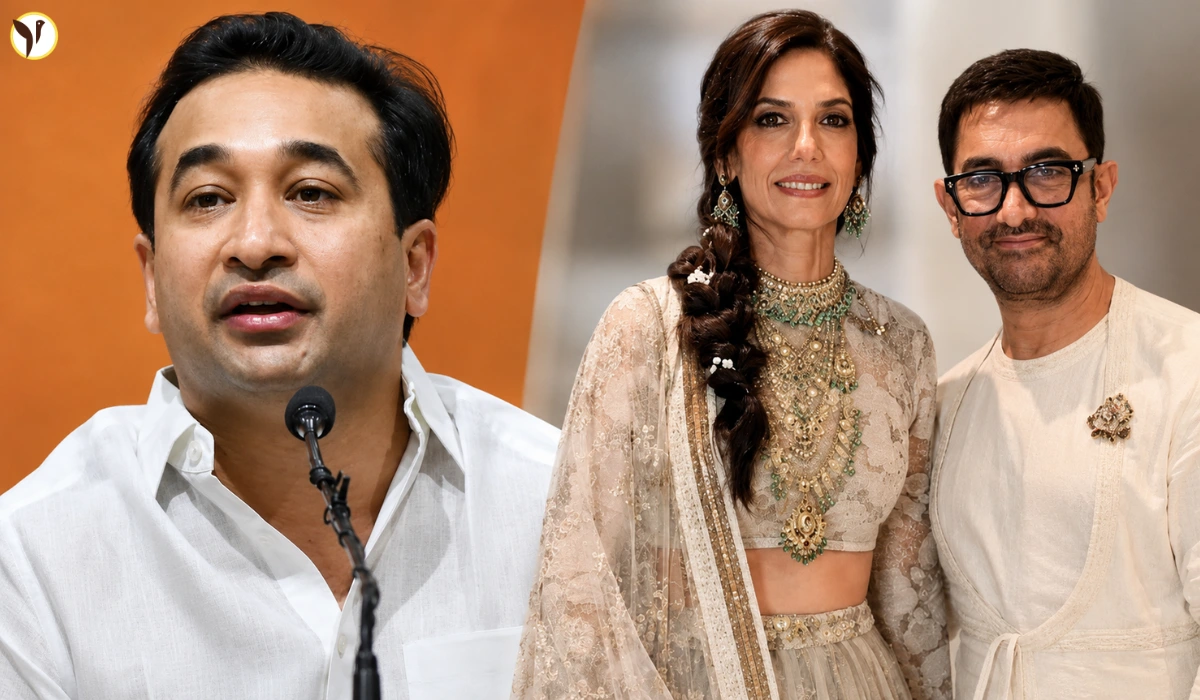


The intersection of Bollywood and Indian politics has rarely been a quiet space, but the latest salvo fired by Maharashtra’s Minister and BJP leader Nitesh Rane against actor Aamir Khan has once again brought this volatile dynamic to the forefront. When a sitting state minister publicly targets one of India's most recognizable cinematic figures, it ceases to be mere celebrity gossip and enters the realm of political signaling.
To understand the gravity of the situation, one must look past the surface-level headlines. Minister Nitesh Rane Targets Aamir Khan With New Allegations that primarily resurrect past controversies—specifically regarding the actor's perceived stance on national issues and his international associations—but frame them within a newly aggressive political vocabulary. For the reader, the immediate questions are simple: What exactly was said? Why now? And what does this mean for the cultural climate in Maharashtra?
Here is a comprehensive breakdown of the situation, providing the context, political analysis, and forward-looking insight that typical news briefs often omit.
The Anatomy of the Allegations: What Actually Happened?
Nitesh Rane, known for his combative political style and unapologetic rhetoric, recently amplified his critique of Aamir Khan. While political figures frequently use Bollywood as a rhetorical punching bag, Rane’s current allegations focus on a specific narrative: that Khan’s past statements and international engagements have actively harmed India’s global image.
The minister's statements hinge on two primary historical pillars that he has brought back into public discourse:
- The "Intolerance" Comment (2015): Rane revisited Khan’s 2015 interview where the actor stated that his wife, filmmaker Kiran Rao, had suggested leaving India due to a growing sense of insecurity. Rane's new framing positions this not merely as a careless comment, but as a deliberate act of defaming the nation on an international stage.
- The Turkey Controversy (2020): The minister also resurrected the backlash surrounding Aamir Khan's meeting with Turkey’s First Lady, Emine Erdoğan. This occurred at a time when Turkey’s geopolitical stance was highly antagonistic toward India, particularly regarding the Kashmir issue. Rane’s allegations imply a deeper, more problematic alignment between the actor's choices and India's geopolitical adversaries.
The Political Calculus Behind the Targeting
When a state-level minister dedicates public bandwidth to a Bollywood star, strategic calculation is invariably at play. Nitesh Rane is not a rank-and-file legislator; he is the son of veteran politician Narayan Rane, and his political brand is built on aggressive Hindutva posturing and "street-fighter" politics.
Targeting Aamir Khan serves a triple purpose for Rane’s specific political ecosystem:
- Consolidating the Base: In the run-up to any electoral cycle, reinforcing a narrative that the ruling establishment is "protecting" Indian culture from "elitist" Bollywood figures who allegedly disrespect the nation is a proven mobilization tactic.
- Distraction and Deflection: State politics in Maharashtra is highly complex, involving coalition dynamics (like the Mahayuti), infrastructure debates, and local economic issues. High-profile cultural wars often serve to shift media attention away from mundane governance challenges.
- National Media Amplification: By targeting a figure of Aamir Khan’s stature, a state minister guarantees national prime-time coverage, elevating their profile far beyond their actual ministerial portfolio.
The Timeline: Tracing the Friction Between Politics and Aamir Khan
To fully grasp why these allegations resurface with such predictability, one must understand the timeline of events. The friction is not a sudden development but a slow-burning narrative crafted over nearly a decade.
|
|
|
|
|
|
|
|
|
|
|
|
|
|
|
|
|
|
|
|
|
|
|
|
Bollywood as a Soft Target in State Politics
The phenomenon of politicians targeting Bollywood is not new, but its nature has fundamentally evolved. In the 1990s and 2000s, politicians sought the glamour of Bollywood for election campaigns. Today, the dynamic has inverted. Bollywood has become a soft target for political point-scoring.
Aamir Khan finds himself in a specific subset of targets. Unlike some of his contemporaries who have openly aligned with political parties, Khan has historically maintained a posture of neutrality, positioning himself as a socially conscious star. Ironically, this very neutrality makes him a prime target. In the current polarized climate, politicians often view "neutral" or "issue-based" stances—especially on topics like intolerance or religious harmony—with deep suspicion, interpreting them as implicit criticisms of the ruling establishment.
The Economic Reality: Do These Allegations Have Real-World Impact?
It is easy to dismiss political rhetoric as mere noise, but the data suggests otherwise. The intersection of political allegations and social media boycotts has created a tangible risk factor for Bollywood investments.
Original Analysis: The "Risk Premium" on Controversial Stars Following the underperformance of Laal Singh Chaddha, industry insiders noted a shift in how distributors price films starring individuals who are frequent targets of political campaigns.
- Pre-2015: Aamir Khan’s films were considered "safe" bets with virtually guaranteed high returns.
- Post-2022: Distributors now factor in a "controversy discount." The cost of acquiring theatrical rights for such stars drops, not necessarily because the audience doesn't like the actor, but because the noise drowns out the marketing, increasing the cost of public relations and crisis management.
When a minister like Nitesh Rane makes new allegations, he inadvertently (or intentionally) impacts the business ecosystem surrounding the actor. It is a form of soft power that translates into hard economic consequences.
What Happens Next: Legal, Political, and Industry Trajectories
Looking forward, this situation will likely unfold across three distinct fronts:
The Legal Front: Soundbites vs. Action
To date, the allegations made by politicians against Bollywood figures regarding "defamation" of India rarely translate into formal legal charges under specific penal codes, because free speech protections generally cover expressing a desire to leave the country or attending international forums. Unless Rane’s allegations pivot to concrete claims of financial fraud or illegal foreign funding, this will likely remain in the realm of political rhetoric rather than courtroom litigation.
The Industry Front: The Strategy of Silence
Historically, Aamir Khan’s team has employed a strategy of strategic silence regarding political provocation. Following the initial backlash in 2015, Khan released a video clarifying that neither he nor his wife intended to leave India, but he has largely avoided engaging directly with political figures like Rane. Industry experts expect this pattern to continue. Engaging in a slinging match with a sitting minister offers no strategic advantage to a film star and only prolongs the news cycle.
The Political Front: Rane’s Escalation Ladder
For Nitesh Rane, the success of this maneuver depends on media traction. If the national media amplifies his statements, expect him to double down, potentially demanding the formation of a committee to review how Indian ambassadors or cultural representatives engage with figures who have "anti-India" records. If the media moves on quickly, this will serve as a localized speech meant to satisfy his immediate constituency in the Sindhudurg region.
The Verdict
When evaluating the headline that Minister Nitesh Rane Targets Aamir Khan With New Allegations, the reader must filter out the performative outrage to see the structural reality. This is not a story about a politician genuinely expecting to prosecute an actor. It is a story about how cultural narratives are weaponized in modern Indian politics.
Aamir Khan is a proxy. The actual subject of Rane’s rhetoric is the broader ideological battle over who gets to define "Indian-ness." By resurrecting old controversies, the minister is attempting to keep a specific cultural grievance alive in the public consciousness, reinforcing a political binary where supporting the ruling ideology requires rejecting certain cultural figures.
For the average citizen, the takeaway should be clear: in an era of 24/7 news, distinguishing between governance-driven policy and narrative-driven politicking is essential. The former affects your daily life; the latter is designed primarily to keep you aligned with a specific political tribe.
Other Articles to Read: