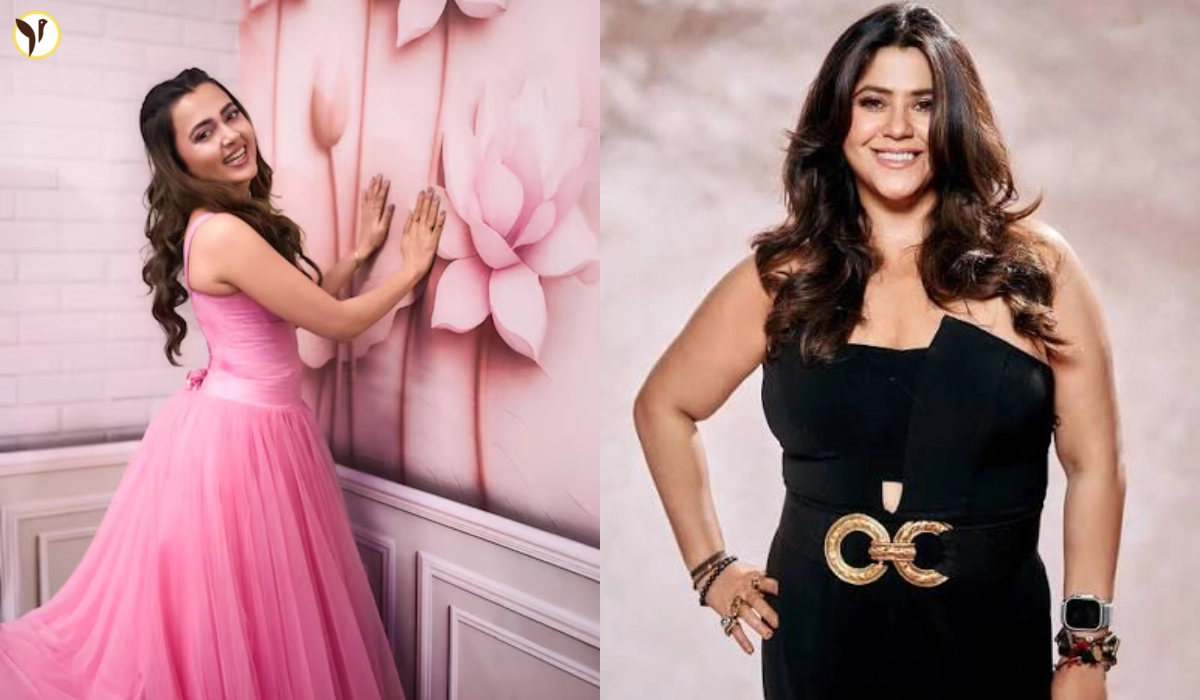


When a public figure announces a divorce, the public reaction is almost universally predictable: speculation, gossip, and a scramble to assign blame. However, when television actress Akanksha Chamola revealed she is asexual just days after announcing her separation from her husband, she didn't just share personal news—she inadvertently pulled back the curtain on a deeply misunderstood aspect of human identity.
In doing so, Akanksha Chamola reveals asexuality days after divorce announcement, transforming a standard celebrity breakup into a profound cultural teachable moment. For a country where marital consummation is heavily policed by societal norms, this revelation is not merely pop culture trivia; it is a radical act of self-actualization that challenges the traditional Indian narrative of romance and marriage.
Here is a deep dive into what actually happened, the broader cultural context of her revelation, and why this matters far beyond the realm of entertainment news.
Unraveling the Events
To understand the weight of Chamola’s statement, it is essential to look at the chronological proximity of her announcements. The timeline below maps the sequence of events that captured the public's attention:
|
|
|
|
|
|
|
|
|
|
|
|
|
|
|
|
For many, the immediate question was: Why now? The answer lies in the complex intersection of societal pressure, self-discovery, and the liberating, albeit painful, process of untangling one’s identity from a relationship that no longer fits.
Who is Akanksha Chamola? Beyond the Characters
Before dissecting the sociological impact of her news, context is key. Akanksha Chamola is a recognized face in the Indian television industry, having notably starred in shows like Dhhai Kilo Prem and Kaisi Yeh Yaariaan. Interestingly, Dhhai Kilo Prem was a love story centered around a plus-sized protagonist, a show that was praised for attempting to deconstruct conventional beauty standards in Indian romance.
Chamola has built a career playing characters deeply entrenched in romantic plotlines. The irony—and the bravery—of an actress who has made a living portraying romantic entanglements stepping forward to declare an absence of sexual attraction is palpable. It highlights the disconnect between the characters actors are paid to play and the nuanced realities of their personal lives.
Understanding Asexuality: The "Ace" Spectrum
The immediate aftermath of Chamola’s announcement saw "asexuality" trending on Indian Twitter. However, trending terms do not equal widespread understanding. To genuinely grasp why Akanksha Chamola reveals asexuality as a pivotal moment, we must define what the term actually means—stripping away the myths.
Asexuality is a sexual orientation characterized by a persistent lack of sexual attraction to any gender, regardless of romantic or emotional connection. It is not:
- A medical condition or hormone imbalance.
- A byproduct of trauma or a past breakup.
- Celibacy or abstinence (which are behavioral choices; asexuality is an orientation).
- A fear of intimacy.
Furthermore, asexuality is a spectrum. The "Ace" community includes:
- Demisexuals: People who only experience sexual attraction after a strong emotional bond is formed.
- Graysexuals: People who experience sexual attraction very rarely, or only under specific circumstances.
- Sex-favorable / Sex-neutral / Sex-repulsed Aces: These terms describe how an asexual person feels about the act of sex, which varies wildly from person to person.
Crucially, asexual people can and do fall in love. They experience romantic attraction (heteroromantic, biromantic, homoromantic, etc.) completely separate from sexual attraction.

Marriage, Compulsory Heterosexuality, and Delayed Discovery
Why would an asexual person get married in the first place? This is the question many critics, often hiding behind the veil of internet anonymity, have posed. The answer requires an understanding of "compulsory heterosexuality"—a societal framework where heterosexuality is assumed and enforced as the default, and where marriage is viewed as the ultimate milestone of a "normal" life.
In India, this pressure is immense.
- The Timeline Pressure: Women, in particular, are subjected to a biological and societal clock. The messaging is relentless: marry by a certain age, or be deemed an outcast.
- Lack of Vocabulary: Until very recently, asexuality was virtually erased from Indian sex education and mainstream discourse. Many asexual individuals spend their twenties and thirties believing they are simply "late bloomers," or that their lack of physical desire is something they will eventually "grow out of" once they meet the right person.
- Conflation of Romance and Sex: Society teaches us that if you love someone, you must want to have sex with them. When an asexual person experiences deep love, they often enter marriage believing that physical desire will naturally follow. When it doesn't, it leads to confusion, guilt, and marital distress.
Akanksha Chamola’s journey—getting married, realizing the mismatch in expectations, getting a divorce, and subsequently identifying her asexuality—is a textbook example of delayed self-discovery. It is not a "trick" played on her spouse; it is a tragic but common consequence of a society that refuses to acknowledge diverse sexualities until after the damage of conformity is done.
Meet Akansha Chamola!
— Rohit (@Iam_Rohit_G) July 14, 2026
> Wife of Gaurav Khanna
> Divorced him because he wanted Babies
> Revealed that she is Bisexual and had relations with women before marriage
> Wants to live a life full of freedom.
> Today, She is sitting on Girls back and giving her a massage by… pic.twitter.com/x0ApdDKuEt
Why Akanksha Chamola Reveals Asexuality: Impact Beyond Celebrity Gossip
When a Hollywood star comes out, it makes international news. When an Indian television actress does it, it strikes at the heart of Middle India’s living rooms. Here is why this revelation holds substantial weight:
Destigmatizing Marital Discord
In many Indian households, a sexless marriage is a source of immense shame, often leading to toxic environments, infidelity, or forced medical interventions. By putting a name to her experience, Chamola provides a framework for thousands of individuals who are trapped in similar marriages, wondering what is "wrong" with them.
Providing Language to the Confused
Representation matters because it provides vocabulary. A teenager in a tier-2 Indian city who does not feel sexual attraction might currently feel broken. Seeing a mainstream actress use the word "asexual" gives that teenager a lifeline—a term to Google, a community to find, and a realization that they are not alone.
Challenging the TV Industry’s Tropes
Indian television relies heavily on the "suhaag raat" (wedding night) trope, forced proximity, and passionate kisses to drive TRPs. An openly asexual actress forces producers and writers to confront the reality that romance does not universally equate to lust. It opens the door for more nuanced storytelling that focuses on emotional intimacy rather than purely physical gratification.
What Happens Next? The Forward-Looking Insight
The immediate aftermath of Chamola’s announcement will likely see a spike in online trolling from sections of the internet that conate sexual orientation with moral failing. However, the long-term trajectory is far more optimistic.
For Chamola personally: This marks the beginning of an authentic life. Freed from the expectations of a marital dynamic that required a performance of sexuality she does not possess, she is likely to find peace in her truth. We can expect her to become an inadvertent but powerful advocate for the Ace community in India.
For the LGBTQIA+ movement in India: While the 2018 repeal of Section 377 was a monumental victory for homosexual and transgender rights, the "A" in the acronym is frequently sidelined—even within the community. Asexuality is often dismissed as "not being a real orientation." Chamola’s high-profile coming-out forces mainstream LGBTQIA+ organizations to ensure their advocacy is truly inclusive of the entire spectrum.
For societal discourse: We are slowly witnessing the death of the "one-size-fits-all" relationship model. As more people speak out about aromanticism, asexuality, and non-monogamy, the Indian public will be forced to expand its definition of what constitutes a "happy," "successful," or "complete" life.
Celebrity news is usually consumed and discarded within a 24-hour news cycle. But Akanksha Chamola’s decision to reveal her asexuality in the shadow of her divorce transcends the ephemeral nature of entertainment journalism.
It is a masterclass in using personal vulnerability for public education. She took a moment of private upheaval and transformed it into a beacon for those who lack the language or the courage to explain their own realities. In a culture that demands conformity, declaring that you do not fit the fundamental mold of societal expectations is a quiet, profound rebellion.
Other Articles to Read: