


For over two decades, Ram Kapoor has been the quintessential pillar of reliability in Indian television and cinema. Whether playing the affable Jai Walia in Kasamh Se or the boisterous, lovable patriarch in Bollywood comedies, his on-screen persona has always been defined by an unshakable, larger-than-life robustness. It is precisely this contrast that makes his recent disclosures about his early life so striking.
In a candid recent reflection, Ram Kapoor opened up about a profound childhood trauma—an experience that shaped his foundational years. More compelling than the trauma itself, however, was the revelation of how his former co-star, Genelia Deshmukh, reacted upon learning the depth of his emotional history.
This is not merely a piece of celebrity gossip. It is a window into the long-term psychological architecture of adults who experience early childhood abandonment, and a case study in how empathetic reactions from peers can validate years of silent struggle.
What Exactly Happened?
The specifics of Ram Kapoor’s childhood trauma are rooted in the sudden departure of his mother when he was a young boy. Raised predominantly by his father, who was a busy advertising professional, Kapoor and his sister were left to navigate the emotional fallout of a fractured household.
In the entertainment industry, where public relations teams meticulously curate images, discussing parental abandonment is rare. For Kapoor, the decision to speak about it openly represents a departure from the stoic masculinity traditionally expected of leading men. He did not frame it as a sob story, but rather as a matter-of-fact accounting of the hand he was dealt—a foundational reality that influenced his adult behaviors, his drive, and his emotional boundaries.
Genelia's Reaction to Ram Kapoor: A Study in Empathetic Witnessing
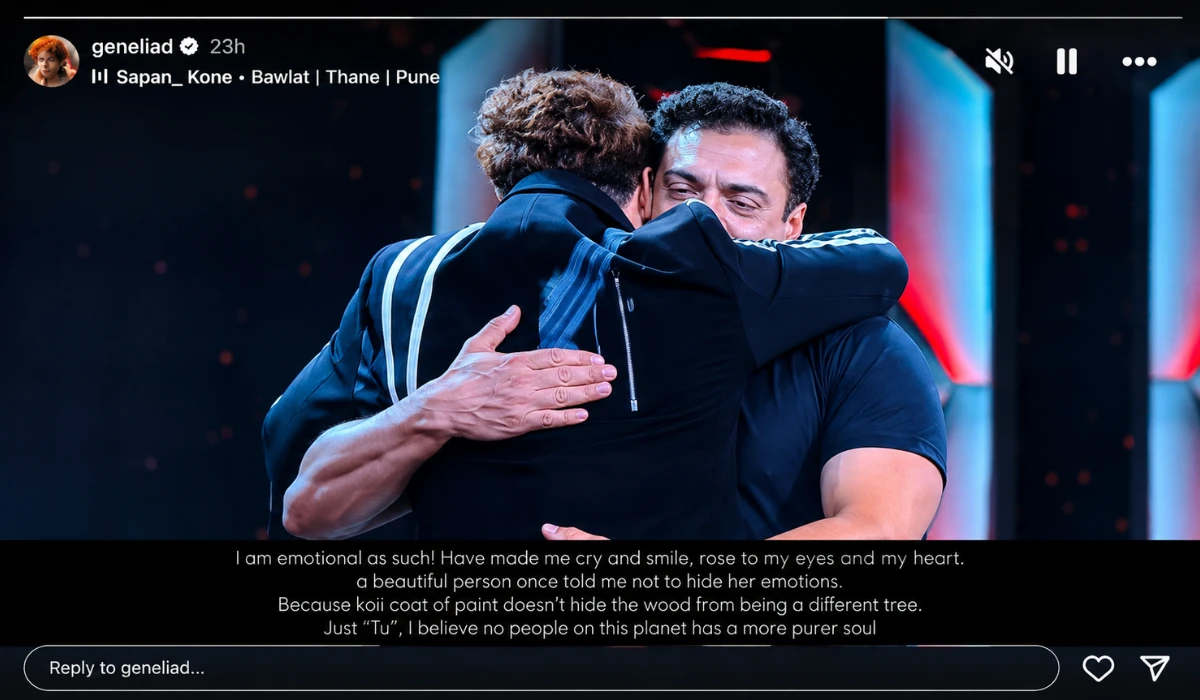
During a conversation that touched upon their shared past—having starred together in the 2012 film Tere Naal Love Ho Gaya—the topic of Kapoor's upbringing surfaced. Genelia Deshmukh's reaction to Ram Kapoor's childhood trauma was not one of performative sympathy or awkward deflection.
According to Kapoor, Genelia responded with a profound sense of sadness—not for the successful actor sitting in front of her, but for the young boy who had to endure that isolation.
Why is this distinction important? In psychological terms, Genelia provided what trauma experts call "empathetic witnessing." She didn't try to "fix" him, nor did she offer toxic positivity (e.g., "Everything happens for a reason"). She acknowledged the pain of the child he used to be. For survivors of childhood trauma, having someone mourn the innocence they lost is often more healing than any amount of adult accolades.
The Psychology of the 'Life of the Party': Understanding the Aftermath
To truly understand why Ram Kapoor’s revelation matters, one must look at the behavioral data surrounding children who experience early familial rupture. There is a common, yet misunderstood, phenomenon where children of trauma become the "accommodators" or the "entertainers" in their adult lives.
Behavioral Mapping: Childhood Trauma vs. Adult Persona
The table below synthesizes established psychological frameworks regarding abandonment trauma (sourced from the diagnostic criteria of the DSM-5 regarding trauma and attachment theories) and maps them observantly to public persona traits often exhibited by Kapoor.
When Genelia reacted with genuine sorrow for his younger self, it briefly pierced through that "compensatory grandiosity." It highlighted a stark reality: the loudest people in the room are often the ones most desperate to ensure the room doesn't go quiet, because silence is where the trauma lives.
The Cultural Context: Bollywood's Shifting Stance on Male Vulnerability
For generations, the Hindi film industry has perpetuated a rigid archetype of male strength. The hero does not cry; he avenges. He does not go to therapy; he goes to the gym. If a backstory involves a mother, it is typically used to fuel rage (the classic Maa trope), not to process complex grief.
Ram Kapoor’s openness, and the public framing of Genelia's reaction to Ram Kapoor's past, represents a micro-shift in this cultural paradigm. We are witnessing the normalization of the "processed male" in Indian media.
- The Pre-2010s Era: Male trauma was depicted as a catalyst for violence or heroism (e.g., Ghajini, Agneepath).
- The Transition Phase: Actors began speaking about depression and anxiety, but usually framed it as burnout (e.g., Deepika Padukone's advocacy, which was groundbreaking but initially highlighted female-centric narratives before men followed).
- The Current Landscape: Male actors are dissecting their origins of pain. Kapil Sharma, Irrfan Khan (in his later interviews), and now Ram Kapoor are moving the conversation from "I am stressed" to "I am wounded, and here is how it happened."
This matters because Bollywood is a primary cultural pedagogical tool in India. When a mainstream actor discusses childhood abandonment without shame, it implicitly grants millions of male viewers permission to examine their own childhoods without feeling emasculated.
What Happens Next? The Ripple Effect of Public Disclosure
When a public figure of Kapoor's stature shares a deeply personal narrative, the "what happens next" extends far beyond his immediate circle.
1. The Clinical Ripple Effect: Therapists and counselors in India often use celebrity narratives as conversational bridges with reluctant patients. A middle-aged man resisting therapy for childhood abandonment might find it easier to say, "I saw what Ram Kapoor said, and I realized I do the same things." It normalizes the clinical process.
2. The Industry Ripple Effect: Genelia’s reaction sets a standard for how industry peers should handle such disclosures. The era of making light of someone's painful past on talk shows is ending. Empathetic witnessing is becoming the new professional courtesy.
3. The Personal Trajectory for Kapoor: From a journalistic standpoint, having opened this door, Kapoor's future projects may take on a different weight. Audiences will likely look for the cracks in the armor of his characters, searching for the vulnerability he has now confirmed exists in real life. He possesses the acting chops to deliver incredibly nuanced portrayals of broken men, should he choose to pivot toward more dramatic, introspective roles.
Why This Conversation Must Move Beyond the Headlines
In the fast-paced ecosystem of digital news, a headline about a celebrity’s childhood trauma is often reduced to clickbait—consumed in ten seconds and forgotten by lunch. That is a disservice to the narrative.
Ram Kapoor’s story, and specifically the focus on how his trauma was received by Genelia, serves as a manual for everyday interactions. Millions of people carry invisible childhood traumas. They do not need society to fix their pasts. What they need is what Genelia provided: a safe, non-judgmental space where the pain of their past is acknowledged without being minimized.
The ultimate takeaway here is not that a famous actor had a hard time growing up. It is that healing does not always come from the dramatic interventions we see in movies. Sometimes, it comes years later, in a quiet conversation, when someone simply looks at you and acknowledges the heavy weight you carried as a child.
Other Articles to Read: