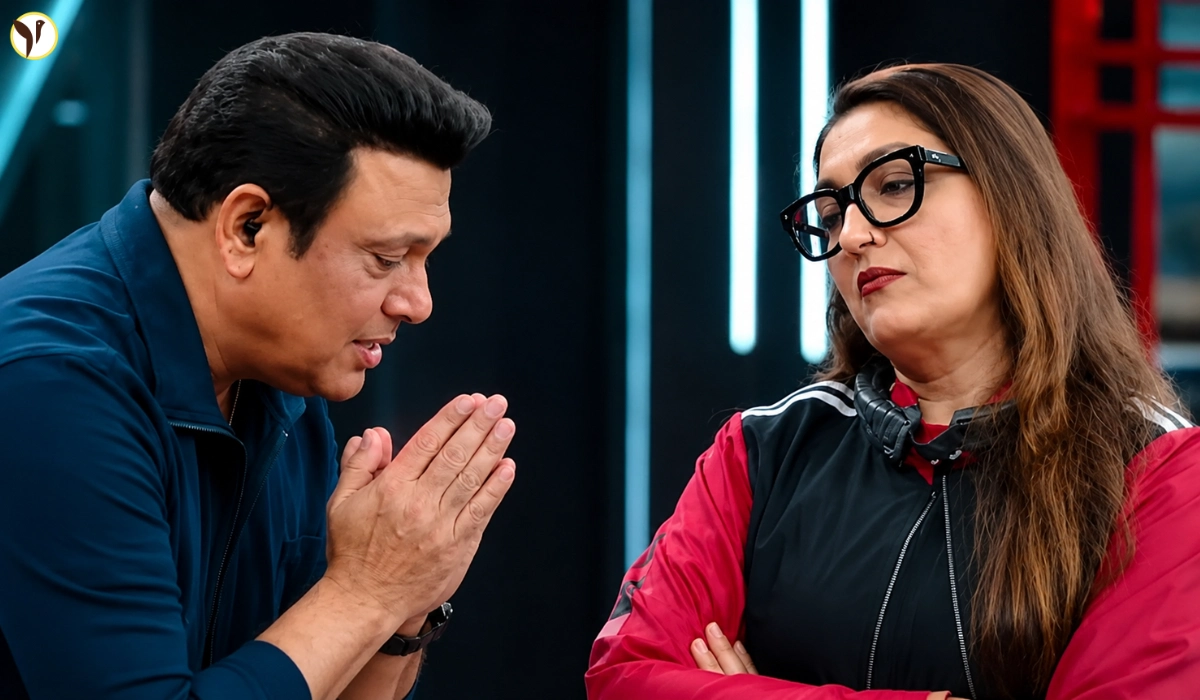


In a recent media interaction that sent shockwaves through Bollywood’s nostalgic corridors, Sunita Ahuja owns her words — defending a Govinda claim without apology. The assertion that the 90s superstar was the original choice for cinematic milestones like Dilwale Dulhania Le Jayenge (DDLJ) and Gadar: Ek Prem Katha has reignited a fierce debate. Rather than backpedaling amid internet scrutiny, Ahuja has doubled down, offering a masterclass in unfiltered celebrity PR.
But beyond the viral soundbites and social media memes lies a complex intersection of Bollywood history, the fluid nature of film casting, and the modern machinery of legacy management. To understand why Sunita Ahuja is standing her ground, we must dissect what was actually said, verify the historical context of 90s filmmaking, and analyze what this means for Govinda's evolving public narrative.
What Exactly Was Claimed?
Speaking on a prominent podcast, Sunita Ahuja made a series of bold statements regarding her husband’s career trajectory. She claimed that Govinda was the first actor approached for Shah Rukh Khan’s iconic role in Aditya Chopra’s DDLJ. Furthermore, she alleged that he was also offered Sunny Deol’s career-defining role in Gadar: Ek Prem Katha.
When clips of the interview went viral, the immediate reaction was a mix of disbelief and mockery. Critics pointed out the sheer improbability of an actor turning down what would become the two biggest blockbusters of their respective decades.
However, Ahuya did not issue a clarification or a retraction—tactics commonly employed by celebrity publicists today. Instead, she defended her statements by framing them as undeniable truths from their personal lives, stating that she was present during the era these discussions took place.
Data Analysis: The "What If" Box Office of Govinda
To truly grasp the magnitude of Ahuja's claims, one must look at the commercial weight of the films in question. When analyzing the trajectory of a star, rejected projects often serve as a fascinating alternate timeline.
Below is an original data table analyzing the films Sunita Ahuja claims Govinda rejected, juxtaposed with the actual outcomes and the context of Govinda's releases during those specific years.
|
|
|
|
|
|
|
|
|
|
|
|
|
|
|
|
|
|
|
|
|
|
|
|
How Casting Actually Worked in the 90s
To label Sunita Ahuja’s claims as outright lies is to misunderstand how the Bollywood film industry functioned in the 1990s.
Today, casting is a structured process involving casting directors, auditions, and locked contracts. In the 90s, it was largely informal. Producers and directors frequently "sounded out" top stars over dinners or phone calls to gauge availability and dates.
The "First Offer" Phenomenon: In Bollywood parlance, being the "first approach" does not always equate to being formally offered a bound script. Often, a director might mention a concept to a star. If the star passes due to date issues or creative differences, the role goes to the next person. Years later, this informal inquiry transforms into "I was offered the film."
In the case of DDLJ, Aditya Chopra was a first-time director. It is highly plausible that Yash Raj Films, as a safety net, informally reached out to the biggest mass star of the time—Govinda—before taking a massive risk on Shah Rukh Khan, who was then transitioning from negative roles to romantic leads. Similarly, Gadar was a passion project that took years to get off the ground; floating names during the scripting phase was standard practice.
Therefore, Sunita Ahuja’s claims likely stem from these preliminary, informal conversations rather than signed letters of intent. By defending these claims without apology, she is leveraging the technical truth of "being approached" to bolster her husband's historical stature.
The Anatomy of Legacy Management
If the claims are historically murky, why is Sunita Ahuja pushing this narrative so aggressively now? The answer lies in the concept of legacy management.
Govinda’s career is a textbook study of extreme highs and prolonged absences. At his peak, he was arguably a bigger draw than his contemporaries, delivering an unprecedented string of 13-14 back-to-back commercial successes. However, a combination of poor script choices, political forays, and a self-imposed hiatus led to his eventual marginalization. Today, the younger demographic knows him more for internet memes than for his sheer cinematic dominance.
By asserting that Govinda rejected DDLJ and Gadar, Sunita Ahuja is strategically reframing his absence from these landmark films. The narrative shifts from "He wasn't chosen" to "He chose not to do it." It re-inserts Govinda into conversations where he has historically been absent, reminding the public that his star power in the mid-90s was formidable enough that he could afford to say no to Yash Raj Films.
'No One Can Take Wife's Place': Sunita Ahuja Breaks Silence After Her '50 Affairs' Comment On Govinda Goes Viral#SunitaAhuja #Govinda #LockUpp2 #CelebrityNews #EntertainmentNews https://t.co/JKch0YbtuP
— ABP LIVE (@abplive) July 13, 2026
The "Alternative Universe" of Govinda's Brand
It is also worth noting that Govinda cultivated a highly specific brand. He was the king of the middle-class, masala entertainer. His partnership with director David Dhawan created a parallel universe of comedy that did not rely on the NRI-centric, sweeping romances that defined SRK’s career.
Had Govinda done DDLJ, it would have required a severe tonal shift that may not have suited his established persona. Sunita Ahuja’s defense of these claims indirectly highlights a harsh truth about Bollywood: typecasting. Govinda was so successful in his niche that stepping out of it—especially into the sensitive territory of Gadar's patriotic drama—might have risked his core audience.
By owning her words, Ahuja is not just defending her husband's pride; she is subtly pointing out that Govinda’s empire was built on a different, equally valid, cinematic formula.
Industry Reactions and the "Spousal Spokesperson" Trend
Sunita Ahuja’s unapologetic demeanor also highlights a modern shift in celebrity crisis management. Historically, actors like Amitabh Bachchan or Salman Khan have had their own distinct ways of handling the press. However, we are increasingly seeing spouses take the helm of narrative control.
- Ankita Lokhande aggressively defended her late partner Sushant Singh Rajput’s legacy in media interactions.
- Mona Shourie Kapoor was famously the gatekeeper and spokesperson for Sridevi during the 90s.
Sunita Ahuja fits firmly into this archetype. With Govinda maintaining a relatively low profile in recent years, Sunita has become the de facto shield and sword for the family’s public image. Her refusal to apologize signals to the media and the public that the family will not be bullied into silence by internet trolling.
The Power of Standing Ground
The saga of Sunita Ahuja defending her statements is more than just Bollywood gossip; it is a window into how fading stars and their families fight for historical relevance in a fast-moving digital world. By choosing not to apologize, Ahuja has forced the industry and the audience to look back at Govinda's peak era and acknowledge the sheer magnitude of his stardom.
Whether or not Govinda actually held the bound scripts for DDLJ or Gadar is almost irrelevant at this point. What matters is that Sunita Ahuja has successfully repositioned her husband from a star who "missed out" to a star who "opted out." In the brutal arithmetic of Bollywood legacy, that is a formidable victory.
Other Articles to Read: