
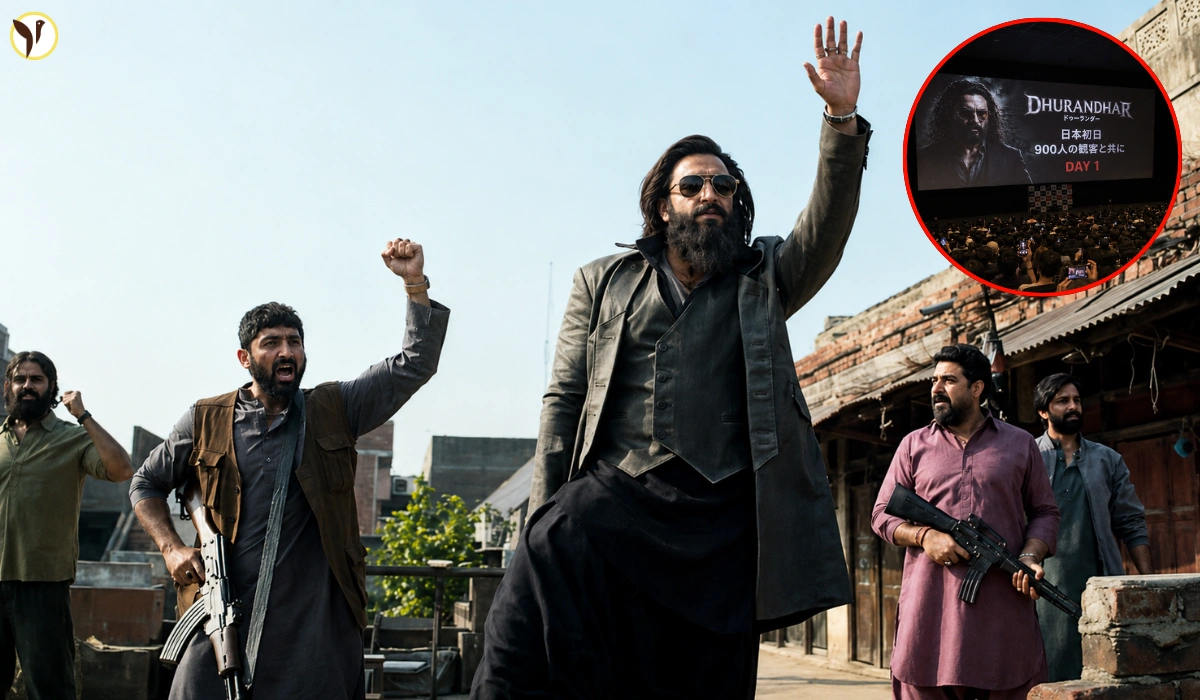


When a Bollywood production sets up cameras on a foreign street, the standard outcome is a gathering of curious onlookers, a few selfies, and localized traffic delays. What unfolded on the first day of shooting for Aditya Dhar’s Dhurandhar in Japan was fundamentally different. On day one, an estimated 900 local and expatriate spectators converged around the shoot location, bringing segments of the city to a standstill and generating a level of organic, localized buzz that most marketing departments spend millions trying to manufacture.
The presence of Ranveer Singh, fronting a high-stakes espionage thriller, clearly transcended the traditional boundaries of Indian cinema’s international footprint. But looking strictly at the crowd size misses the broader narrative. To understand why a 900-person gathering on a Tuesday afternoon in Japan matters, one has to examine the strategic shifts in Bollywood’s production methodologies, the specific cinematic language of Dhurandhar, and the evolving international appetite for Indian action cinema.
The Anatomy of a Day-1 Blockade
The logistics of filming in a meticulously organized country like Japan are notoriously stringent. Securing permits for large-scale action sequences requires months of negotiation with local authorities, ensuring that public disruption is kept to an absolute minimum. Therefore, a spontaneous gathering of 900 people—rather than a controlled audience—is a metric of genuine public interest.
To contextualize the scale of this day-one footprint, it helps to compare it against recent benchmark Bollywood shoots conducted overseas.
Comparative Analysis of High-Profile Bollywood International Shoots
|
|
|
|
|
|
|
|
|
|
|
|
|
|
|
|
|
|
|
|
|
|
|
|
|
|
|
|
|
|
|
|
|
|
|
|
As the data illustrates, a near-1,000-person gathering in a non-traditional Bollywood market like Japan is highly anomalous. It indicates that the anticipation for Dhurandhar—fueled by the successful prior collaboration between Singh and Dhar on Uri: The Surgical Strike—has leaked well beyond the Indian diaspora.
Why Japan? The Strategic Locale for 'Dhurandhar'
Aditya Dhar is a director known for his grounded, hyper-realistic portrayal of military and geopolitical operations. Japan is not a standard Bollywood backdrop chosen for its picturesque value alone. From a narrative standpoint, the location provides a rich tapestry for an espionage thriller.
Japan’s geopolitical significance—its delicate balance of pacifist constitutional constraints, its strategic alliances, and its proximity to ongoing Asian geopolitical tensions—makes it an ideal setting for a story about intelligence and defense strategy (the literal translation of "Dhurandhar"). Furthermore, Japan offers a visual aesthetic that is largely untapped in mainstream Hindi cinema.
By moving away from the saturated visual clichés of Europe or the Middle East, Dhar is actively positioning Dhurandhar within the realm of global espionage thrillers—sharing visual and thematic DNA with productions like Mission: Impossible - Dead Reckoning or the John Wick franchise, both of which leveraged Japan’s urban density and cultural mystique to elevate their stakes.
The Ranveer Singh Phenomenon: Accessibility as a Global Currency
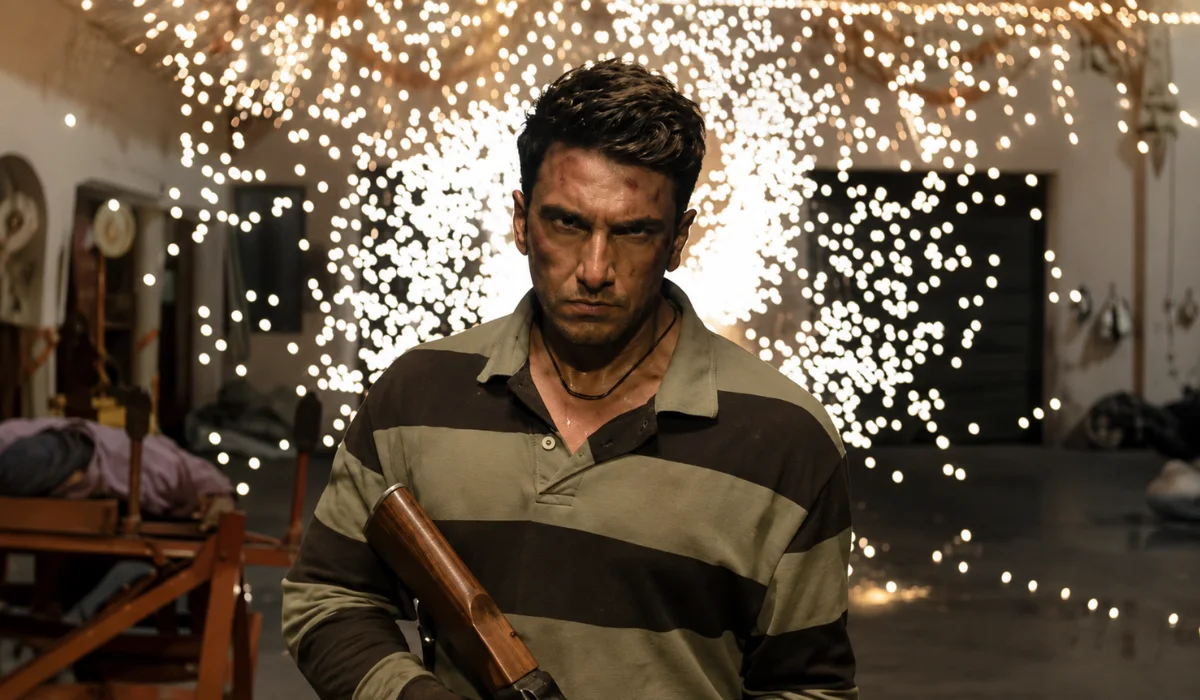
The crowd in Japan did not just show up because a camera crew arrived; they showed up for Ranveer Singh. In the realm of star power, Singh possesses a specific type of global magnetism. Unlike stars who maintain an untouchable, elevated mystique, Singh’s public persona is rooted in high-octane accessibility.
When confronted with a massive crowd in a foreign country, the standard industry protocol is to wave from a tinted vehicle and speed away to maintain the schedule. Singh’s documented approach is markedly different. He frequently steps out of the security perimeter, interacts directly with the crowd, and attempts to bridge the language barrier through sheer physical expressiveness.
This interaction model is highly effective in cultures like Japan, where celebrity encounters are usually formal and distanced. An Indian star breaking that protocol generates viral local media moments. Local Japanese tabloids and Twitter (X) trends quickly picked up the day-one disruption, translating the event from a "Bollywood shoot" into a localized human-interest story. This organic amplification is something traditional PR budgets cannot replicate.
The Economics of Organic Virality
From a strategic and financial perspective, the 900-person day-one hit is a masterclass in modern film marketing. The economics of a film like Dhurandhar dictate a massive budget, likely offsetting costs through pre-sales, digital rights, and international distribution.
Consider the return on investment (ROI) of this single day:
- Traditional PR Cost: Securing front-page entertainment coverage in Japanese media or global trending status would require significant financial outlay from a PR firm.
- Organic Earned Media Value (EMV): The localized images and videos of the crowd, shared by Japanese citizens and Indian entertainment portals, generated an estimated EMV running into the millions of rupees within 24 hours.
This early momentum is critical. It establishes Dhurandhar not as a routine Bollywood release, but as a cinematic event. For international distributors, particularly in markets like Japan, Southeast Asia, and the Middle East, this visual proof of crowd hysteria serves as a tangible metric to negotiate better screen counts and positioning during the theatrical release.
'Dhurandhar' in the Broader Bollywood Matrix
To fully grasp the significance of this Japan schedule, one must view it against the backdrop of Bollywood’s current transitional phase. The industry is actively moving away from domestic, studio-bound sets toward authentic, global locations that serve the story rather than just the song sequence.
Dhurandhar is positioned to be a cornerstone of this new era. The casting of Ranveer Singh in a rugged, intense avatar—a departure from his recent, more commercially flamboyant roles—signals an attempt to mature his brand. Aditya Dhar’s involvement guarantees a certain baseline of technical proficiency and patriotic undertones, but the Japanese setting suggests an expansion of that worldview. It implies a narrative that looks outward at global defense mechanics rather than inward at local conflicts.
What Happens Next: The Road Ahead for the Production
A day-one crowd of 900 people is a triumphant headline, but the reality of a high-stakes international shoot is defined by operational endurance.
- Security Escalation: Following the day-one bottleneck, local security and production managers will likely implement stricter, wider cordons. While the crowd is good for marketing, it halts production. A 900-person crowd can cost a production upwards of ₹15-20 lakhs per day in lost shooting hours.
- Narrative Integration: The goal over the coming weeks is to integrate Japan not just as a backdrop, but as a character in the film. Expect to see Singh interacting with local talent or specific regional elements that justify the logistical expense of the shoot.
- The Post-Production Pipeline: The footage captured in Japan will likely be among the first to enter the extensive VFX pipeline. Given Dhar’s style, the action choreography will be grounded but visually spectacular, requiring meticulous post-production work to maintain the gritty realism.
The immediate next milestone for observers will be the release of official first-look stills from the Japan schedule. How the production chooses to frame the country—whether they lean into the chaotic urban energy of Tokyo or the stark, traditional landscapes—will provide the first concrete clues about the film's tonal palette.
The 900-person crowd that gathered to watch Ranveer Singh on the first day of the Dhurandhar shoot in Japan is more than a testament to a single actor's popularity. It is a microcosm of Bollywood's evolving ambition. It demonstrates a shift toward utilizing international locations with strategic narrative intent, an understanding of organic global marketing, and the leveraging of star power in a way that transcends cultural and linguistic barriers.
If day one is any indication, Dhurandhar is not simply being shot in Japan; it is actively attempting to occupy that cultural space, blending the high-octane expectations of Hindi cinema with the precise, atmospheric tension of global espionage storytelling. The crowd wasn't just watching a movie being made; they were witnessing the boundaries of Indian commercial cinema being quietly, but forcefully, expanded.
Other Articles to Read: