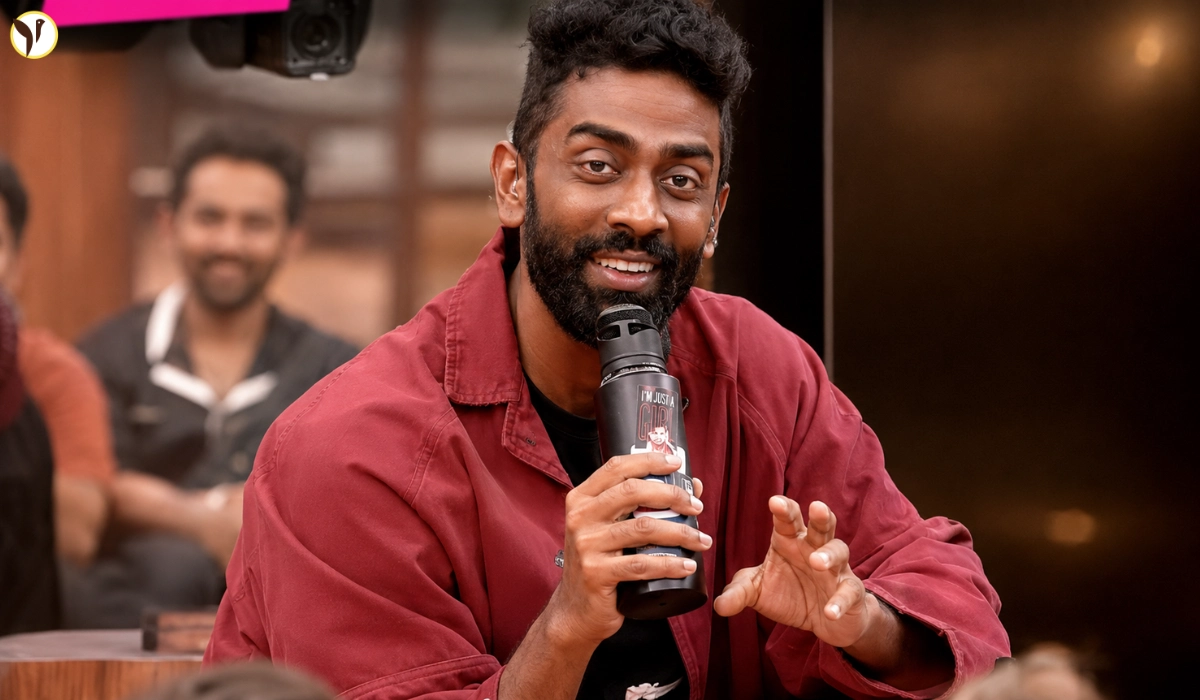


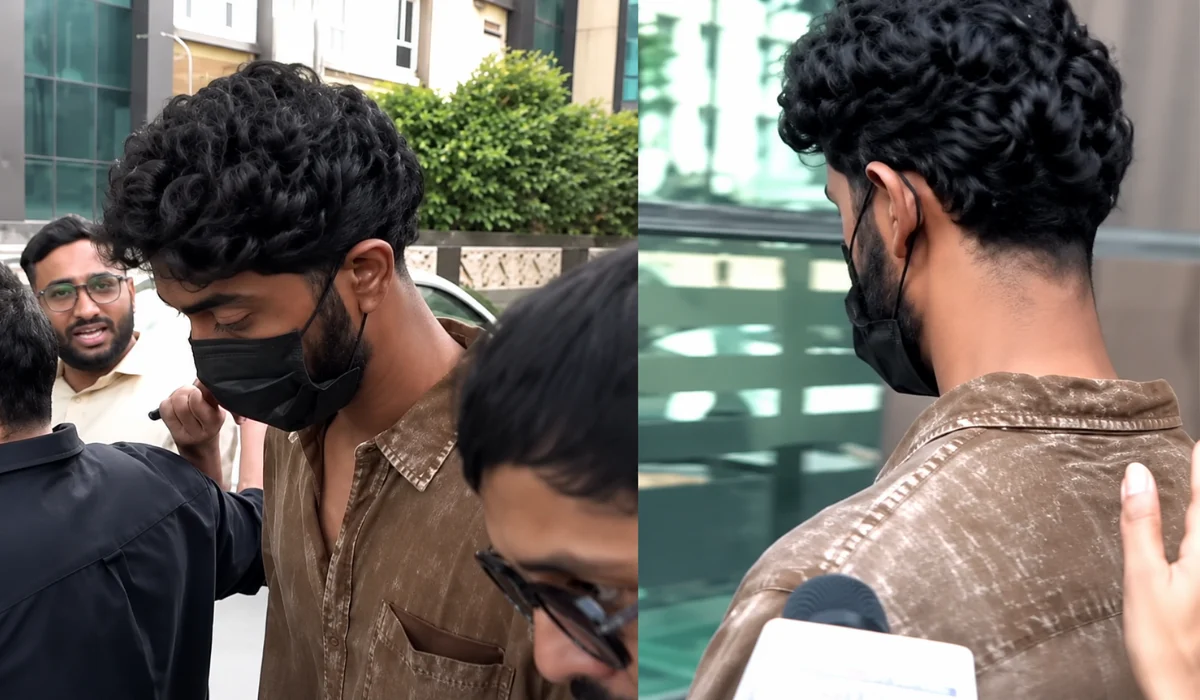
Face masked, head down, zero words to the press. On June 22, comedian Pranit More walked into the National Commission for Women's office in New Delhi and said everything — by saying nothing. Inside, the commission was less accommodating: it rejected his apology, and the ₹370 biryani case grew heavier.
The image that anchored Monday's news cycle was a study in deliberate silence. Pranit More — stand-up comedian, the man whose viral crowdwork clip set off a weeks-long national argument about consent, comedy, and accountability — walked through a press scrum outside the National Commission for Women's New Delhi office without breaking stride or answering a single question. He wore a face mask. He did not stop. He went inside.
The visual landed with the weight of a statement, even as none was made. After days of social media storms, a public apology video, a cancelled Nepal tour date, and an FIR lodged under the Bharatiya Nyaya Sanhita, Pranit More had arrived at his formal reckoning — and chosen to meet it in quiet.
The Clip That Started Everything
To understand why Monday's hearing carried the weight it did, you need to understand what the clip actually showed — and why a significant portion of the internet decided it could not simply scroll past.
At a stand-up show in Gurugram, Pranit More was doing crowdwork — the live comedy format in which a comedian riffs with audience members in real time. Audience member Himanshu Jangra, 22, stepped into the spotlight and narrated an anecdote about a date. According to him, he had spent ₹370 on a chicken biryani for a woman and felt that expense entitled him to something in return from her. The implication was unmistakable. More laughed and kept the segment going.
The clip was later shared — reportedly by More himself — and was widely condemned for trivialising consent and packaging a transactional view of women as comedy. Within days it had drawn reactions from creators including Kusha Kapila and Dolly Singh, prompted NCW Chairperson Vijaya Rahatkar to write to the Director General of Police, Haryana, and sparked FIRs in Gurugram and Maharashtra under provisions of the BNS and the IT Act.
"Freedom of speech does not extend to normalising the violation of women's bodily autonomy or converting heinous crimes such as rape and murder into material for entertainment."
Monday, June 22: What Actually Happened at the Hearing
All three summoned individuals complied with the NCW's direction and presented themselves before the commission. Pranit More and Himanshu Jangra appeared together, while comedian Madhur Virli — facing a separate but related matter involving a resurfaced 2024 clip in which he allegedly made derogatory remarks referencing rape — appeared at the same session.
By all accounts, the proceedings were serious. NCW Chairperson Vijaya Rahatkar did not approach the session as a formality. Sources cited by PTI and other outlets confirmed she expressed "profound anguish" over how content that normalises harm against women gets laundered through comedy — performed in rooms full of people laughing, then amplified for millions more online.
All three men offered apologies. The commission rejected all three.
"All three apologised during the hearing, but the commission did not accept the apology," a source told PTI. The NCW has now set fresh dates for further examination. It has also given Haryana Police additional time to advance its investigation.
|
|
|
|
|
|
|
|
|
|
|
|
|
|
|
|
|
|
|
|
|
|
|
|
The Real-World Consequences That Preceded the Hearing
By the time Monday's hearing was convened, a significant amount had already happened — a reminder that in 2026, digital backlash does not wait for institutional processes to catch up.
Himanshu Jangra lost his job. The Gurugram firm at which he worked let him go amid public outcry. He deactivated his Instagram account, then resurfaced with a statement claiming the remarks had been largely improvised for comic effect. Pranit More similarly deactivated his Instagram account before returning with a second apology video, in which he said he had been "carried away" by crowd laughter and acknowledged he should have challenged Jangra's comments rather than laughing them along. Nepal's organisers cancelled his Kathmandu show — scheduled for June 28 — citing the controversy, and issued full refunds to ticket holders.
FIRs were registered in both Gurugram and Maharashtra against More, Jangra, and the venue owner, under the BNS and the Information Technology Act. The legal proceedings, initiated by police, run parallel to — and independent of — the NCW process.
|
|
|
|
|
|
|
|
|
|
|
|
|
|
|
|
|
|
|
|
|
|
|
|
|
|
|
|
|
|
|
|
The Broader Question the Hearing Refuses to Resolve
If the NCW hearing settled anything, it is that India's principal women's rights commission does not consider this case closed. But the harder question — one the hearing did not and perhaps cannot resolve — is what exactly a live performer owes the room when an audience member says something harmful.
Crowdwork is one of comedy's most genuinely unpredictable forms. The comedian sets up conditions; whatever comes out of the audience is, by definition, not scripted. More's defenders have argued that the responsibility for Jangra's words rests with Jangra. His critics counter that the clip was then promoted online, amplifying its reach far beyond a single evening's audience. Both of those things are true simultaneously.
What the NCW's intervention signals is that the commission views these questions as having at least a provisional answer: public figures have a responsibility not to amplify content that trivialises consent, regardless of its source. The rejection of the apologies suggests that a statement of regret, delivered after the clip has already done its rounds, does not by itself discharge that responsibility.
The case also sits inside a wider pattern. Madhur Virli's inclusion in the hearing — a separate matter, technically — meant the commission was making an implicit argument: this is not an isolated incident but part of a recognisable problem with a subset of stand-up content being produced, performed, and monetised in India's booming comedy circuit.
₹370 Biryani Row: Comedian Pranit More Appears Before NCW, Covers Face With Mask
— JioNews (@JioNews) June 23, 2026
Stand-up comedian Pranit More appeared before the National Commission for Women (NCW) in connection with the ₹370 Biryani controversy, where an audience member allegedly made insensitive remarks… pic.twitter.com/AT91Hj1yIL
What Happens Next
In the immediate term: fresh hearing dates will be issued by the NCW. Haryana Police have been granted additional time to continue investigating and submit an Action Taken Report to the commission. The FIRs in Gurugram and Maharashtra continue through their own legal track.
For Pranit More personally: the professional fallout is already substantial. A tour date in a neighbouring country has been cancelled. His social media presence has been significantly curtailed. Whether the comedy circuit — which has been broadly supportive of free expression — continues to book him at scale will depend in part on how the next hearing unfolds.
The more durable consequence may be a shift in how comedians navigate crowdwork: not just in what they permit an audience to say, but in what they choose to amplify afterward. The clip did not simply happen — it was shared. That decision, More has acknowledged, was his.
Other Articles to Read: