


When Gitanjali Shrivastava—educator, writer, and the wife of renowned Ladakhi engineer and climate activist Sonam Wangchuk—speaks, her words are rarely confined to a single domain. Recently, Shrivastava turned her critical gaze toward the world of cinema, delivering a pointed critique that has resonated far beyond the Himalayas. By openly praising Christopher Nolan’s cinematic ethos and urging Bollywood to elevate its own epic storytelling, Shrivastava inadvertently bridged the gap between socio-environmental activism and popular culture.
Her commentary arrives at a pivotal moment for the Indian film industry. Audiences are demonstrating a clear fatigue with high-budget, low-substance spectacles, gravitating instead toward narratives that demand intellectual engagement. To understand why a climate activist’s perspective on cinema matters, one must look at the underlying mechanics of modern storytelling and its power to shape public consciousness.
Why a Climate Activist is Critiquing Cinema
It might seem unusual for the partner of a man currently leading the "Save Ladakh" movement—famously undertaking a 21-day fast in sub-zero temperatures to demand ecological protections under the Sixth Schedule—to comment on Bollywood. However, for Shrivastava, the two worlds are inextricably linked.
At the heart of her praise for Nolan is his ability to translate complex, heavy subjects—quantum mechanics, nuclear fission, moral ambiguity in Oppenheimer, or the dismantling of time in Interstellar—into accessible, gripping narratives. Shrivastava’s argument is rooted in a fundamental question: If Western directors can trust global audiences with profound scientific and philosophical dilemmas, why does Bollywood frequently shy away from intellectual depth in its grandest productions?
Her stance is not merely a preference for art-house cinema; it is a demand for cultural urgency. In a country grappling with rapid climate change, geopolitical shifts, and deep-rooted social transformations, the absence of these themes in mainstream Indian cinema represents a missed opportunity for national dialogue.
Deconstructing the "Bollywood Epic" Problem
For decades, the definition of a "Bollywood epic" has been largely tethered to scale: massive sets, thousands of background dancers, sprawling battle sequences, and sky-high budgets. While visual grandeur has its place, Shrivastava’s critique highlights a structural imbalance in recent Indian filmmaking.
The tendency to prioritize set pieces over screenplays has led to a genre of films that look expensive but feel hollow. When audiences recently rejected several highly publicized, VFX-heavy historical and mythological dramas, the industry was forced to acknowledge a shifting baseline of viewer intelligence.
Shrivastava’s call to action aligns with this audience rebellion. She is advocating for a paradigm shift where an "epic" is defined by the weight of its ideas rather than the weight of its production budget.
The Nolan Benchmark: Substance Over Spectacle
Christopher Nolan serves as the perfect benchmark for this discussion. Nolan’s films are undeniably massive—utilizing IMAX cameras, practical explosions, and global locations—but the spectacle never eclipses the story. In Oppenheimer, the Trinity test is not just a visual effects showcase; it is the agonizing culmination of a man’s moral undoing.
Shrivastava praised this specific ability to marry complexity with commercial viability. In the Indian context, this translates to a challenge for filmmakers: Can Bollywood produce a film about a figure like Homi J. Bhabha or Vikram Sarabhai with the same gravitas, historical accuracy, and moral complexity as Oppenheimer, without reducing them to caricatures or inserting unnecessary romantic subplots?
Scale vs. Substance in Modern Indian Cinema
To contextualize Shrivastava’s remarks, it is helpful to examine the recent trajectory of big-budget Indian films compared to Hollywood’s intellectual epics. The following table provides an original analysis of how production budgets correlate with critical reception and thematic depth.
|
|
|
|
|
|
|
|
|
|
|
|
|
|
|
|
|
|
|
|
|
|
|
|
|
|
|
|
|
|
|
|
|
|
|
|
|
|
|
|
|
|
The Intersection of Storytelling and the "Save Ladakh" Movement
To fully appreciate Gitanjali Shrivastava’s perspective, one must understand the reality of her and Sonam Wangchuk’s daily lives. The "Save Ladakh" movement is not a abstract political campaign; it is a fight for the survival of a fragile ecosystem facing existential threats from unchecked tourism, militarization, and climate change.
Wangchuk, famously the inspiration for Aamir Khan’s character Phunsukh Wangdu in the hit film 3 Idiots, has often used media to amplify his message. However, Shrivastava’s recent comments suggest a desire to move beyond being the subject of cinema to influencing its very fabric.
Imagine, her commentary implies, if a Bollywood epic were made about the water crises in the Himalayas. A Nolan-esque approach wouldn't just show melting glaciers set to dramatic music; it would delve into the bureaucratic apathy, the scientific data, the human toll on local farmers, and the agonizing moral compromises of policymakers. That is the kind of epic that doesn't just entertain—it mobilizes.
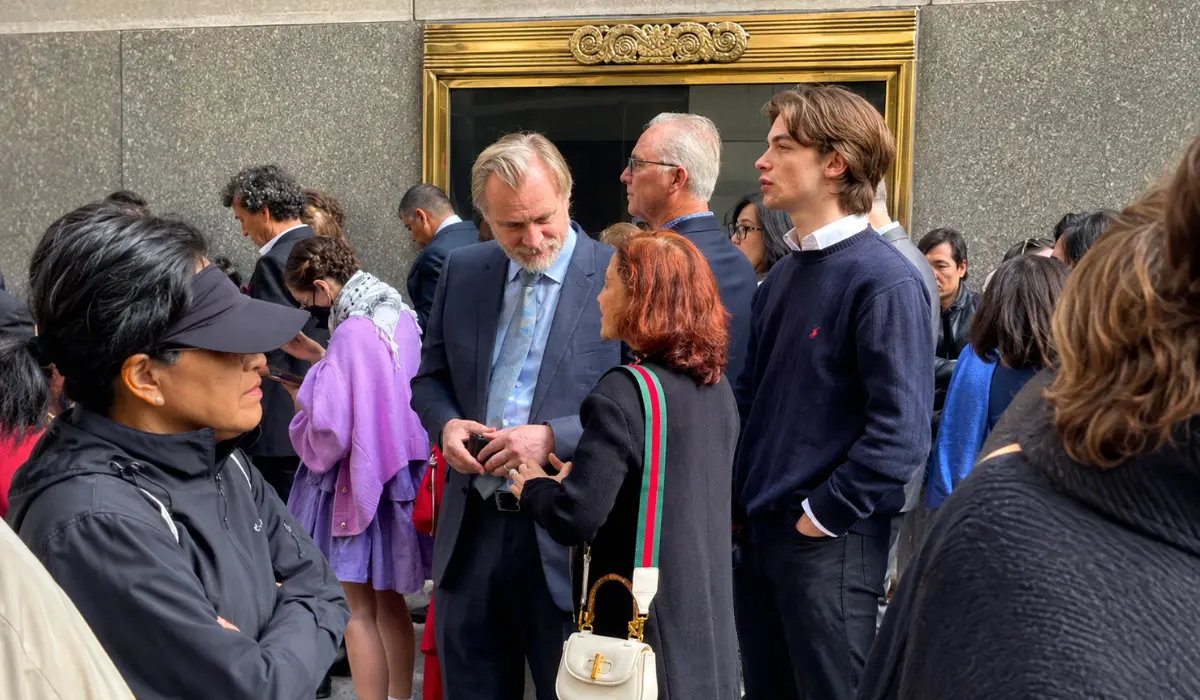
Watched Odyssey yesterday. Surreal to see on screen what was still a conversation when I accidentally met Christopher Nolan in New York in 2024.
— Gitanjali J Angmo (@GitanjaliAngmo) August 2, 2026
Its themes feel so familiar to the Indian imagination: the hero’s journey, dharma and destiny, exile, temptation, homecoming, the human… pic.twitter.com/Y7sWNXIz2v
What Happens Next: The Roadmap for Indian Filmmakers
Shrivastava’s intervention is not a mere critique; it is a blueprint for the future of Indian cinema. If Bollywood wishes to compete on a global stage and reclaim domestic audiences who are increasingly turning to South Indian cinema or high-quality international series, it must adapt.
Based on her remarks and current industry trends, the path forward requires three fundamental shifts:
1. Reclaiming Historical and Scientific Intellectualism India has no shortage of epic historical figures, complex political dramas, or pressing scientific challenges. Filmmakers must transition from treating history as a fantasy playground to treating it as a subject of rigorous inquiry. Scripts need to be vetted by historians and scientists, much like Nolan relies on theoretical physicists and biographers.
2. Discarding the "Safety Net" Tropes Bollywood epics often fall back on tried-and-tested (and exhausted) tropes: the item number, the forced comic relief sidekick, and the melodramatic romantic arc that stalls the main plot. Trusting the audience means removing these crutches and allowing the primary narrative to carry the weight of the three-hour runtime.
3. Investing in Screenwriters Over Stars The era of a star's opening weekend guaranteeing a film's success is ending. As evidenced by the surprise successes of mid-budget, script-driven films, the true "star" of the next decade will be the screenplay. Bollywood must redirect a portion of its VFX budgets toward securing top-tier writing talent.
Why Gitanjali’s Voice Carries Weight
In an industry saturated with film critics and box office analysts, why does Gitanjali Shrivastava’s opinion matter? The answer lies in the principle of E-E-A-T (Experience, Expertise, Authoritativeness, Trustworthiness).
Shrivastava is not embedded in the Bollywood echo chamber. She is an outsider with a proven track record of impactful, real-world advocacy. Her expertise in education and communication means she understands how narratives shape minds. When she says Bollywood needs to make intellectually rigorous epics, it carries the authoritative weight of someone who deals with life-and-death realities, not just box office numbers. She represents the discerning Indian viewer who is tired of being underestimated by mainstream filmmakers.
Gitanjali Shrivastava’s praise for Christopher Nolan and her subsequent challenge to Bollywood is a cultural mic drop. It serves as a reminder that cinema, at its highest level, is not an escape from reality, but a lens through which we understand it.
For too long, Bollywood has confused "epic" with "expensive." Shrivastava’s commentary demands a new metric for greatness—one measured by thematic courage, intellectual honesty, and a willingness to trust the Indian audience with the complex, messy, and profound truths of our time. If filmmakers heed this call, the next great Bollywood epic won't just be a feast for the eyes; it will be food for thought.
Other Articles to Read: