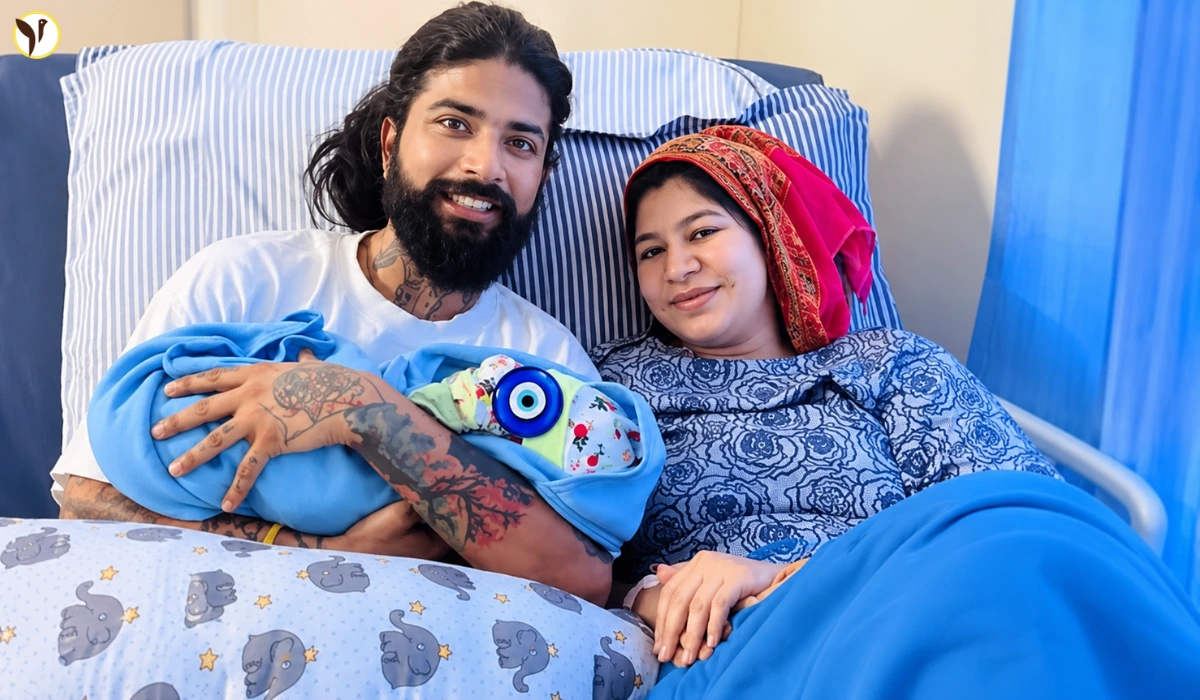


The ongoing personal dispute between popular motovlogger Anurag Dobhal, widely recognized as UK07 Rider, and his estranged partner Ritika has crossed the threshold from private family turmoil into a public legal spectacle. At the center of the latest escalation is a startling financial claim: Dobhal allegedly paid ₹37 lakh specifically to secure a meeting with his own son—a transaction that Dobhal’s camp now claims is part of a broader conspiracy orchestrated by Ritika.
For millions of followers who have followed Dobhal’s journey from the roads of Uttarakhand to the Bigg Boss 17 house, the sudden emergence of a hidden family and a multi-lakh financial dispute is jarring. But beyond the spectacle of influencer drama, this situation highlights a growing, complex intersection of Indian family law, digital PR warfare, and the monetization of personal trauma.
Here is a comprehensive, objective breakdown of what has actually transpired, why the ₹37 lakh figure matters legally, and how this "digital trial" impacts both the parties involved and the broader creator economy.
The Core Dispute: What Actually Happened?
The public fallout between Anurag Dobhal and Ritika began when Ritika came forward with serious allegations, asserting her position as Dobhal’s wife and the mother of his child. Prior to this, Dobhal’s massive online following was largely unaware of his marital status or his son's existence.
The narrative took a sharp turn when financial transactions became the focal point of the argument. According to statements circulated on social media and various YouTube commentary channels, Ritika’s camp asserted that Dobhal had transferred approximately ₹37 lakh to her.
However, the context of this transfer is heavily contested:
- Ritika's Perspective: The amount is framed as part of maintenance, legal reconciliation, or rightful financial support owed to her and the child, highlighting the financial disparity and the responsibilities of a high-earning influencer.
- Anurag Dobhal’s Perspective (The Conspiring Claim): Dobhal and his legal/team representatives have pushed back, framing the ₹37 lakh not as standard maintenance, but as an extortionate amount specifically demanded as a precondition for him to merely meet his son. Furthermore, they allege this is part of a concerted conspiracy by Ritika to extort money and tarnish his public image.
To understand the gravity of these claims, one must look at the timeline of how this dispute escalated from private messages to public courtrooms.
Timeline of the UK07 Rider and Ritika Dispute
|
|
|
|
|
|
|
|
|
|
|
|
|
|
|
|
|
|
|
|
|
|
|
|
|
|
|
|
|
|
Why the ₹37 Lakh Figure is Legally and Publicly Significant
In standard Indian custody and maintenance cases under the Hindu Marriage Act and the Code of Criminal Procedure (CrPC), financial support is calculated based on the earning capacity of the husband, the needs of the child, and the standard of living.
The specific claim that UK07 Rider paid ₹37 lakh to meet son alters the legal framing entirely.
If the assertion by Dobhal’s camp is proven in court—that this money was a quid pro quo specifically to access his child—it moves the case away from standard "cruelty or non-payment of maintenance" (which falls under civil or standard domestic dispute purviews) and edges toward allegations of extortion, criminal intimidation, or even elements of wrongful confinement or alienation.
Legal experts note that in Indian jurisprudence:
- A parent cannot legally bar the other parent from meeting a child without a specific, enforceable court order stating otherwise (which is rare unless there is a proven threat to the child's life).
- Conditioning access to a child on financial payment, if proven through WhatsApp chats, bank transfers with specific remarks, or witness testimonies, can be viewed unfavorably by family courts and could invite criminal investigation.
The decision to make this "conspiracy" claim public is a deliberate strategy. In the court of public opinion—where influencers make their living—framing oneself as a victim of extortion is often more protective to a brand than being labeled a "deadbeat dad" who refused to pay maintenance.
The "Conspiring" Claim: PR Defense or Valid Legal Strategy?
When Ritika is accused of "conspiring," what does that actually mean in this context? It implies a premeditated plan to leverage Dobhal's newly acquired wealth and fame for financial gain.
To validate this claim in a legal setting, Dobhal’s legal team would need to provide irrefutable evidence, such as:
- Digital Trail: Text messages or audio recordings where a specific amount (₹37 lakh) is demanded in exchange for visitation rights.
- Banking Forensics: Proof that the money was transferred under duress, possibly accompanied by a legal threat of going public with scandalous information.
- Timeline Correlation: Evidence showing that the threats of public exposure scaled up exactly as Dobhal's earnings increased post-Bigg Boss.
However, from an objective journalistic standpoint, a "conspiracy" claim is currently an aggressive legal defense. Ritika’s camp maintains that the money was owed to her. Until a family court or criminal court evaluates the forensic evidence, the "conspiring" claim remains an allegation—a shield used to counter the immense reputational damage caused by the initial allegations of abandonment.
The Dark Side of the Creator Economy: Publicizing Private Trauma
While the legal battle wages on, the more pressing cultural phenomenon is how this battle is being fought. The UK07 Rider dispute is a textbook example of a disturbing trend in the creator economy: the weaponization of audience reach in personal disputes.
Trial by Social Media
Instead of relying solely on the gag orders typically issued by family courts, both parties have allowed the narrative to be shaped by third-party YouTube "roast" channels, Instagram influencers, and pop-culture news portals. This creates an echo chamber where facts are diluted, and sensationalism thrives. For the reader, it becomes nearly impossible to separate verified court documents from WhatsApp forwards.
Monetization of Misery
There is an uncomfortable truth in digital media: controversy drives clicks. Every time a new claim—like the ₹37 lakh figure—drops, dozens of channels generate hundreds of thousands of views. The algorithm does not care about the psychological impact on the child involved; it cares about engagement. By keeping the dispute in the headlines, both sides inadvertently (or deliberately) monetize the trauma.
The Asymmetry of Power
Anurag Dobhal has millions of followers who act as a decentralized PR army. Ritika, prior to this dispute, was a private citizen. When a mega-influencer's team releases a statement claiming a "conspiracy," it instantly trends. A private citizen making a counter-claim often struggles to gain the same traction without aligning with other large media channels. This asymmetry makes it incredibly difficult for the public to get a balanced view.
WTF!! UK07 Rider ( Anurag Dobhal) found his wife was cheating on him while she was pregnant.
— Gagan Choudhary (@trigguuuu) July 26, 2026
She used to visit her best friend House
What a pity life this guy is living man first his parents disowned him, his own younger brother conspired against him
And now His wife😭💔 pic.twitter.com/aKPikE8t64
What Happens Next? The Legal Trajectory
Moving forward, the digital noise will eventually have to submit to judicial procedure. Here is what legal analysts anticipate will happen in the coming months:
- Jurisdiction and Custody Petition: The primary focus will shift to a formal custody or visitation petition under the Guardians and Wards Act, 1890. The court will prioritize the "welfare of the minor," which is the supreme consideration in Indian law.
- Forensic Audit of ₹37 Lakh: The family court (or potentially a criminal court if an FIR is filed regarding extortion) will demand the complete bank trail of the ₹37 lakh. The remarks added during the transfer (e.g., "for meeting," "maintenance," "settlement") will be heavily scrutinized.
- Gag Order Enforcement: Judges in high-profile family cases frequently issue strict gag orders, prohibiting both parties from discussing the matter in the media. Violation of this can lead to contempt of court. If the public mudslinging continues, the judiciary may step in to silence the digital narrative.
- Impact on UK07 Rider's Brand: For Anurag Dobhal, the commercial impact is already in motion. Brands are highly risk-averse to family controversies, especially those involving children. His ability to secure mainstream brand deals may be temporarily paralyzed until a legal resolution provides him with a clean chit or a finalized settlement.
Conclusion: Beyond the Headlines
The headline "UK07 Rider Paid ₹37 Lakh to Meet Son" is designed to shock and generate clicks. But beneath the surface, it is a tragic, complex situation involving a child caught between two warring adults, complicated further by the perverse incentives of the digital attention economy.
The claim of a conspiracy by Ritika is a high-stakes legal maneuver that Dobhal's team is using to reclaim the narrative. Whether this claim holds water in a court of law, where evidence trumps Twitter trends, remains to be seen.
For the audience, the most responsible approach is to view these developments with critical distance. In the age of influencer drama, the most helpful thing a reader can do is recognize the difference between a legal fact and a public relations strategy.
Other Articles to Read: