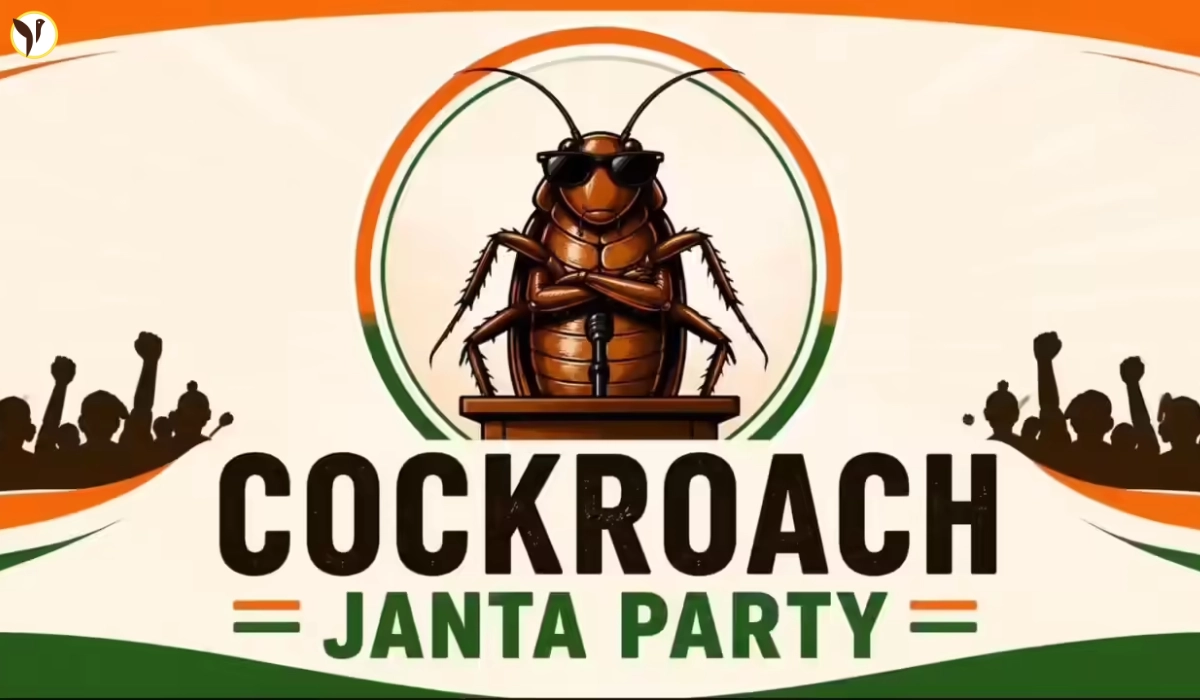


What began as a throwaway remark in the Supreme Court became a one-lakh-strong digital rebellion. The Cockroach Janata Party is not just a meme — it may be India's most honest political mirror in years.
India's internet has seen viral moments before. But few have escalated this fast, this loudly, or with this much dark humour. The Cockroach Janata Party (CJP) — a satirical online political movement launched on May 16, 2026 — crossed over 1 lakh (100,000) member registrations in just three days, with nearly 551,000 followers on Instagram and over 40,000 on X. As of May 20, the trajectory of growth is being widely described as crossing the 3 million reach milestone in terms of combined social impressions.
What started as a lone tweet became a website, a manifesto, a party anthem, a Yamuna river clean-up drive, and a genuine conversation about what India's unemployed and frustrated youth actually want from democracy. So let's break it all down — who started it, why it exploded, what they're demanding, and whether this swarm has staying power.
The Spark: CJI Surya Kant's Courtroom Remark
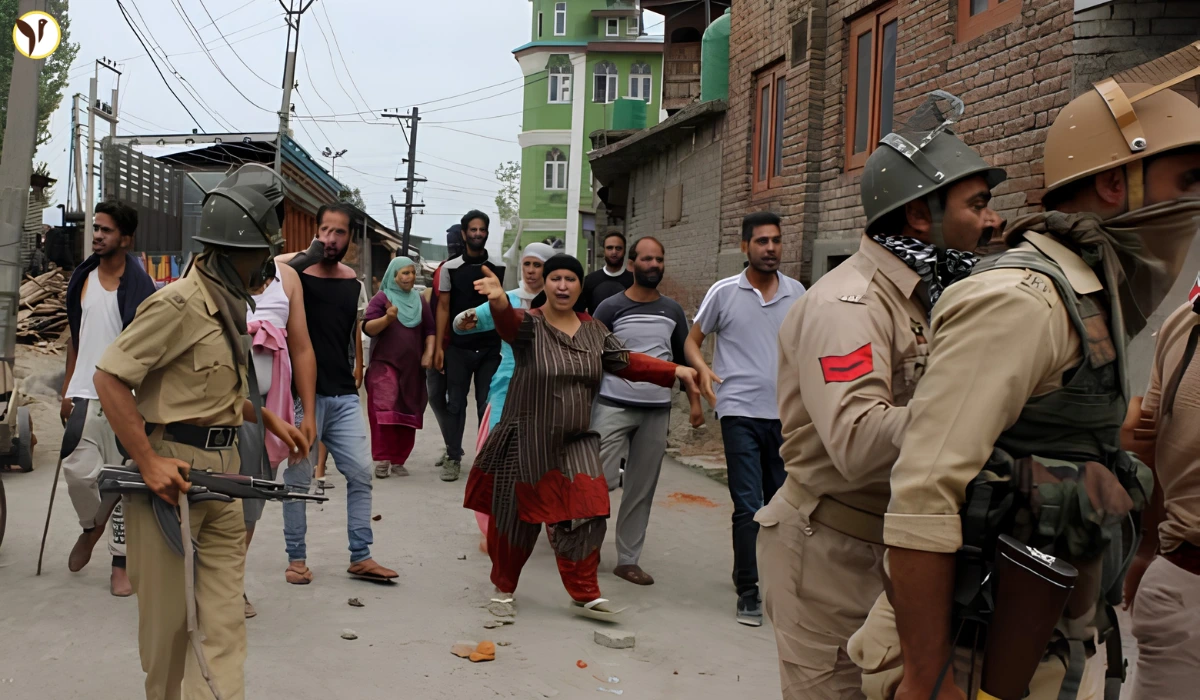
The origin story begins — as many modern Indian controversies do — inside a courtroom. On May 15, 2026, a Supreme Court bench led by Chief Justice Surya Kant was hearing a petition related to students allegedly misled by individuals using fake professional credentials. During proceedings, the Chief Justice used the words "cockroaches" and "parasites" to describe those who fraudulently enter professions.
In a nation where youth unemployment is a deeply sensitive subject, the phrase did not stay in the courtroom. Shared on social media, it was interpreted by thousands of young Indians as a swipe at unemployed degree-holders — not just credential fraudsters. The CJI subsequently issued a clarification, stating he had been misquoted and that his remarks were specifically directed at people using fake degrees, adding that he deeply respects the country's youth.
But the internet had already moved. And Abhijeet Dipke was already typing.
- 1L+ Members in 3 Days
- 3 Million Instagram Followers
- 40K+ Followers on X
- May 16 Founded
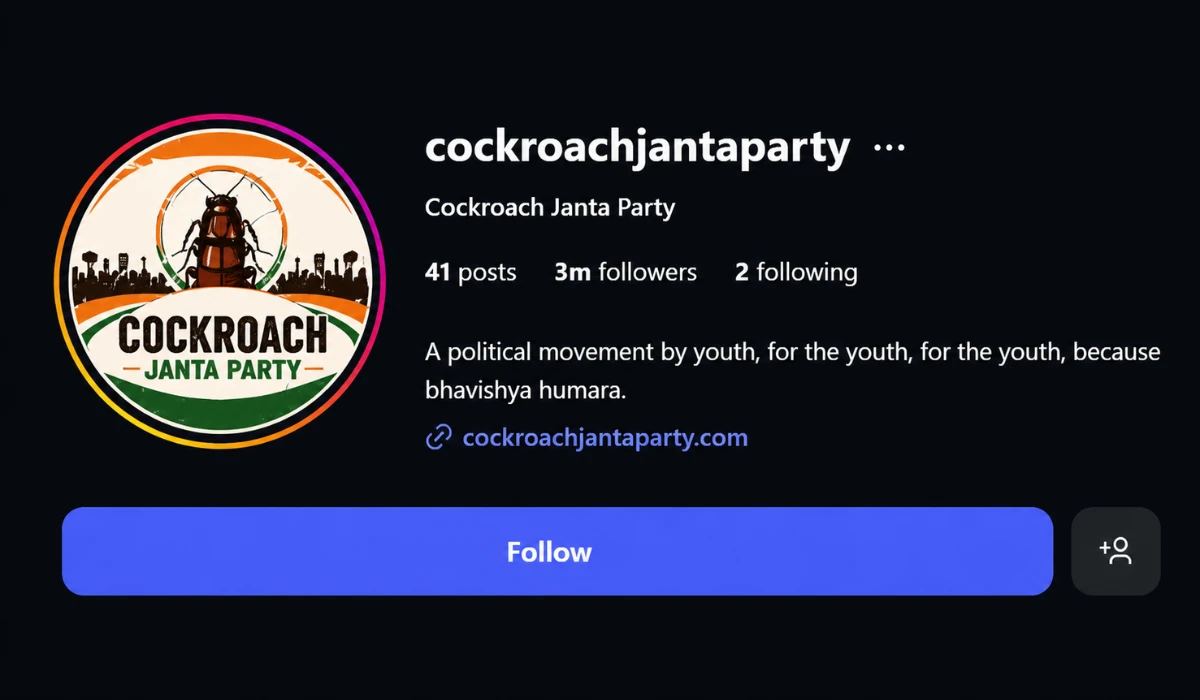
Who Is Abhijeet Dipke? The Man Behind the Swarm
Abhijeet Dipke is a 30-year-old from Maharashtra, currently pursuing a postgraduate degree in public relations at Boston University in the United States. Before that, he worked as a social media volunteer for the Aam Aadmi Party between 2020 and 2022, gaining hands-on experience in digital political communication and meme-driven campaigns.
"I think the biggest takeaway from the response is that young people in India are frustrated since no political party has done anything for them in the last few years. That is precisely why all have signed up as cockroaches."— Abhijeet Dipke, Founder, Cockroach Janata Party
When he learned about the CJI's remarks, Dipke acted on impulse. "There was no planning at all. It was completely impulsive and instinctive," he told The Federal. Within hours of his first satirical tweet, a Google Form for "membership" attracted nearly 15,000 sign-ups. The rest, as they say, cascaded.
How It All Unfolded: A Timeline
- May 15, 2026
CJI Surya Kant uses "cockroaches" and "parasites" during a Supreme Court hearing. The clip spreads on social media and is widely interpreted as an insult toward unemployed youth.
- May 16, 2026
Abhijeet Dipke launches the Cockroach Janata Party on X. A satirical Google Form goes live. Within hours, 15,000 people sign up. The slogan "Main Bhi Cockroach" begins trending nationally.
- May 17, 2026
TMC MPs Mahua Moitra and Kirti Azad publicly express interest in joining. A CJP party anthem and website are launched. Youth volunteers stage a symbolic clean-up drive along the Yamuna river, dressed in cockroach costumes.
- May 18, 2026
CJI issues a clarification. Membership crosses 80,000. X followers surpass 38,000. Instagram following crosses 420,000. Social activist Anjali Bhardwaj and former IAS officer Ashish Joshi engage with CJP posts.
- May 19–20, 2026
Membership crosses 1 lakh. Instagram following reaches 551,000. Business Today, Deccan Herald, Zee News, Outlook India, and dozens of national publications cover the phenomenon. CJP reaches an estimated 3 million+ combined social impressions.
The Manifesto: Darker Than It Looks
For all its meme energy, the CJP manifesto is thoughtful — and that's partly why it's resonating. Dipke and his growing volunteer base have published a five-point agenda under the banner "Five demands. Zero sponsors. One large, stubborn swarm."
CJP's Five-Point Manifesto (CJP 2029 Agenda)
- 50% reservation for women in all government positions and legislative bodies.
- No post-retirement Rajya Sabha seats for Chief Justices — ending the "quid pro quo" perception in the judiciary.
- 20-year ban on political defections — to hold elected representatives accountable to voters, not party bosses.
- Cancellation of broadcasting licenses for media houses owned by large corporate monopolies accused of government partisanship.
- Strict electoral accountability — severe penalties for deleted legitimate votes; transparency in the electoral process.
Literary commentator Meghnad, author of the satirical novel Parliamental, described the manifesto as "a powerful, brilliant piece of digital satire turned into an organic youth movement." He highlighted that the cockroach — a symbol of resilience and survival — makes for an unusually apt mascot for a generation that feels unseen by the political system.
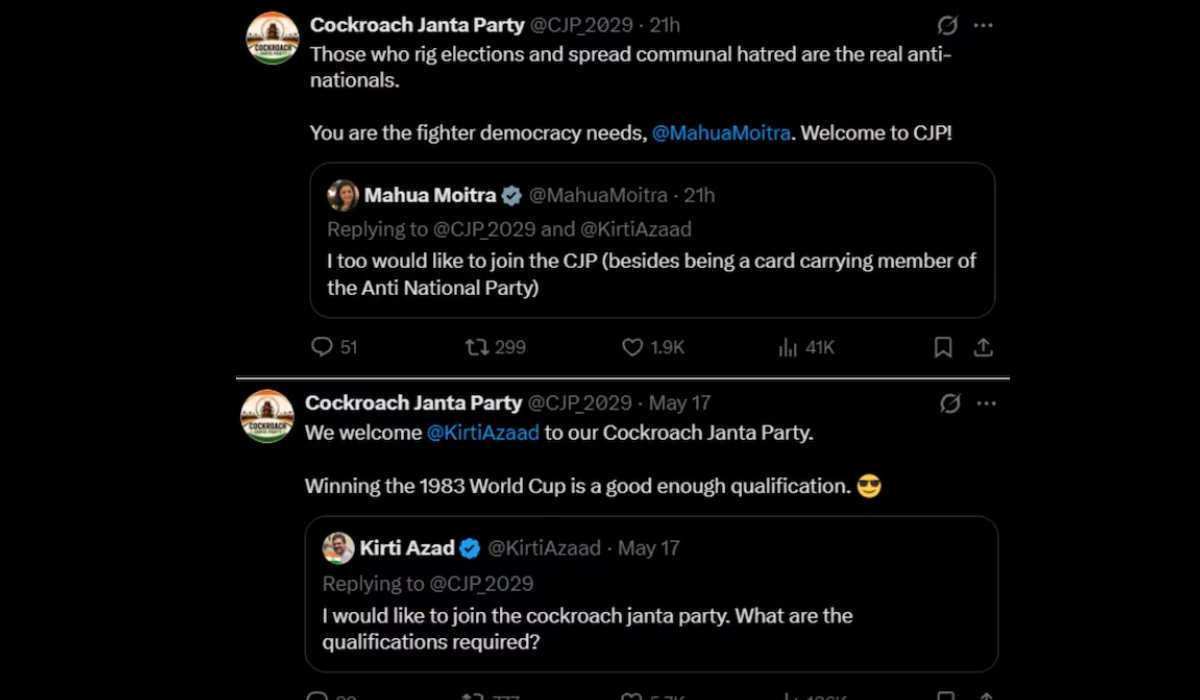
Who's "Joining"? From Meme Supporters to TMC MPs
The CJP's membership criteria are, on paper, satirical — requiring applicants to be "unemployed by force, choice or principle," spend at least 11 hours a day online, and demonstrate the "ability to rant professionally." Yet the range of people who have engaged with the platform tells a different story.
|
|
|
|
|
|
|
|
|
|
|
|
|
|
|
|
|
|
|
|
|
|
|
|
|
|
|
|
|
|
The Yamuna March: When Satire Went Offline
Perhaps the most striking sign that this movement had outgrown the internet came on May 17, when a group of CJP volunteers carried out a cleanliness drive along the Yamuna river, dressed in cockroach costumes and holding placards reading "I Am A Cockroach." The symbolism was unmistakable: owning the insult, then using it to serve the public.
The act was widely shared online and drew praise from commentators who noted it transformed the campaign from pure digital spectacle into a tangible act of civic engagement. For a generation accused of only ranting online, it was a pointed rebuttal.
Growth Compared: CJP vs India's Past Viral Political Moments
|
|
|
|
|
|
|
|
|
|
|
|
|
|
|
|
|
|
|
|
|
|
|
|
Observers have already drawn comparisons with the India Against Corruption movement of 2011 — which similarly began as a spontaneous public outpouring of frustration and eventually gave birth to the Aam Aadmi Party. Whether CJP follows that trajectory or fades as a seasonal internet trend remains to be seen. But the numbers, at this early stage, are not easily dismissed.
A video from New Delhi showing youths dressed as “cockroaches” symbolically cleaning the Yamuna at Kalindi Kunj Ghat has gone viral on social media. The prøtest, linked to the online “Cockroach Janata Party” movement, aimed to highlight unemployment, youth frustration, and river… pic.twitter.com/j5w6c0WHBv
— The Logical Indian (@LogicalIndians) May 20, 2026
What Happens Next?
Abhijeet Dipke has hinted at returning to India to decide the movement's future. "We have 80,000+ sign-ups. It can't be left as such. I may move to Delhi," he said in an interview. The party plans to conduct surveys and member consultations to determine its roadmap. Whether this means contesting elections under the CJP banner remains unclear — Dipke himself says it is "too early" to talk electoral politics.
What is clear is that the movement has no intention of changing its name. "The youth connect with it. The word 'cockroach' symbolises resilience and survival. If that is how the system sees us, then why not own that identity?" Dipke told The Federal. As the party's own website puts it: "Too resilient to die, too unemployed to leave the house."
Why This Matters Beyond the Memes
India's youth unemployment rate remains a structural challenge. According to the Centre for Monitoring Indian Economy (CMIE), youth unemployment has persistently hovered in double digits even as India claims the title of the world's fastest-growing major economy. For millions of degree-holders who feel the economy's gains are not reaching them, the Cockroach Janata Party — however satirical — gave language and community to a frustration that was already there.
The CJP did not create that anger. It simply gave it a name, a manifesto, and — perhaps most importantly — a sense of humour. In a political climate where engagement often means outrage, that combination proved unusually magnetic.
"No, we are not changing the name. The word 'cockroach' symbolises resilience and survival. If that is how the system sees us, then why not own that identity?"— Abhijeet Dipke, in an interview with The Federal
Other Articles to Read: