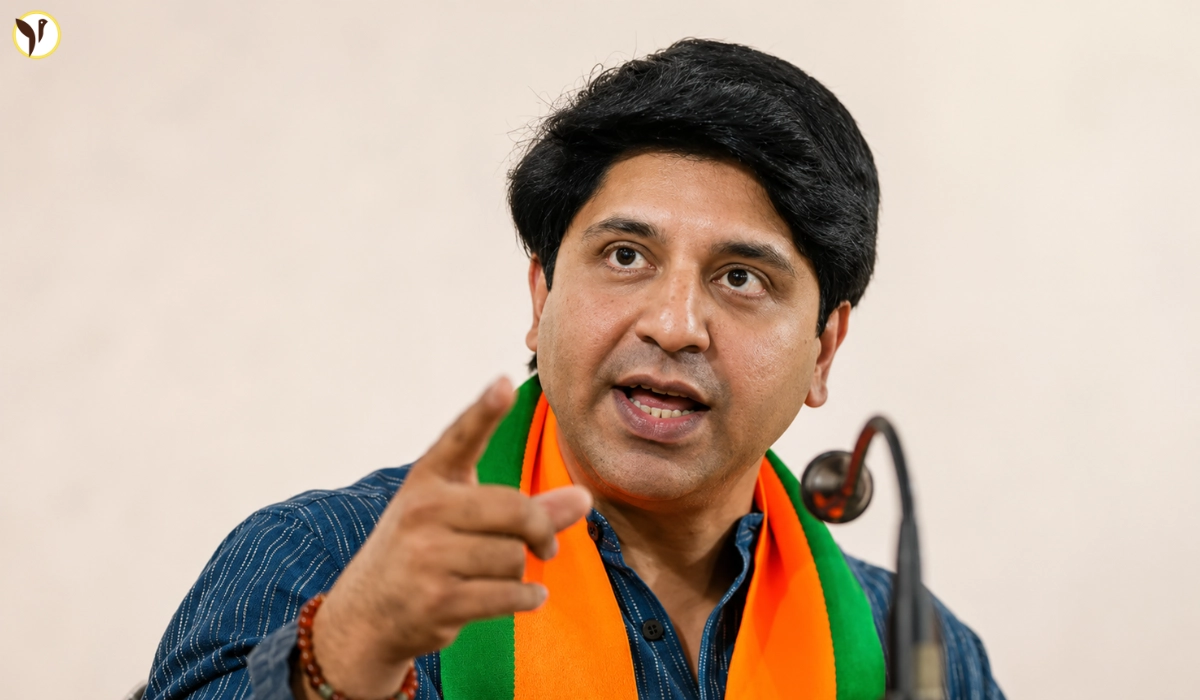



In a country where gold is woven into weddings, faith, and family savings, PM Modi's appeal to "not buy gold for a year" was anything but ordinary. Behind the headline lies a serious economic warning about forex reserves, oil shocks, and a rupee under siege. When Prime Minister Narendra Modi stepped to the podium at a BJP rally in Hyderabad on May 10, 2026, his appeal was deceptively simple: "For a year, be it any function, we shouldn't buy gold jewellery." In the same breath, he also asked Indians to cut fuel use and reduce unnecessary foreign travel.
What Happened: Modi's Appeal in Full
PM Modi made the remarks while addressing concerns about the escalating West Asia conflict and its potential ripple effects on India's economy. He specifically flagged the disruption risk to the Strait of Hormuz — a narrow waterway through which a significant share of the world's oil shipments pass.
"I would appeal to people not to buy gold for weddings for one year."— PM Narendra Modi, BJP Rally, Hyderabad, May 10, 2026
He went further, calling on citizens to reduce petrol and diesel consumption, shift to public transport, revive work-from-home arrangements, and avoid non-essential overseas vacations. The Prime Minister also addressed farmers, encouraging natural farming and solar pumps as a way to reduce fertiliser and diesel dependence.
Crucially, this was an appeal — not a ban. There is no restriction on buying gold in India. Modi stressed that "We have to save foreign exchange by any means," framing individual choices as contributions to national economic resilience.
- $80B+India's estimated annual gold import bill (FY2025-26)
- 85%Of India's gold requirement sourced through imports
- 94.9USD/INR exchange rate — near record low (May 2026)
- $691BIndia's forex reserves as of end-March 2026

Why It Matters: The Gold-Oil-Rupee Squeeze
To understand why PM Modi singled out gold, you have to understand how India earns and spends its foreign exchange reserves — the pool of dollars, euros, and other currencies held by the Reserve Bank of India (RBI) to support trade and protect the rupee.
India is a massive net importer of two commodities above all others: crude oil and gold. Together, they account for a disproportionate share of the country's total import bill — and both are paid for in dollars.
India spent approximately ₹16.44 lakh crore (US$174.9 billion) on crude and petroleum products in FY2025-26 — roughly 22% of its total imports. The West Asia conflict has already pushed crude prices sharply higher. Three state-run fuel retailers — Indian Oil, BPCL, and HPCL — are currently absorbing losses estimated at ₹1,600–1,700 crore per day by not passing fuel price increases to consumers.
Gold compounds this pressure. India imports nearly 85% of its gold requirement, and in FY2025-26, the gold import bill was estimated at over ₹6.77 lakh crore — even as the quantity of gold imported actually fell by around 4.76% (to 721 tonnes from 757 tonnes the previous year), a direct consequence of soaring international prices.
When Indians buy more gold during a global crisis — which paradoxically is exactly when demand tends to rise since gold is seen as a "safe haven" — more dollars leave the country, putting additional pressure on the rupee. The rupee was trading around 94.9 to the US dollar as of May 11, close to record lows.
|
|
|
|
|
|
|
|
|
|
|
|
|
|
|
|
|
|
|
|
India's Forex Reserves: Bigger Buffer Than It Seems — But Not Invincible
India's foreign exchange reserves stood at $691.11 billion at end-March 2026 — enough to cover approximately 11 months of imports, according to the RBI's latest half-yearly reserves management report. On paper, that looks reassuring. So why is Modi sounding the alarm?
Context matters. Reserves had hit an all-time high of $728.49 billion in late February 2026 — before the West Asia war escalated. Since then, the RBI has had to intervene repeatedly in the foreign exchange market, selling dollars to defend the rupee, which has drawn down the reserves buffer considerably.
|
|
|
|
|
|
|
|
|
|
|
|
|
|
|
|
|
|
|
|
|
|
|
|
|
|
|
|
This Isn't the First Time India Has Worried About Gold
PM Modi's appeal carries echoes of past crises where gold imports pushed India's current account deficit — the gap between what it earns and what it spends in foreign currency — to dangerous levels.
- 2013
India faced a severe rupee crisis partly caused by soaring gold and oil imports. The government sharply raised gold import duties (to 10%) and introduced restrictions on gold-backed loans to curb demand. The rupee fell to a then-record low of ₹68/USD.
- 2015–2016
The Gold Monetisation Scheme was launched to mobilise idle household gold (estimated at 25,000–35,000 tonnes) into the formal economy — reducing import pressure by recycling domestic holdings.
- 2024
India Bullion and Jewellers Association (IBJA) warned in a BDO India report that rising gold imports could worsen current account pressure and create financial vulnerability. It estimated that recycling 1 tonne of domestic gold could save approximately $95 million in imports.
- May 2026
PM Modi makes an unprecedented public appeal asking Indians to voluntarily pause gold purchases for one year amid the West Asia crisis-induced oil price surge and rupee depreciation pressure.
Gold Rate After PM Modi Appeal: प्रधानमंत्री नरेंद्र मोदी ने देश के लोगों से एक साल तक सोना न खरीदने की अपील की है, तो इसके बाद सोने-चांदी की कीमतों में बदलाव पर निवेशकों और खरीदारों की नजर टिक गई है.
— AajTak (@aajtak) May 11, 2026
पूरी खबर: https://t.co/0Bnxo2Rb7X#GoldImport #PMModi #IndianEconomy… pic.twitter.com/Bd9AWxBYfp
The Gold Paradox: Why "Safe Haven" Demand Makes the Problem Worse
Here lies a sharp economic irony at the heart of this issue. When global uncertainty rises — wars, oil shocks, financial instability — Indian households instinctively buy more gold, not less. It is their traditional hedge against uncertainty.
But from a national macroeconomic standpoint, this makes India's external position worse. Every additional tonne of gold imported means more dollars leaving the country, greater pressure on the rupee, and a widening trade deficit — exactly at the moment when the economy is already stretched by expensive oil imports.
As Business Standard noted in its analysis, gold doesn't directly power transport, factories, or electricity — it largely sits in lockers, homes, and jewellery boxes. In contrast, oil, expensive as it is, is an economic necessity. This asymmetry is why PM Modi specifically called out gold as a discretionary import that can be delayed.
What Happens Next: Will Indians Listen?
That is the central question — and the honest answer is: probably not entirely, but partially. India's gold demand has deep cultural roots. Weddings, Akshaya Tritiya, Dhanteras, and Puja seasons drive cyclical demand spikes that cannot be wished away with a political appeal.
What Modi's statement does accomplish is multiple things simultaneously: it signals to financial markets that the government is taking forex management seriously; it creates political cover for potential future policy action (such as import duty hikes); and it may nudge at least some urban, middle-class buyers — particularly those buying gold as a financial investment rather than for cultural reasons — to pause and reconsider.
Jewellery stocks reacted immediately, with companies like Titan and PC Jeweller falling sharply on Monday after Modi's remarks were reported, reflecting market anxiety about potential demand suppression or future regulatory action.
Other Articles to Read:
- Chand Mera Dil Trailer Reveals The One Unforgivable Mistake That Destroys Everything
- Maa Hai Na: Shilpa Shetty’s New Show Brings Tanya Mittal On Board
- Dua Lipa Wants $15 Million From Samsung: What Is the Full Story?
- ChatGPT Would Be Charged With Murder: OpenAI Sued Over FSU Shooting
- Nick Jonas Calls Priyanka Chopra His ‘Jaan’ In Sweet Mother’s Day Post With Malti
- VIP Mansion 2026: Shocking Winner Announced in Grand Finale!
- Kiara Advani Reveals How Sidharth Malhotra Made Her First Mother’s Day Extra Special