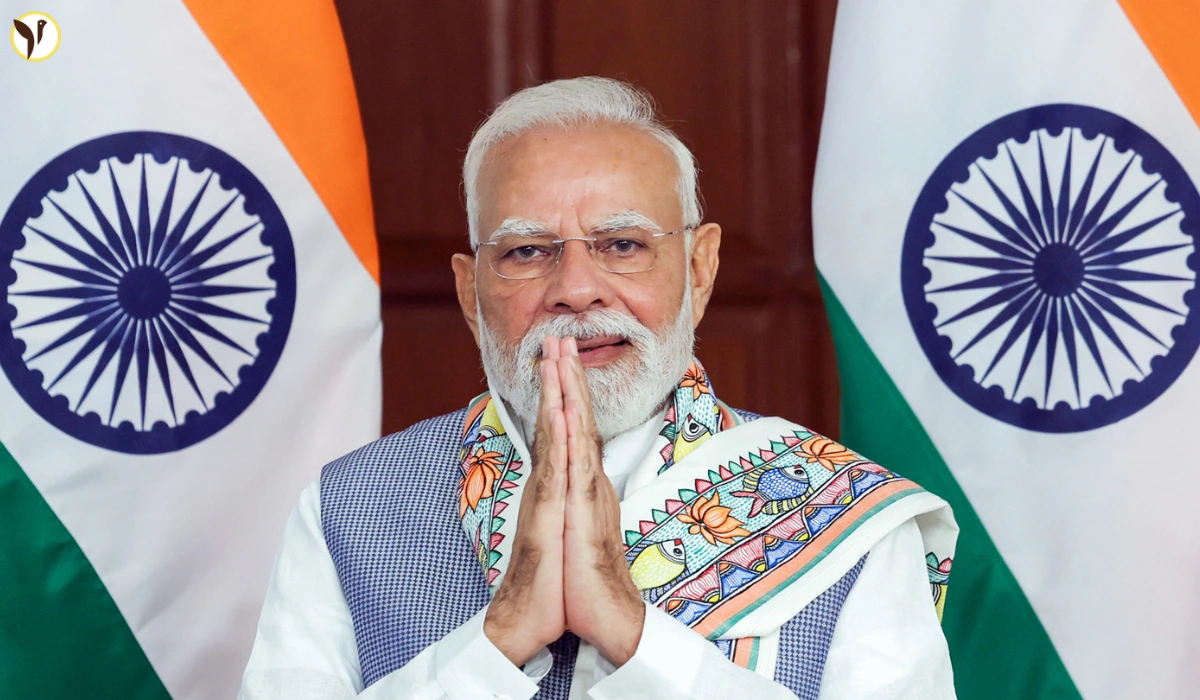


A year after India rewrote its counter-terrorism playbook with precision strikes deep inside Pakistan, the Prime Minister's tribute was more than symbolism — it was a quiet signal that the doctrine holds.On the morning of May 7, 2026 — exactly one year since Indian armed forces launched one of the most consequential military operations in the subcontinent's recent history — Prime Minister Narendra Modi did something characteristically deliberate: he changed his display picture across every social media platform he holds.
The Tribute: What PM Modi Said — and What It Meant
In a post on X, Prime Minister Modi wrote that a year ago, India's armed forces displayed courage, precision and resolve during Operation Sindoor and gave a fitting response to those who dared to attack innocent civilians at Pahalgam. He added that the entire nation salutes the forces for their valour and reaffirmed that India remains as steadfast as ever in its resolve to defeat terrorism and destroy its enabling ecosystem.
"Operation Sindoor reflected India's firm response against terrorism and an unwavering commitment to protecting national security. Today, a year later, we remain as steadfast as ever in our resolve to defeat terrorism and destroy its enabling ecosystem."— Prime Minister Narendra Modi, May 7, 2026 (via ANI)
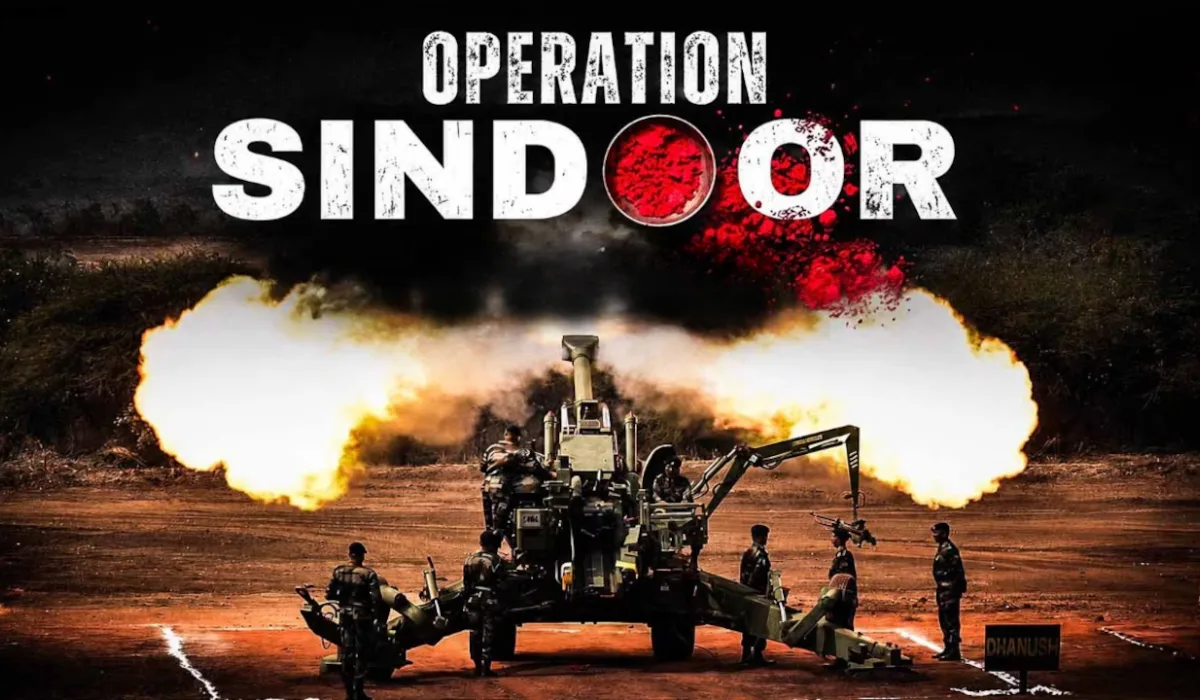
The Prime Minister also called on citizens to change their own display pictures to the Operation Sindoor image — a crowd-sourced act of solidarity that transformed the anniversary into a nationwide moment of remembrance. It is a rare move: the last time Modi had changed his X display picture before this was to the Tricolour ahead of Independence Day in August 2024.
Within hours, the gesture cascaded across the government. Defence Minister Rajnath Singh, External Affairs Minister S. Jaishankar, MEA spokesperson Randhir Jaiswal, Foreign Secretary Vikram Misri, and BJP IT Cell chief Amit Malviya all updated their profile pictures. Singh described the operation as a "powerful symbol of national resolve and preparedness," noting that it reflected the armed forces' unmatched precision and seamless jointness.
One Year On: What Operation Sindoor Actually Changed
The first anniversary of Operation Sindoor isn't just a commemorative date — it's a checkpoint to honestly assess how India's security landscape has shifted. The verdict from defence experts, retired military officers, and strategic analysts is unambiguous: the operation was a watershed, not just a moment.
Maj. Gen. Dhruv C. Katoch (Retd.) put it bluntly: India successfully struck major terror camps inside Pakistan that were previously considered outside India's operational reach, blocked Pakistan's retaliatory efforts, and destroyed Pakistani air defences and airbases with precision. The message sent to Islamabad, according to him, was that India can hit whatever it wants inside Pakistan — and Pakistan cannot stop it.
Air Marshal Sujeet Pushpakar Dharkar, former Vice Chief of the Air Staff, called Operation Sindoor a major technological milestone — likely the first time in the region that long-range surface-to-air weapon systems had been employed at such range and scale, and among the first instances globally where loitering munitions were deployed in such volume in a live conflict.
|
|
|
|
|
|
|
|
|
|
|
|
|
|
|
|
|
|
|
|
|
|
|
|
|
|
|
|
The Doctrine Shift: From Strategic Restraint to Strategic Proactiveness
Perhaps the most lasting legacy of Operation Sindoor isn't the tactical outcome — it's the conceptual shift it encoded into India's national security DNA. Lt. Gen. Dushyant Singh (Retd.) articulated it with precision: India moved from strategic restraint to strategic proactiveness, and demonstrated a willingness to call the nuclear bluff of an adversary. Red lines, he noted, have been pushed further.
This "Cold Strike" approach — as defence analysts are beginning to call it — rests on calibrated, high-speed conventional action delivered with precision and control. It depends on pre-authorised decision chains, integrated intelligence, and coordinated strike capabilities across all three services. The aim is to impose costs quickly without triggering uncontrolled escalation.
|
|
|
|
|
|
|
|
|
|
|
|
|
|
|
|
|
|
|
|
|
Who Was Eliminated: The Blow to Jaish-e-Mohammed's Leadership
One year on, the full picture of Operation Sindoor's human toll on terrorist networks is clearer than ever. The strikes dealt a devastating blow to Jaish-e-Mohammed, dismantling much of the inner circle of its chief, Masood Azhar. Among the eliminated: Yusuf Azhar — the IC-814 hijacker and chief of the Balakot Jaish camp — killed in Bahawalpur. Hafiz Muhammad Jameel, Azhar's eldest brother-in-law and overseer of JeM's 18-acre Markaz Subhan Allah headquarters, was also killed alongside his son Hamza Jameel. Huzaifa Asghar Alvi and Muhammad Abdul Aziz, both senior JeM commanders, were eliminated in the same strikes.
These weren't foot soldiers. They were architects of terror — people involved in the Uri, Pulwama, and Pathankot attacks. Their elimination has structurally degraded JeM's operational capacity in a way that years of diplomatic pressure could not.
The Broader Fallout: Pakistan, China, and the Regional Calculus
Operation Sindoor didn't just change India — it forced Pakistan to reassess. Within months of the operation, Pakistan passed a constitutional amendment creating the post of Chief of Defence Forces and established an Army Rocket Force Command, modelled on China's PLA Rocket Force, reflecting doctrinal changes directly learned from the conflict. Dinakar Peri of Carnegie India observed that the operation established a new military threshold and asymmetry between India and Pakistan — and that any future conflict will not look like Sindoor did.
For the wider world, the 88-hour confrontation — which saw the first-ever use of cruise and long-range missiles between the two nuclear-armed neighbours alongside a full-scale drone war — served as a stark reminder that South Asia remains a nuclear flashpoint. India's Rafale jets with SCALP missiles, HAMMER bombs, and electronic warfare systems that jammed Pakistan's Chinese-supplied air defences marked a new chapter in the region's military competition.
What Comes Next: India's Resolve, One Year Later
Defence Minister Rajnath Singh had stated in Parliament that Operation Sindoor was "halted, not ended" — a deliberate choice of words that has become a governing principle. The Indian Army and Air Force marked the anniversary by releasing fresh videos declaring that India "will track, identify and punish every terrorist and their backers," and that "India forgives nothing."
Lt. Gen. AB Shivane (Retd.), writing on the anniversary, captured the moment with clarity: the Indian Army is becoming faster in response, tighter in integration, and more deliberate in execution. The direction, he argued, is unmistakable — though sustaining it will depend on scaling domestic defence production to match the doctrine. Drones, loitering munitions, sensors, and precision components must be produced in volume with secure domestic supply chains. Without manufacturing depth, even the most refined doctrine risks remaining aspirational.
Meanwhile, on the diplomatic front, India placed the Indus Waters Treaty in abeyance, suspended visa services for Pakistani nationals, and signalled a harder line on cross-border terrorism. These measures remain in place, adding teeth to what is now a multi-domain pressure strategy — not merely a military one.
"Op Sindoor was a watershed moment for India and the subcontinent in the way it established a military threshold and asymmetry between India and Pakistan. The next conflict, or Op Sindoor 2.0, will not be like the last one."— Dinakar Peri, Fellow, Security Studies, Carnegie India (via The Week, May 2026)
Why This Anniversary Matters Beyond the Military
Prime Minister Modi's decision to change his Instagram, X, Facebook, and WhatsApp display pictures simultaneously — and invite a billion-plus citizens to do the same — is not a trivial act of social media engagement. It is a political and emotional statement: that the state remembers, that the armed forces are seen, and that the sacrifice of the 26 Pahalgam victims will not be quietly absorbed into the statistics of history.
Operation Sindoor was named, by Modi's own words, for the sindoor that was wiped from the foreheads of Indian women when their husbands were gunned down in the Baisaran Valley that April afternoon in 2025. The name carries grief and resolve in equal measure. A year on, that duality defines how India holds this moment — not triumphalism, but steadiness.
Other Articles to Read:
- Nora Fatehi Submits A Written Apology To End The Sarke Chunar Controversy For Good
- The Silent Saviour Governor Teaser Out: Manoj Bajpayee Leads a Story of Sacrifice
- Urvashi Rautela Finally Shuts Down Trolls Over Her Dabidi Dibidi Song With Balakrishna
- Rajeev Khandelwal Still Feels Guilty For Mother’s Cancer Death
- Citadel 2 Review: Is Priyanka Chopra & Richard Madden’s Series Worth the Hype?
- Ted Turner Dies At 87 Years After Creating The World’s First 24 Hour News Network
- Amanpreet Singh Passes Away at 36, Yuvraj Singh Devastated
- James Cameron & Disney Sued Over Avatar Character: What Started the Legal Battle?