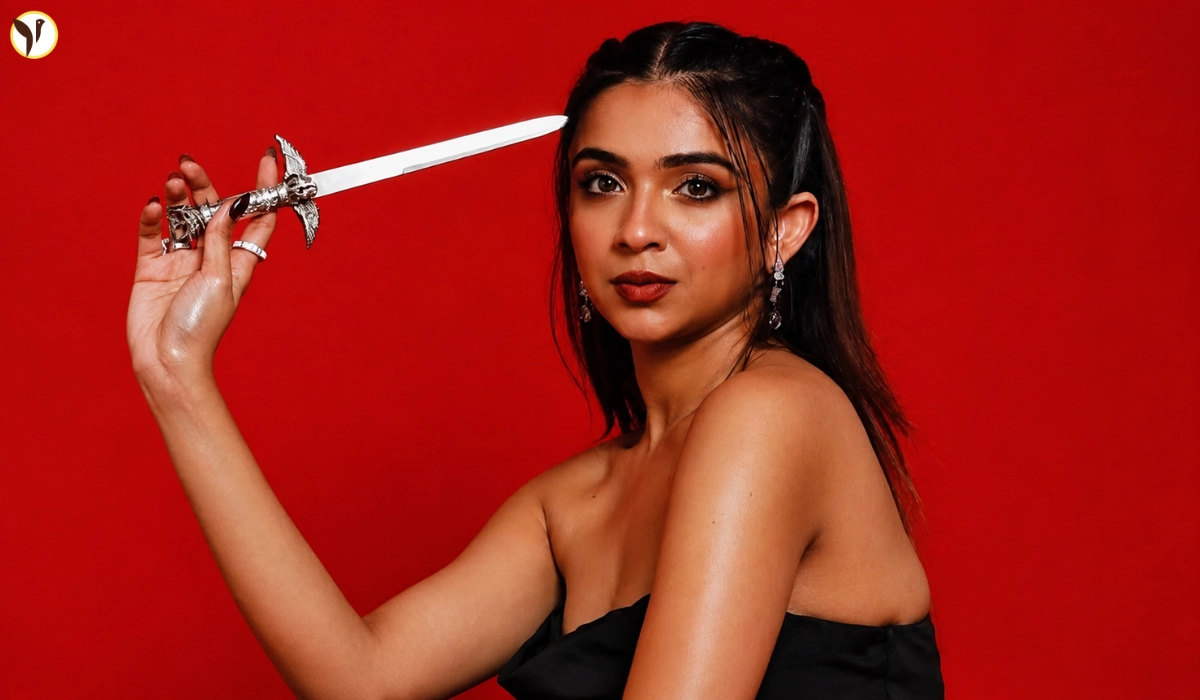


For weeks after the India's Got Latent controversy, Apoorva Mukhija went dark. No posts. No statements. No explanation. When she came back, she didn't come back quietly. She came back with receipts.
The Rebel Kid breaks her two-month silence by exposing the horrifying rape, acid attack, and death threats she received after the India's Got Latent controversy — revealing the shared screenshots represent less than 1% of what she endured.
The Silence Before the Storm
On a February evening in 2025, a clip from comedian Samay Raina's YouTube roast format India's Got Latent tore across Indian social media. The segment — anchored by an explicit remark from podcaster Ranveer Allahbadia, with Apoorva Mukhija among the panellists — triggered instant, volcanic outrage. Multiple FIRs were filed. The show was taken down. The NCW issued summons. And Apoorva Mukhija, known to her 3 million Instagram followers as The Rebel Kid, disappeared.
She unfollowed everyone. She archived every post she had ever made. For roughly six weeks, one of India's most followed digital creators vanished from the internet she had built her life on.
Most public figures, when they eventually break cover after controversy, do so with carefully drafted apology statements, media-trained language, and a publicist's fingerprints all over the output. Mukhija did none of that. What she did instead was arguably far more confrontational: she put the abuse on display and made the internet look at it.
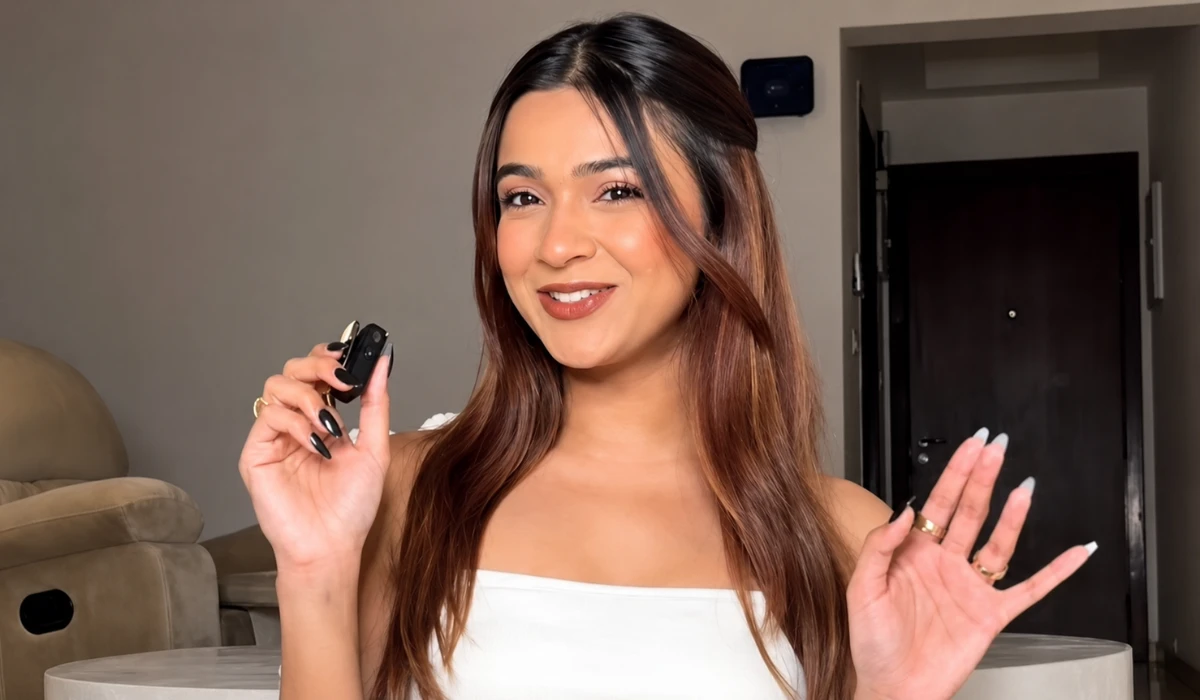
19 Screenshots. "Not Even 1%."
On April 8, 2025, Mukhija broke her Instagram silence — not with an apology, not with a statement, but with a carousel of nineteen screenshots. Inside them: threats to rape her. Threats to throw acid on her. Messages threatening to find her home address and wait for her outside. Her caption read four words: "That's not even 1%."
The implication was the point. Those nineteen screenshots, hundreds of explicit and violent messages between them, were a sample. A curated fragment from an inbox that had, for weeks, been overflowing with gendered violence.
What Apoorva Mukhija's Disclosed Abuse Looked Like: At a Glance
|
|
|
|
|
|
|
|
|
|
|
|
|
|
|
|
|
|
|
|
|
|
|
|
|
|
|
|
|
|
The Video India Didn't Expect
A day after the Instagram carousel, Mukhija uploaded a YouTube video titled Till I Say It Is. Within 24 hours, it had crossed four million views. It was not the video most people anticipated.
She opened with the IGL controversy directly, clarifying on the record that her reaction to a male contestant's demeaning comment about her body was not a calculated comedic moment. It was anger, in real time, in front of a live audience. She said she never intended to hurt anyone — "except perhaps that man's ego." She acknowledged that intent does not erase impact, offered a genuine apology to those she had hurt, and moved on.
Then she kept going. And the video changed register entirely.
Mukhija disclosed an abusive past relationship. She talked about being slut-shamed by her own relatives. She described struggling with self-harm as a teenager, growing up in a home that never felt safe. She spoke about how the trolls found her mother's Instagram account and left rape threats in the comment section — and how, bracing for her father's disappointment when he called, she heard him say instead: "Don't worry. I am on your side."
She described herself as "the laughing stock, the punching bag, and the girl they would rape, kill, and throw acid on if they saw her alive." Then, in the line the internet has since repeated back to her: "I really thought that it was over. But it's not over — till I say it is."
The NCW Steps In — and the Double Standard It Exposed
On April 10, 2025, the National Commission for Women acted. It took suo motu cognisance of the threats, described the online abuse as "despicable," wrote formally to Maharashtra Director General of Police Sanjay Kumar Verma demanding immediate investigation, and directed that police protection be extended to Mukhija.
The NCW was careful to draw a distinction: it reaffirmed its earlier stance against vulgar content on platforms like IGL, while simultaneously stating that such content could never justify threats of sexual violence. "Issuing threats of sexual violence or death sets a dangerous precedent and must be dealt with sternly," the Commission stated publicly.
The optics, however, were uncomfortable for the institution. Several commentators and observers noted that the same NCW that had moved with urgency to summon the IGL panellists for obscene jokes had taken no independent action on the wave of online threats against Mukhija until she made her abuse visible herself. The intervention came after she published the screenshots — not before.
Timeline: From India's Got Latent to Mukhija's Public Disclosure
|
|
|
|
|
|
|
|
|
|
|
|
|
|
|
|
|
|
|
|
|
|
|
|
What She Actually Said — and What It Cost Her
The practical consequences of the controversy were not abstract. Mukhija lost brand partnerships. She had to vacate her Mumbai apartment because police visits to the address, linked to the ongoing FIR proceedings, had made living there untenable. She watched online trolls locate and target her mother's social media profile.
She admitted in the video that her worst professional fear had always been irrelevance. In a single month, she had experienced something far more visceral — the sense that the internet's verdict on her had already been written, and it was violent.
The video's emotional architecture was deliberate. She did not just apologise. She contextualised — placing her reaction on the IGL panel inside a longer personal history of learning to defend herself in spaces that had not been safe. She disclosed not to court sympathy but to establish a record: this is what happened, in my words, on my terms. The title was the thesis. It ends when she says it does.
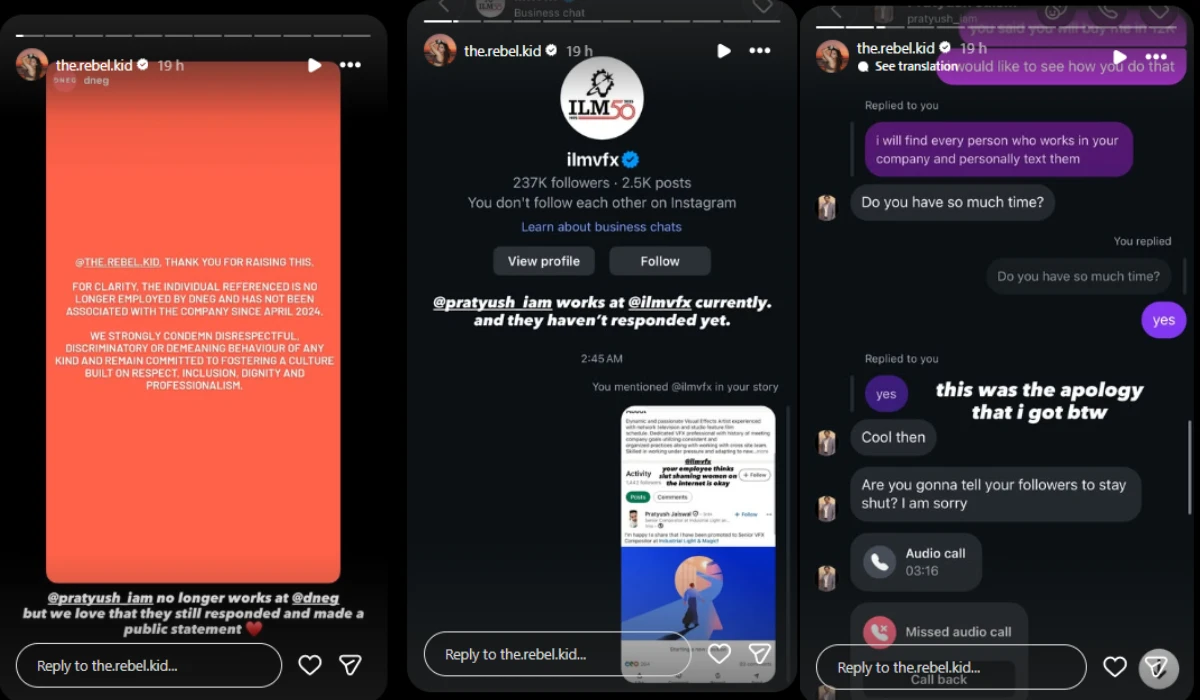
Insta Story of Apoorva Mukhija aka Rebel kid.
— sakht launda (@sakhtlaunda_AF) June 18, 2026
last reply from the other guy is savage bro!! pic.twitter.com/2RuUhAsjpQ
The Larger Question the Internet Keeps Avoiding
What the Mukhija case threw into relief — with unusual clarity, precisely because the chronology was so public — was the asymmetry in how the same controversy was experienced by its participants.
Ranveer Allahbadia, whose remark was at the centre of the IGL firestorm, resumed podcasting within weeks and publicly framed his recovery through a conversation about Buddhist philosophy and "transcendence." Samay Raina performed a sold-out show for 70,000 people at Delhi's Indira Gandhi Indoor Stadium by the end of 2025. Both continued to face criticism, but neither received rape threats. Neither disclosed being forced out of their home.
Mukhija, whose contribution to the controversial episode was secondary, absorbed a disproportionate share of sexualised violence. The pattern — where female creators face gendered escalation while male counterparts face conventional backlash — is documented, recurring, and almost entirely unaddressed by the platforms on which it plays out.
By making the abuse visible instead of private, Mukhija did something that required a specific kind of courage: she refused to let the cruelty stay quietly in her inbox. She made it a matter of public record.
What Comes Next
As of late 2025, Mukhija had moved past the controversy in professional terms — appearing in The Traitors India and making her feature film debut in Nadaaniyan. Her Instagram following and engagement recovered. The NCW investigation, while formally initiated, has not resulted in publicly announced prosecutions of those who sent the threats.
The Laxmi Foundation, to which she donated the video's AdSense revenue, works with survivors of acid violence and domestic abuse — the same categories of harm that had been threatened against her. The donation was not incidental. It was a pointed, deliberate use of the very attention the abuse generated.
In a media environment where the fastest path to rehabilitation is often silence followed by a sponsored post, the fact that Mukhija chose documentation, disclosure, and institutional escalation before resuming her career is worth noting. She didn't perform recovery. She built a record first.
Other Articles to Read: