


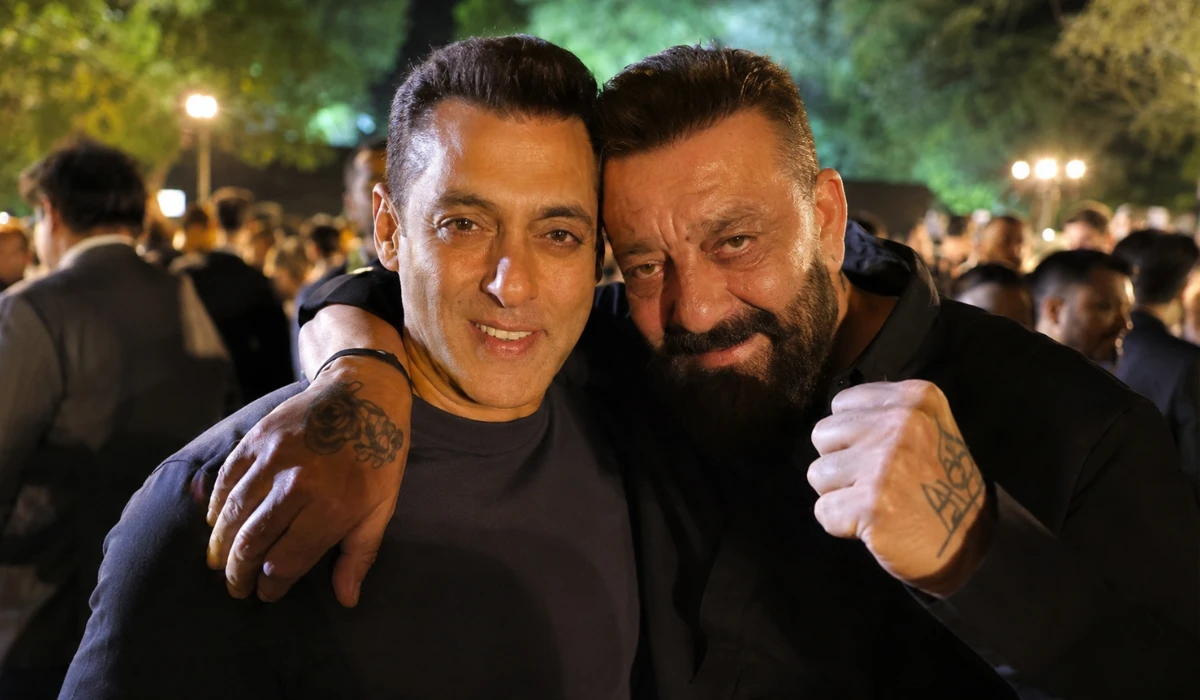
In an industry where professional alliances are often as fleeting as Friday box office numbers, a single social media post can cut through the noise to reveal something substantive. Recently, Salman Khan took to social media to address Sanjay Dutt with a phrase that immediately caught the attention of fans and industry watchers alike: "I love you Baba," followed by the respectful designation of "Bada Bhai" (elder brother).
While a casual scroll might dismiss this as another routine celebrity interaction, doing so misses the layered history these two figures share. To understand the weight of Salman Khan’s public declaration, one must look past the glitz of their current superstar status and examine the foundational roots of a friendship that survived Bollywood’s most turbulent eras. This is not merely a post; it is a reaffirmation of a bond forged in the 1990s, tested by personal tragedies, and sustained by a mutual understanding that rarely exists in the public eye today.
The Anatomy of the Post:
The digital footprint of celebrities is often carefully curated by teams of managers and public relations executives. However, Salman Khan’s outreach to Sanjay Dutt carried the unmistakable spontaneity of genuine affection. The use of the word "Baba"—a moniker universally recognized in India as belonging exclusively to Sanjay Dutt—immediately established an intimate tone.
By appending "Bada Bhai," Salman elevated the interaction from a simple greeting between contemporaries to a gesture of explicit respect. In the Hindi film industry, acknowledging someone as an elder brother is not just about age; it is an acknowledgment of seniority, experience, and a protective dynamic. For Salman Khan, a reigning box office titan with decades of his own legacy, to publicly defer to Dutt in this manner speaks volumes about their internal hierarchy of respect.
Why This Bond is Different
To appreciate the "Salman Khan Sanjay Dutt" dynamic, we have to trace it back to a Bombay that no longer exists. Their connection predates the era of mega-corporations and structured PR machinery. It was born in the shadow of two of Indian cinema's most respected patriarchs: Salim Khan and Sunil Dutt.
Sunil Dutt and Salim Khan represented the golden, socially conscious era of Hindi cinema. Their sons, however, represented the rebellious, culturally shifting 1990s. When Salman and Sanjay first formed their brotherhood, they were not the polished, insulated stars they are today. They were young men navigating an industry fraught with underground influences, intense media scrutiny, and immense pressure.
A Timeline of the Brotherhood
To provide clear context, here is a look at the pivotal milestones that define their relationship over the decades:
|
|
|
|
|
|
|
|
|
|
|
|
|
|
|
|
|
|
|
|
|
|
|
|
|
|
|
|
Decoding the Terminology: "Baba" and "Bada Bhai"
Language in the film industry is heavily coded. When Salman Khan calls Sanjay Dutt "Baba," he is not using a generic term of endearment. Sanjay Dutt has been "Baba" to the nation since his younger, more troubled days—a title that carries echoes of his rebellious youth, his suffering, and his eventual redemption. By using it, Salman acknowledges Sanjay’s entire journey, the good and the bad, without judgment.
"Bada Bhai," on the other hand, is a statement of position. Bollywood is notoriously ego-driven. Leading men rarely publicly label another leading man as their "elder brother" unless there is a deeply ingrained, real-world dynamic at play. It signals that regardless of who is currently commanding higher opening weekend numbers, Salman still views Sanjay through the lens of a younger brother looking up to an older, more experienced figure who has seen the darker sides of life.
Why This Matters in Today’s Bollywood Landscape
We live in an era of "PR friendships." Social media is frequently used to manufacture closeness for the sake of film promotions, only for those relationships to quietly dissolve once the box office run ends. Audiences have grown incredibly cynical about celebrity interactions, often correctly identifying them as transactional.
Salman Khan’s post cuts through that cynicism. It matters because it represents an anomaly: a bond that exists independently of commercial necessity. Salman does not need Sanjay Dutt to validate his stardom, and Sanjay does not need Salman to stay relevant. Their association is entirely divorced from utility.
Furthermore, in a modern Bollywood that is increasingly fragmented—divided between traditional theatrical stars and digital/streaming luminaries—the Salman-Sanjay alliance represents the old guard's enduring unity. It is a subtle signal to the industry that the foundational networks built decades ago remain intact, unbothered by the shifting sands of content consumption.
Salim Khan and Sunil Dutt
You cannot analyze this friendship without looking upward at their lineage. Sunil Dutt was a man of immense political and moral standing, known for taking a marathon walk from Mumbai to Amritsar for communal harmony. Salim Khan is a literary giant of Indian screenwriting, part of the legendary Salim-Javed duo that revolutionized Hindi cinema.
Both fathers instilled a sense of grounded reality in their sons. When Salman calls Sanjay "Bada Bhai," there is an unspoken acknowledgment of the Dutt family’s standing in the broader cultural fabric of India. It is a gesture that would make both Salim Khan and the late Sunil Dutt proud—seeing their sons maintain a bond rooted in traditional Indian values of respect and brotherhood, despite living lives of extraordinary privilege and chaos.
The Future of the Alliance
From a forward-looking perspective, this public display of affection does more than warm the hearts of nostalgic fans; it sets the stage for potential future collaborations.
While neither actor is desperate for work, the commercial viability of a Salman-Sanjay project in today's climate is undeniable. We have already seen glimpses of their combined star power in recent cameo appearances and promotional events. A full-fledged, mature action drama—perhaps a gritty, older-brother-younger-brother dynamic in the vein of classic Westerns but set in the Indian heartland—would be a massive box office event.
Beyond films, this bond solidifies their positions as elder statesmen of the industry. As they both transition into the later stages of their acting careers, taking on more paternal or mentor-like roles both on and off-screen, their public solidarity sets a tone for the next generation of actors. It teaches the emerging crop of stars that longevity in this industry depends as much on character and loyalty as it does on talent.
The Sociology of Male Friendships in the Public Eye
From a sociological standpoint, the public’s fascination with the Salman-Sanjay bond stems from how rare unguarded male vulnerability is in popular culture. Men in positions of extreme power and wealth are typically expected to project stoicism or dominance.
When a megastar like Salman Khan types out "I love you" to another man, it normalizes emotional expressivity among men. It shows that true strength does not preclude the ability to openly express love, gratitude, and respect for a male peer. In a country where male friendships are often relegated to comedic side-plots in movies, the real-life Salman-Sanjay dynamic offers a masterclass in profound, platonic male love that survives the test of time.
Other Articles to Read: