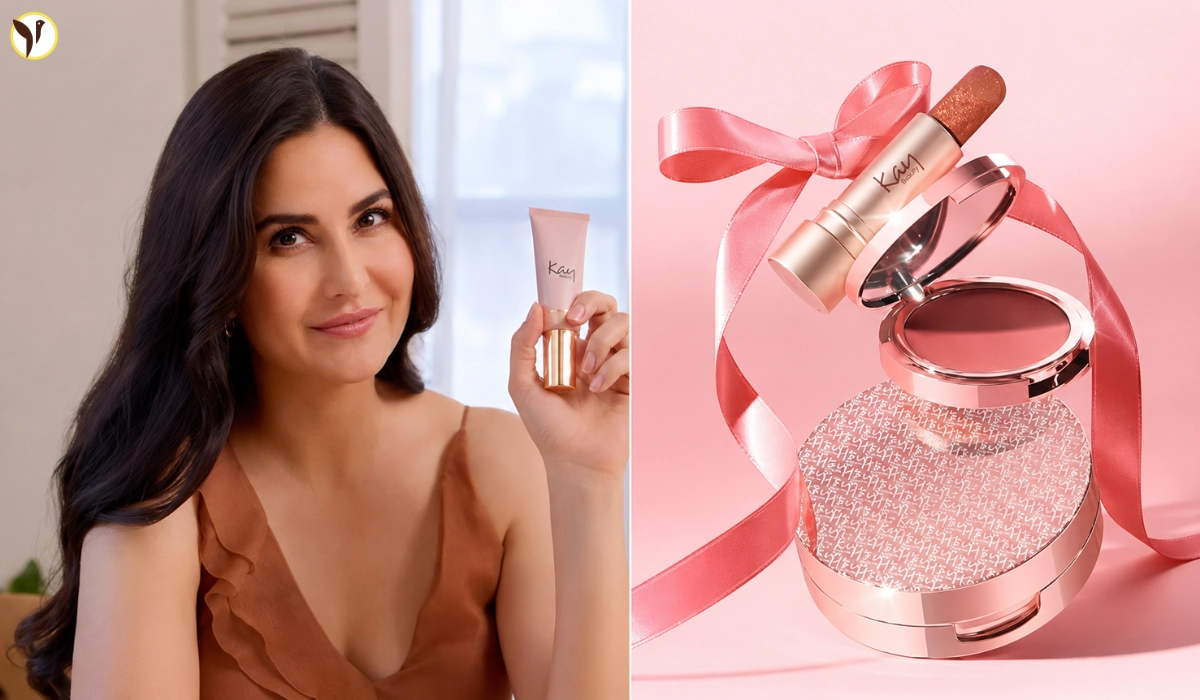


When Katrina Kaif launched Kay Beauty in 2019, the standard assumption in the business press was predictable: another Bollywood star leveraging their fame to sell mediocre products at a premium before quietly fading away. The Indian cosmetics market was littered with such experiments.
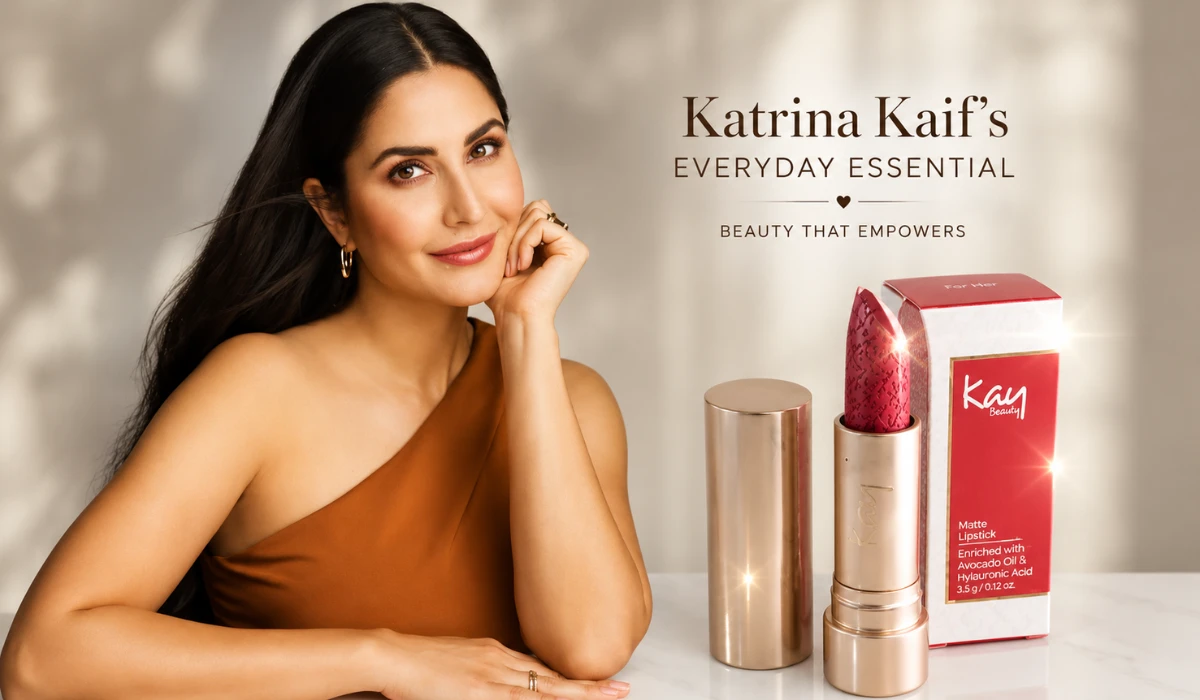
Today, that assumption lies shattered. Kay Beauty has surged past the Rs 350 crore mark in gross merchandise value (GMV), establishing itself not merely as a "celebrity brand," but as the third-largest makeup brand on Nykaa and a formidable player in India’s Rs 16,000 crore color cosmetics market.
Achieving this milestone required more than a famous face. It demanded a ruthless focus on product formulation, a strategic alliance with India’s largest beauty retailer, and an operational agility that traditional celebrity brands often lack. Here is a granular look at how Katrina Kaif and her team engineered this Rs 350 crore juggernaut.
The "Celebrity Brand" Trap and How Kay Beauty Avoided It
To understand the scale of Kay Beauty’s achievement, one must first understand why most celebrity ventures fail. Typically, a star licenses their name to a white-label manufacturer. The focus is on short-term social media virality rather than long-term product-market fit. The margins are split unfavorably, and the celebrity has little say in supply chain or quality control.
Katrina Kaif took a fundamentally different route. Instead of a licensing deal, she chose to build an entity. She brought in experienced operators to run the business day-to-day, ensuring that strategic decisions were driven by data rather than ego.
The brand’s initial core proposition—"makeup that cares for your skin"—was not revolutionary, but it was highly strategic. Indian consumers were increasingly aware of cosmetic ingredients, driven by the rise of K-beauty and clean beauty trends. By formulating products that were vegan, cruelty-free, and infused with skin-loving ingredients (like argan oil and vitamin E), Kay Beauty bridged the gap between color cosmetics and skincare. This "skinfusion" approach drastically improved the repeat purchase rate, which is the lifeblood of any D2C brand.
The Nykaa Masterstroke: Equity Over Endorsement
The single most critical business decision in the Kay Beauty timeline occurred before a single lipstick was sold: the Nykaa partnership.
In 2019, when Kay Beauty launched, entering a retail ecosystem dominated by global giants like L’Oréal, Maybelline, and MAC was nearly impossible for an independent startup. Instead of treating Nykaa merely as a distributor, Kay Beauty structured a strategic partnership where Nykaa took an equity stake in the brand.
Why this mattered:
- Algorithmic Preference: As an equity partner, Nykaa had a vested interest in Kay Beauty’s success. The brand received prime real estate on the app’s homepage, targeted push notifications, and preferential placement in search algorithms.
- Data Sharing: Nykaa shared granular consumer data with Kay Beauty. This allowed the brand to identify which shades were working in which Tier-2 and Tier-3 cities, enabling hyper-local inventory management.
- Trust Transfer: Nykaa’s rigorous quality checks served as a badge of legitimacy. If Nykaa vouched for it, consumers assumed the product was legitimate.
Decoding the Rs 350 Crore Revenue Engine
Reaching Rs 350 crore in GMV within a few years is a function of pricing power, volume, and channel mix. Kay Beauty attacked the "premium-masstige" segment—products priced between Rs 500 and Rs 1,500. This is the sweet spot where Indian consumers are willing to trade up from mass-market brands (like Lakme) but are price-sensitive regarding global luxury brands (like Charlotte Tilbury or Dior).
Below is an analysis of the primary drivers that contributed to the Rs 350 crore milestone, based on industry estimates and retail channel performance.
|
|
|
|
|
|
|
|
|
|
|
|
|
|
|
|
|
|
|
|
|
|
|
|
The Supply Chain Reality: Contract Manufacturing Excellence
A common misconception is that successful D2C brands own massive factories. Kay Beauty does not own its manufacturing facilities. Instead, it leveraged India’s mature contract manufacturing ecosystem, specifically partnering with top-tier OEMs (Original Equipment Manufacturers) like HCP Wellness and others based in Maharashtra and Gujarat.
This was a brilliant capital allocation decision. By outsourcing manufacturing, Kay Beauty avoided the massive capital expenditure (CapEx) of building a plant. This allowed them to pour capital into R&D for specific formulations, marketing, and building a robust digital infrastructure. When global supply chains choked during the pandemic, Kay Beauty’s localized manufacturing base allowed them to restock faster than imported global brands, capturing massive market share in 2020 and 2021.
The Omnichannel Pivot: Conquering Offline Retail
While Nykaa provided the launchpad, depending entirely on a single platform is a strategic vulnerability. Recognizing this, Kay Beauty aggressively pushed into offline retail over the last 18 months.
The brand secured shelf space in Reliance Retail’s Tira stores, Sephora India, and premium department stores like Shoppers Stop. The offline strategy serves two purposes:
- Discovery: Nearly 70% of Indian beauty retail still happens offline. Offline aisles allow consumers to physically test shades, which is crucial for foundations and lipsticks.
- Margins: While D2C offers higher gross margins, the customer acquisition cost (CAC) on platforms like Nykaa or Instagram has skyrocketed. Offline retail offers a more predictable, often lower CAC once the shelf space is secured.
Furthermore, Kay Beauty smartly tapped into the "quick commerce" boom. By listing on Blinkit, Zepto, and Instamart, they captured the impulse-buy market for last-minute makeup needs, a channel that now contributes a low-single-digit but rapidly growing percentage to their overall GMV.
What Happens Next: The Road to Rs 500 Crore and Beyond
Hitting Rs 350 crore is a validation, but the Indian beauty market is entering a hyper-competitive phase. The barriers to entry are low, and the war for shelf space and digital attention is brutal.
1. The Global Threat: Selena Gomez’s Rare Beauty is making aggressive inroads into India. Similarly, brands like Fenty Beauty are expanding their local distribution. Kay Beauty can no longer rely on the "Indian celebrity" novelty; it must compete purely on formulation and shade range.
2. The Skincare Adjacency: The real money in beauty lies in skincare, which boasts higher margins and better retention rates than color cosmetics. Kay Beauty has already started expanding its skincare range (cleansers, sunscreens). If they can capture even 10% of a customer's skincare wallet alongside their makeup purchases, their customer lifetime value (LTV) will skyrocket.
3. International Expansion: To justify a potential future valuation spike (if they ever raise private equity or consider an IPO), geographic expansion is mandatory. The Middle East and Southeast Asia present logical next steps due to a high demand for Indian-origin halal-compliant and vegan beauty products.
The Final Verdict
Katrina Kaif did not build a Rs 350 crore brand just by putting her name on a lipstick. She built it by acting as a strategic principal, aligning incentives with Nykaa, utilizing India's world-class contract manufacturing base, and ruthlessly focusing on the premium-masstige price bracket.
Kay Beauty’s journey effectively shatters the glass ceiling for celebrity entrepreneurs in India. It proves that with the right operational partners and a refusal to cut corners on product quality, a celebrity brand can evolve into a sustainable, scalable FMCG enterprise. For aspiring founders—celebrity or otherwise—the Kay Beauty playbook is less about fame, and more about frictionless distribution and product-market fit.
Other Articles to Read: