


The Indian television industry has long operated on an unspoken hierarchy. Seniority often dictates not just the length of a role, but the behavioral latitude afforded to an actor on set. However, a recent public alignment—where digital powerhouse Jannat Zubair stands with Shivangi Joshi against veteran actor Shilpa Shinde—signals a palpable shift in this established order.
When news broke that Jannat Zubair had publicly thrown her weight behind Shivangi Joshi amidst a brewing friction with Shilpa Shinde, it was quickly dismissed by many as mere "industry gossip." But to view this solely through the lens of celebrity drama is to miss the broader narrative. This moment is a case study in how the modern television ecosystem operates: one where traditional hierarchy is increasingly challenged by peer networks, digital influence, and a workforce that is no longer willing to suffer in silence.
Here is a deep dive into what actually transpired, why Jannat Zubair’s intervention matters beyond the headlines, and how this confrontation reflects a generational tipping point within Indian entertainment.
The Catalyst: Unpacking the Shivangi Joshi vs. Shilpa Shinde Friction
To understand the significance of Jannat Zubair’s stance, one must first understand the root of the disagreement between Shivangi Joshi and Shilpa Shinde.
Shilpa Shinde, a seasoned performer with over two decades of experience, rose to unprecedented mainstream fame with Bhabhi Ji Ghar Par Hai and later cemented her populist appeal by winning Bigg Boss 11. She is known for her blunt, unfiltered public persona. Shivangi Joshi, conversely, represents the current guard of television leading ladies. Having anchored Yeh Rishta Kya Kehlata Hai for years, Joshi commands a massive, highly organized fan base that thrives on digital platforms.
The recent friction between the two actors—stemming from differing professional approaches, public remarks, and perceived dismissals—brought an underlying generational tension to the forefront. In previous eras, a younger actor like Joshi might have been expected to defer to a veteran like Shinde, absorbing public criticisms as part of the "learning process."
That did not happen. Instead of quiet deference, the situation escalated into a public standoff, creating a vacuum that demanded industry responses.
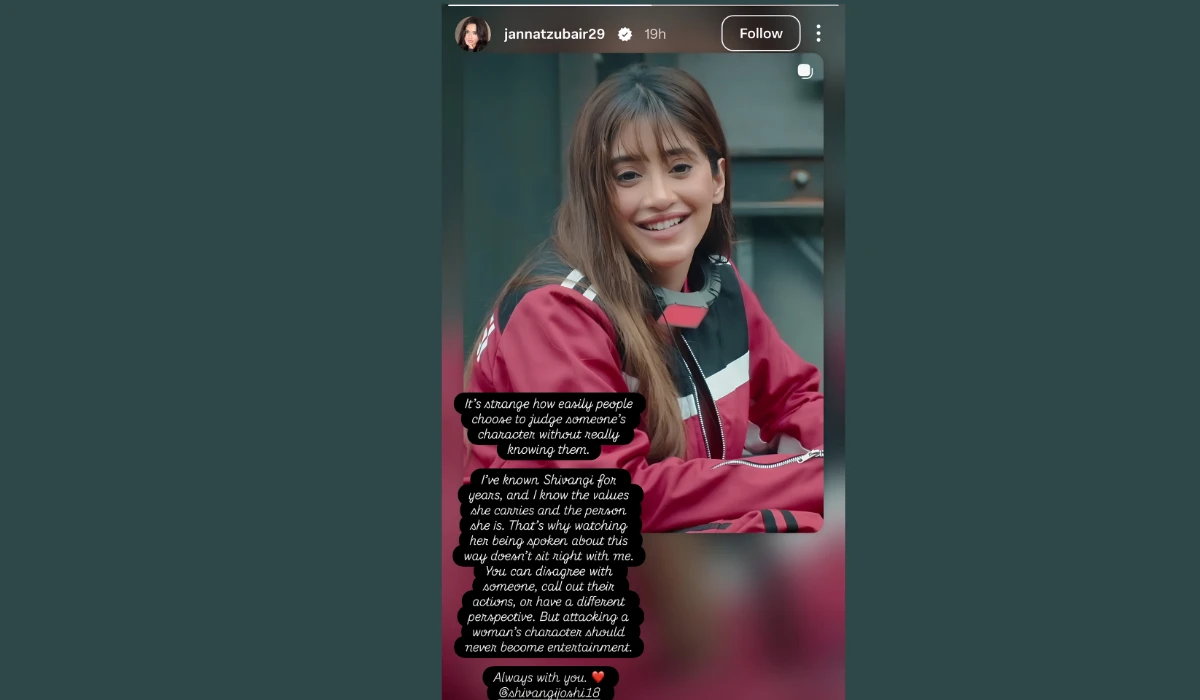
The Intervention: Why Jannat Zubair’s Stance Resonated
Enter Jannat Zubair. Primarily known for her transition from child artist to a behemoth digital creator and television star, Jannat is not a passive observer of industry politics. By choosing to publicly stand with Shivangi Joshi, Jannat did more than just pick a side; she activated a new form of industry solidarity.
Why did Jannat’s support carry such weight?
- The Peer Network Validation: Jannat and Shivangi belong to the same demographic cohort of actors. They navigate the same modern pressures—relentless social media scrutiny, the demand for constant content creation, and the expectation to maintain a pristine public image. Jannat’s support signaled to the public and the industry that Joshi was not isolated in her perspective.
- The Power of Digital Capital: While Shilpa Shinde possesses legacy star power, Jannat Zubair commands digital capital. With millions of followers across platforms, Jannat’s public alignment instantly shifted the narrative momentum, proving that reach and engagement can counter traditional seniority.
- Redefining "Respect": By intervening, Jannat subtly challenged the antiquated notion that respecting seniors means agreeing with them unconditionally. Her stance framed the debate around mutual professional respect rather than age-based hierarchy.
Behind the Curtain: The Changing Dynamics of TV Set Culture
To truly appreciate the Jannat Zubair-Shivangi Joshi alliance against Shilpa Shinde, one must look at the macroeconomic and cultural shifts within the Indian television space (the Hindi General Entertainment Channel, or GEC, space).
Historically, television sets were micro-dictatorships. The senior actor's word was law, and younger actors had little recourse if they felt marginalized. Complaints to production houses often fell on deaf ears if the senior actor brought in ratings.
However, the paradigm has shifted. We can observe this transition through the lens of industry evolution:
The Generational Divide in Indian TV Stardom
|
|
|
|
|
|
|
|
|
|
|
|
|
|
|
|
|
|
|
|
|
|
|
|
This table illustrates a fundamental truth: the tools of power have changed. When Shilpa Shinde navigated her highly publicized exit from Bhabhi Ji Ghar Par Hai in 2016, her weapon was labor unions (CINTAA) and traditional media press conferences. Today, an actor's weapon is their digital ecosystem. Jannat Zubair standing with Shivangi Joshi is a masterclass in wielding this modern power.
The Fandom Factor: How Audiences Weaponize Celebrity Feuds
It is impossible to discuss this situation without addressing the role of the audience. The reaction to Jannat Zubair standing with Shivangi Joshi against Shilpa Shinde was not contained to entertainment portals; it played out aggressively on X (formerly Twitter) and Instagram.
Modern fandoms operate less like fans and more like decentralized PR agencies. When the friction became public, Shivangi Joshi’s fandom immediately began compiling timelines, past interview clips, and "receipts" to frame the narrative in her favor.
When Jannat Zubair validated Shivangi’s position, it was akin to pouring gasoline on a smoldering fire. It gave the fandom the "legitimacy" they craved—a peer confirming that their idol was in the right. This creates a feedback loop:
- The Actor feels validated by peer support and fan aggression.
- The Fans feel empowered by the actor's peer support.
- The Veteran (Shinde) finds themselves outflanked, not necessarily by logic, but by the sheer volume of digital noise.
This dynamic forces a critical question: Are celebrities genuinely resolving conflicts, or are they just feeding the content beast that sustains their relevance?
What Happens Next: The Aftermath and Industry Impact
The immediate aftermath of this public alignment will likely follow a predictable, yet fascinating, script.
1. The "Diplomatic Silence" Phase:
Expect all three parties—Shilpa Shinde, Shivangi Joshi, and Jannat Zubair—to gradually step back from direct commentary. In the age of digital footprints, prolonged public feuds risk alienating brand endorsements. Brands prefer stability; controversy is only lucrative if it directly converts to sales, which interpersonal TV feuds rarely do.
2. The Producer's Dilemma:** This is where the real impact will be felt. Casting directors and producers are taking notes. If they cast a veteran actor with a history of public spats alongside a younger actor with a massive digital following, they are essentially subsidizing a potential PR crisis. We may see a subtle shift in casting choices, prioritizing "set diplomacy" alongside acting chops.
3. The Precedent of Peer Solidarity: Jannat Zubair’s move sets a precedent. It tells the younger generation of actors that they do not have to face industry intimidation alone. We are likely to see more public displays of solidarity among the younger cohort, effectively creating a united front against what they perceive as entrenched, outdated industry behaviors.
The Bigger Picture: A Microcosm of Modern Workplace Dynamics
Strip away the glamor, the designer outfits, and the millions of followers, and the situation between Shilpa Shinde, Shivangi Joshi, and Jannat Zubair mirrors a standard modern workplace generational clash.
You have a Baby Boomer/Gen X equivalent (Shinde) who values traditional chain-of-command and believes respect is inherent to tenure. You have a Millennial/Gen Z equivalent (Joshi) who expects mutual respect regardless of tenure and relies on peer networks for validation. Then you have the highly networked modern professional (Zubair) who uses public platforms as leverage.
The Indian television industry is simply late to a party that corporate America has been attending for a decade. The only difference is that in television, this clash is commodified and broadcast to millions for engagement.
Conclusion
Jannat Zubair’s decision to stand with Shivangi Joshi against Shilpa Shinde is not a fleeting tabloid moment. It is a cultural demarcation line. It highlights the exact moment when the old guard's unassailable authority was publicly challenged not by a critic, not by a journalist, but by a digitally native peer network.
For the audience, it provides a peek behind the velvet curtain of the entertainment industry—a reminder that the polished smiles on screen often mask complex, hierarchical, and deeply human workplace struggles. As the television industry continues to merge with digital-first ecosystems, expect these collisions to become more frequent, more public, and increasingly driven by the actors themselves rather than the production houses that employ them.
Other Articles to Read: