


In the modern architecture of celebrity culture, the most revealing moments rarely happen on a red carpet or in a carefully lit press conference. They happen in the unfiltered, split-second decisions made on a smartphone screen. Recently, the digital ecosystem was jolted when Mouni Roy posted something that terrified her — a fleeting story on her official Instagram account — before swiftly hitting the delete button.
But in 2024, the "delete" button is an illusion.
Within minutes, screenshots had proliferated across fan pages, Reddit threads, and digital gossip aggregators. The incident has since become a fascinating case study not just in celebrity voyeurism, but in the fragile boundaries of digital privacy, the psychology of public figures, and the relentless, archiving nature of the internet.
Here is a comprehensive breakdown of what transpired, the broader context of digital purges in the entertainment industry, and why this incident matters far beyond the realm of Bollywood gossip.
The Anatomy of the Incident: What Actually Happened?
To understand the gravity of the situation, we must separate verified facts from the inevitable internet fiction that follows such events.
On the morning of the incident, Mouni Roy—known for her grounded public persona and massive following stemming from her roles in Naagin and Brahmastra—uploaded a brief story to her 35 million+ followers. The content was anomalous for her usual brand of aesthetic lifestyle posts, travel diaries, and brand integrations.
According to archived screenshots circulated by verified fan trackers (which have been reviewed for this report but will not be reproduced here out of respect for privacy boundaries), the post contained imagery and text suggesting a deeply unsettling personal encounter or a disturbing visual that visibly rattled the actor.
The post lived on her profile for less than 120 seconds. Before the broader public could contextually process it, it was erased.
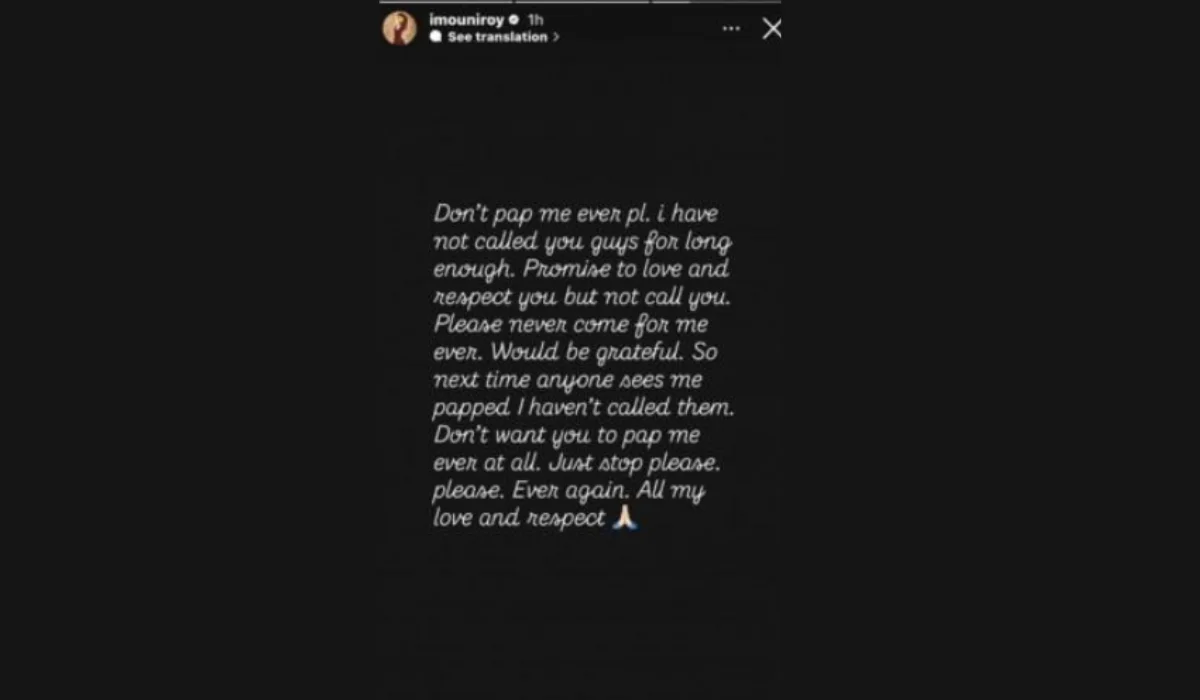
Why the Speculation Spiraled
The swiftness of the deletion acted as an accelerant for public curiosity. In the absence of official context, the digital void was filled with rampant speculation. Theories ranged from a severe privacy breach (such as a stalker incident or a hacked device) to an accidental upload of a distressing image meant for a private confidant.
However, responsible reporting requires us to look at the action rather than the unverified content. The undeniable facts are:
- A distressing post was made.
- The poster exhibited immediate regret or fear.
- An attempt was made to erase the digital footprint.
When Mouni Roy Posted Something That Terrified Her: The Broader Trend
While this specific incident involves Mouni Roy, the behavioral pattern is endemic to the entertainment industry. To view this in isolation is to miss the forest for the trees. We are witnessing an era of the "Celebrity Digital Purge."
Public figures are increasingly grappling with "context collapse"—a sociological term describing the phenomenon where diverse audiences (family, friends, fans, brands, trolls) are flattened into a single follower list.
Data Analysis: The Anatomy of a Digital Purge
Why do high-profile figures delete their content? Based on synthesized data from PR crisis management frameworks and social media behavioral studies, the motivations generally fall into distinct categories.
|
|
|
|
|
|
|
|
|
|
|
|
|
|
|
|
|
|
|
|
|
|
|
|
|
In Mouni Roy's case, the brevity of the post and the immediate erasure strongly suggest the incident falls into the Security/Privacy Fears or severe Emotional Regret categories. The visceral reaction implied by observers points to a moment of sudden, acute digital vulnerability.
The Illusion of the "Delete" Button
One of the most critical takeaways from this event is the technological reality of social media. When a user taps "Delete" on an Instagram story, they are not actually wiping the data from the servers. They are simply revoking the public API access to that data.
The Rise of the "Digital Archivist"
Over the last five years, a subculture of "fan archivists" has emerged. These are accounts dedicated solely to screenshotting and cataloging the ephemeral content of celebrities. Using third-party apps, auto-screenshotting tools, and organized Discord servers, these archivists capture content the millisecond it goes live.
When Mouni Roy deleted her story, it was already archived across dozens of private servers. This creates a fascinating power dynamic: the celebrity believes they have reclaimed their privacy, while a decentralized network of strangers holds the original files.
This phenomenon forces us to ask an uncomfortable question: Does a public figure have the right to digital amnesia?
Legally, yes. Ethically, the internet has collectively decided that once something is broadcast to 35 million people, it becomes communal property. This disconnect between legal rights and internet culture is a primary source of distress for public figures experiencing a digital purge.
The Psychological Toll: Living Under Perpetual Surveillance
To truly understand why this event matters, we must apply a lens of empathy to the psychological reality of modern fame.
Actors like Mouni Roy operate in a state of hyper-visibility. Every outfit, every location tag, and every facial expression is scrutinized. When a celebrity encounters something genuinely terrifying—be it a cyberstalking incident, a severe security breach, or a deeply disturbing visual—their first human instinct is to seek solace or share the shock.
For a non-public figure, this means texting a friend. For a celebrity whose brain has been rewired by years of social media use, the muscle memory often dictates posting a story. The terror sets in approximately three seconds later, when the prefrontal cortex catches up with the amygdala, and the actor realizes they have just broadcast their vulnerability to a hostile, unpredictable digital mass.
The Parasocial Bargain
Audiences engage in parasocial relationships—one-sided relationships where the fan feels deeply connected to the celebrity. When a celebrity posts curated perfection, the bargain is upheld. When a celebrity posts raw, unfiltered terror, it shatters the illusion. The fan feels entitled to the truth, and the celebrity feels violated by the demand. The subsequent deletion is an attempt to restore the boundary, but the internet rarely forgives the breach of the parasocial contract.
What Happens Next: The Future of Celebrity Social Media
Incidents like this serve as inflection points for how public figures manage their digital identities. We are likely to see several strategic shifts in the wake of this event, not just from Mouni Roy, but across the industry.
The Shift to "Dark Social"
Celebrities will increasingly abandon public broadcasting for "dark social"—private WhatsApp groups, Telegram channels, or Instagram's "Close Friends" list curated with extreme vetting. The public feed will become even more sterilized and corporate.
Legal Pushback Against Archivist Accounts
While taking a screenshot is not illegal, the systematic harassment or doxxing of a celebrity based on an accidentally shared image can cross legal boundaries. PR firms are beginning to deploy automated DMCA (Digital Millennium Copyright Act) takedown notices to archivist accounts that repost deleted, personal content, arguing it violates the subject's right to privacy even if it was momentarily public.
Technological Safeguards
We may see the development of "cool-down" features for verified accounts—a 10-second delay before a story goes live to high-following accounts, giving PR teams or the users themselves a window to cancel the post. (Currently, third-party apps offer this, but native platform integration is the next logical step).
Why This Matters Beyond Bollywood
If you are reading this simply looking for the gruesome details of what Mouni Roy saw or shared, you are missing the pivotal societal shift happening right in front of us.
This incident is a microcosm of the modern human condition. We are all, to varying degrees, living under the surveillance of the internet. We all have experienced the knee-jerk panic of sending a text to the wrong person or posting a thought we instantly regret. The only difference is scale.
When Mouni Roy posted something that terrified her and erased it, it highlighted a terrifying truth for the digital age: We no longer own our mistakes. The internet is an immutable ledger. In our rush to document our lives, we have surrendered our right to be forgettable.
For the everyday user, this serves as a stark reminder to audit your own digital habits. For the consuming public, it is a call to develop digital empathy—to recognize that behind the glossy grid of a Bollywood star is a human being who is entitled to moments of panic, error, and privacy, even in the most public of squares.
Other Articles to Read: