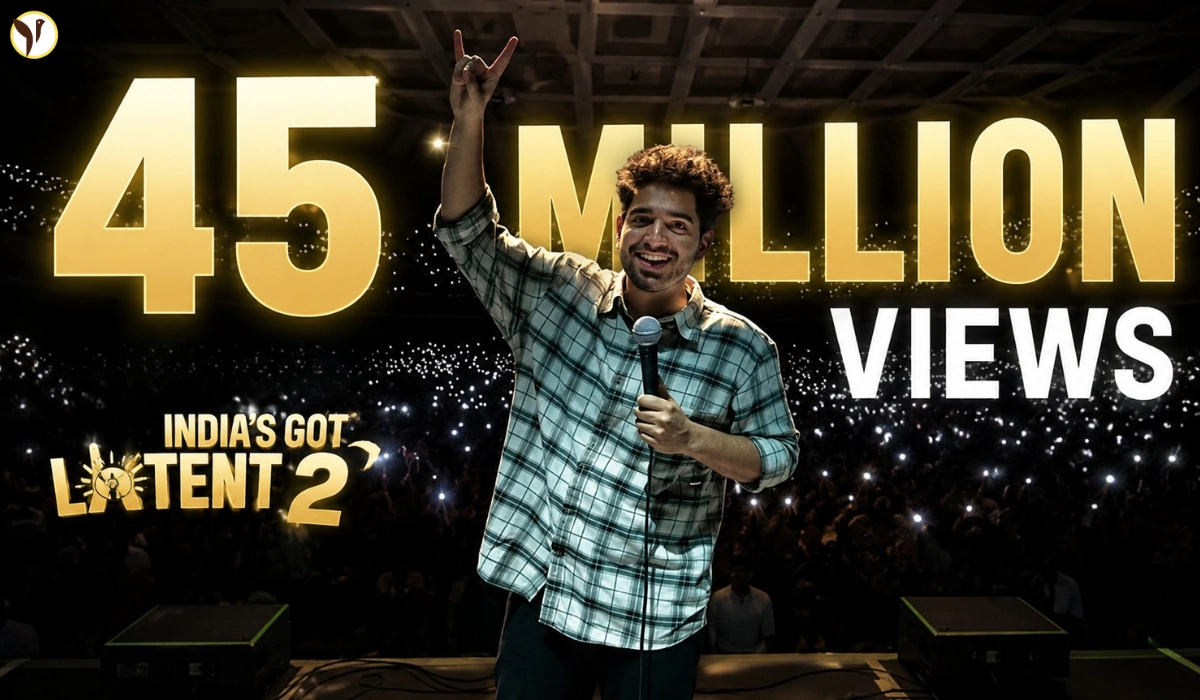


There's a strange kind of math at play whenever a public figure falls and then tries to climb back up. Usually, the apology is supposed to be the moment that earns forgiveness, and the comeback is what happens after forgiveness is granted. Samay Raina flipped that order entirely — and the numbers prove it.
His February 2025 apology, issued at the peak of the India's Got Latent controversy, barely registered as a cultural moment. It was scrolled past, screenshotted for ridicule, and at one point even confused with a sarcastic 2023 clip that fact-checkers had to step in and debunk. An old, sarcastic video of Raina was mistakenly shared online as if it were his apology for the controversy. That mix-up alone says something about how little attention the real apology actually got.
Fast forward fourteen months, and his comeback special, Still Alive, did something almost no Indian YouTube content has done before: it became the most-watched full-length stand-up comedy special in the world from a single platform upload, according to official releases cited by ANI. Within 24 hours, the special had already pulled in roughly 22 million views, and that number kept climbing.
This piece breaks down what actually happened, why the apology fizzled while the comeback exploded, and what this gap tells us about how Indian digital audiences process scandal, sincerity, and storytelling in 2026.
What Happened: The Apology Nobody Remembers vs. The Comeback Everyone Watched
To understand the gap, you need both timelines side by side.
|
|
|
|
|
|
|
|
|
|
|
|
|
|
|
|
|
|
|
|
|
|
|
|
|
|
|
|
|
|
|
|
|
|
|
What's notable isn't just that the comeback outperformed the apology — it's the scale of the gap. An apology is, by design, a low-attention format: a few lines, a single post, meant to close a chapter quietly. A stand-up special is built to be watched, shared, and discussed for over an hour. Comparing engagement between the two isn't entirely fair on format alone. But the disparity here goes well beyond format. People didn't just watch more of the comeback — they actively rooted for it, in a way they never rooted for the apology.
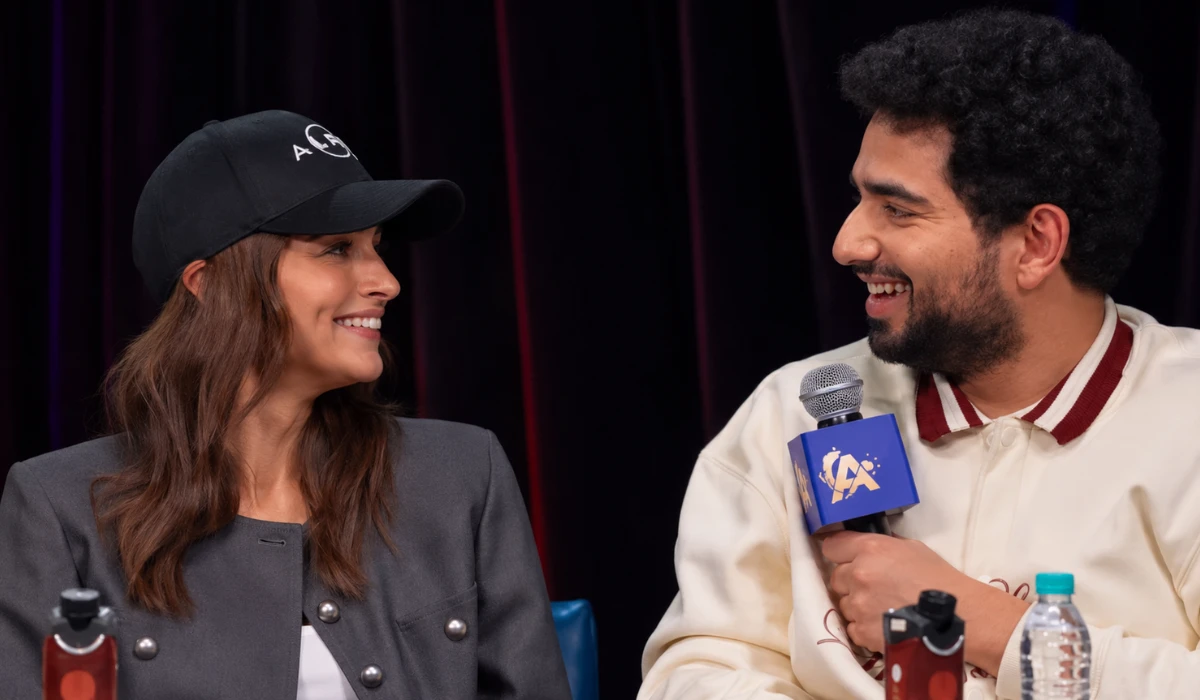
Why the Apology Fell Flat
Three things worked against Raina's original apology, and none of them were really about the apology's wording.
1. The controversy wasn't really about him. The remark that triggered the firestorm came from guest panelist Ranveer Allahbadia, not Raina himself. During the show, podcaster Ranveer Allahbadia made remarks that were widely deemed offensive, and clips spread rapidly, triggering massive public outrage. Raina ended up apologizing for something he didn't say, which created an odd dynamic — sincerity aimed at the wrong audience rarely lands.
2. The apology arrived inside chaos, not after it. Multiple FIRs were filed against Samay Raina, Ranveer Allahbadia, Apoorva Mukhija, and Ashish Chanchlani for allegedly promoting obscene and explicit content, while the Maharashtra Cyber Cell investigated the case and the National Commission for Women also took cognisance. An apology issued in the middle of an active legal storm reads less like reflection and more like legal strategy — which is exactly how much of the public interpreted it.
3. He tried to record a "real" one nine times — and never posted it. This is the detail that didn't surface until over a year later, on the podcast Chalchitra Talks. Raina revealed that his lawyer had advised him to film an apology video, but despite trying multiple times, he could not bring himself to post it. He recounted attempting to record it nine separate times, doing whatever advisers suggested, but it never made it online. In hindsight, that hesitation may have been the most honest part of the entire episode — he simply didn't believe in the version of contrition he was being told to perform.
Why the Comeback Worked: It Replaced Apology With Honesty
If the apology felt manufactured, Still Alive did the opposite — and that distinction is the entire story.
Rather than apologizing again, Raina used the special to explain rather than defend. He acknowledged the impact directly, saying that every time a public figure hurts people, that person loses part of their audience permanently, calling that loss "the punishment," while also questioning aloud how a single joke could escalate so dramatically. That combination — owning the consequence without performing exaggerated remorse — is precisely what audiences responded to.
He also didn't dodge the hardest parts of the fallout. The special saw Raina directly address the controversy, the public backlash, the toll it took on his mental health, and even his family's reactions, delivered through dark humour and unusually candid storytelling. Across the 81-minute set, he spoke about the controversy, his year away from the public eye, financial strain, childhood bullying, his Kashmiri Pandit identity, and the support he received from friends during the lowest point.
There's also a structural reason the special travelled so far, so fast: it wasn't gated behind a streaming platform. Still Alive was released directly on YouTube by a 28-year-old comedian with no Netflix deal, no OTT backing, and no major studio pushing his name, and still crossed over 53 million views within roughly two weeks. Free, public, shareable content almost always outpaces anything sitting behind a login wall or app download — and that accessibility compounded the virality.
A Quick Numbers Snapshot
|
|
|
|
|
|
|
|
|
|
|
|
|
|
|
|
|
|
|
|
|
|
|
|
These aren't soft engagement metrics like shares or sentiment scores — they're hard view-and-like counts that place Still Alive ahead of stand-up specials from comedians with far bigger platforms and studio backing.
What This Reveals About Audience Psychology
There's a pattern worth naming here, because it isn't unique to Raina — it shows up across the creator economy whenever a public figure tries to recover from backlash.
Audiences rarely forgive a statement. They forgive a story. A two-line apology gives people nothing to engage with emotionally; it's a transaction, often perceived as legally motivated rather than personally felt. A long-form narrative — one that includes vulnerability, specific detail, and a willingness to sit in discomfort rather than rush past it — gives people something to actually process and discuss.
This is also why the timing gap mattered. Raina didn't comeback immediately, riding the wave of the controversy. He returned to live performance in August 2025 with a nationwide tour, "Still Alive And Unfiltered," which ran from Bengaluru to Delhi between August 15 and October 5, before he went on to perform at Madison Square Garden in 2026, becoming one of the youngest Indian comedians to do so. That year of touring, away from the cameras, functioned as a kind of credibility-building period that a rushed apology video never could have replicated.
It's worth being clear-eyed about the other side of this, too. Not everyone views the comeback as proof of accountability. Critics have pointed out that the damage from the original incident had already been done, regardless of how effectively the affected parties later repositioned themselves through documentaries, specials, or public statements. The scale of Still Alive's success measures attention and goodwill — it doesn't, by itself, settle the underlying question of whether the original content crossed a line that needed crossing in the first place.
What Happens Next
The comeback isn't really the end of this story — it's a pivot point. Recent reports indicate that shooting for India's Got Latent Season 2 is already underway, and the show's return will be watched far more closely than the original ever was. The new season won't be judged as a normal comedy show launch — it will be treated as a test of whether the team has actually learned from the controversy, with stronger editing, better judgment, and greater sensitivity to what got cut last time.
There's also a parallel thread developing around Ranveer Allahbadia, whose remark started the entire chain of events. Allahbadia has reportedly announced a documentary related to the controversy, expected to lay out his side of the story, the personal impact, and lessons learned from the fallout. If that documentary lands anywhere close to the reception Still Alive got, it would suggest the audience's appetite isn't really for apology or comedy specifically — it's for honesty delivered at length, in the creator's own voice, on their own terms.
There's also early evidence that Raina is trying to apply the lesson in real time. On the Season 2 set itself, a recent clip showed him calling out a sexist remark made on stage, a moment that went viral and earned him widespread praise across Reddit, X, and Instagram for "drawing a line" rather than letting the joke slide. Whether that becomes a consistent pattern — or a one-off moment timed for goodwill — will likely shape how Season 2 is received far more than any nostalgia for the original show.
Other Articles to Read: