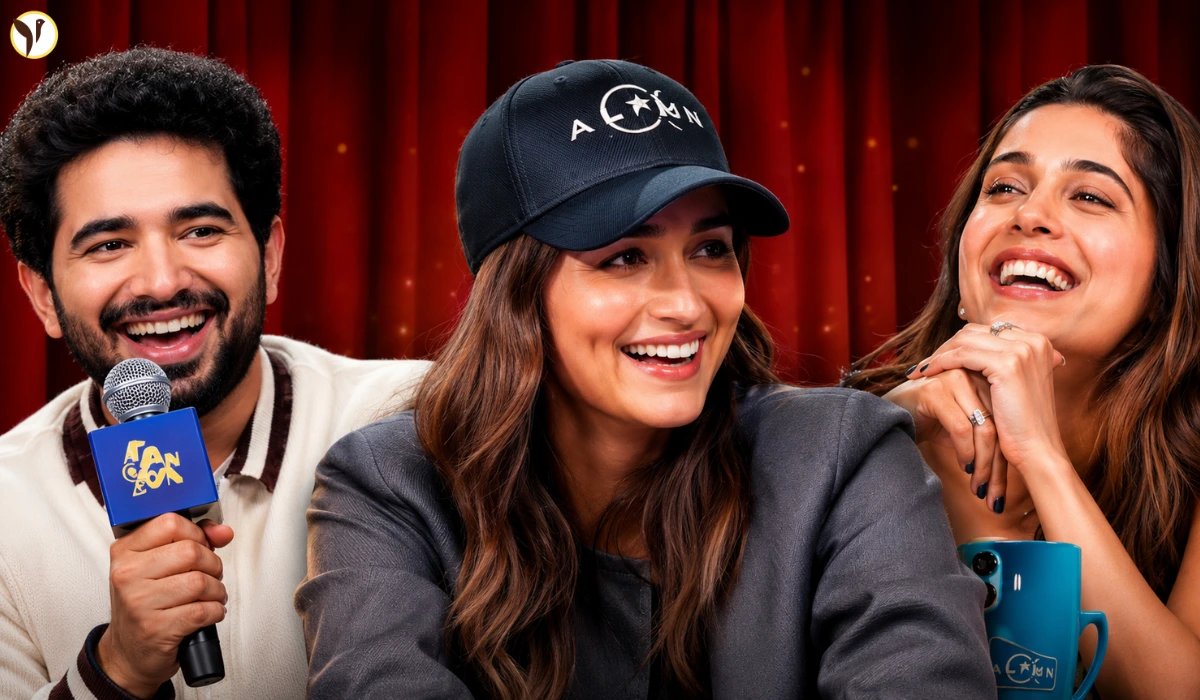


Samay Raina has made a clear copyright-related announcement after the Alia Bhatt–Sharvari episode of India’s Got Latent Season 2, telling YouTube creators they can react to the show’s public episodes without fearing copyright strikes from his channel. The move matters because it turns a popular comedy episode into a wider creator-friendly moment, especially for reaction channels that depend on fair-use style commentary and clip-based discussion.
Samay Raina has made one of the most consequential announcements around India’s Got Latent Season 2 — and it has less to do with celebrity guests than with how the show will circulate online.
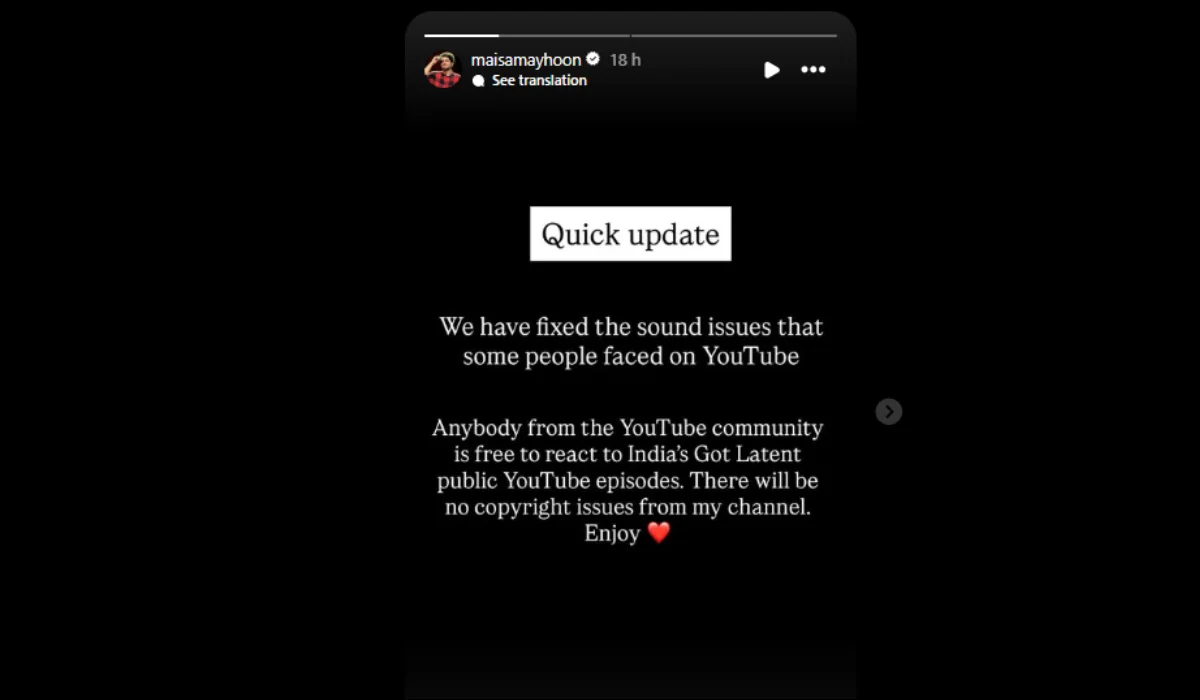
Days after the season’s opening episode featuring Alia Bhatt and Sharvari landed on YouTube and Netflix, Raina said creators from the YouTube community are free to make reaction videos using the show’s public YouTube episodes without worrying about copyright issues from his channel. The update, shared via Instagram Stories and reported by multiple outlets on June 24, comes at a crucial moment for a franchise trying to rebuild after controversy, platform anxiety and audience skepticism.
At first glance, it looks like a simple creator-friendly gesture. In practice, it may be something bigger: a deliberate attempt to restore the open, remix-heavy internet culture that helped India’s Got Latent become one of India’s most talked-about YouTube comedy properties in the first place.
What exactly Samay Raina announced
According to Hindustan Times, Raina said that anyone from the YouTube community can react to the publicly available YouTube episodes of India’s Got Latent Season 2 and “there will be no copyright issues” from his channel. In the same update, he also said the team had fixed sound issues that some viewers had flagged on YouTube.
That distinction matters. The permission, as reported, applies to public YouTube episodes of the show — not necessarily every clip, promo asset, or the Netflix version in a blanket legal sense. But the message was still unmistakable: Raina wants commentary creators, clip channels and reaction ecosystems to engage with Latent without fear of takedowns from his side.
For a creator-led property that depends heavily on internet conversation, memes, breakdowns and reaction culture, that is not a minor housekeeping note. It is a distribution strategy.
Why this announcement came right after the Alia-Sharvari episode
The timing is the story.
Season 2 opened with Alia Bhatt and Sharvari as guest panelists, tied to promotions for their upcoming film Alpha. The episode drew immediate attention because it marked a high-profile celebrity launch for Raina’s comeback season and because viewers were curious about what India’s Got Latent would look like after the turbulence surrounding Season 1.
The premiere did what big comeback episodes are supposed to do: it got people talking. It also produced exactly the kind of internet afterlife that comedy shows now rely on — roast clips, viral one-liners, reaction threads, criticism about scripting, praise for specific moments, and debates over whether the show had changed too much. Some coverage highlighted Samay’s roasts of Alia and Sharvari; other pieces focused on viewer criticism that the episode felt more scripted or polished than the earlier, rougher energy associated with the show.
In that environment, copyright can become either a brake or an accelerator.
By publicly assuring YouTubers that reaction videos will not trigger copyright trouble from his channel, Raina appears to be choosing acceleration. Instead of trying to tightly control circulation after a celebrity-led launch, he is signaling that Latent wants to live in the wider creator ecosystem.
The bigger context: Samay Raina is trying to solve two audience problems at once
To understand why this matters, it helps to look at the pressure points around Season 2.
1) The Netflix problem: fans feared Latent would stop feeling like a YouTube show
When Netflix’s involvement became public, some fans worried that India’s Got Latent would move behind a paywall or lose the unruly, internet-native quality that made it popular. Reports around the launch suggest there was visible pushback from Raina’s YouTube base before he clarified that the show would also stream on YouTube.
That created a trust challenge. A show born in the creator economy was suddenly also part of a major OTT rollout. For viewers, the question was obvious: Is this still a creator-first show, or has it become a platform-managed entertainment product?
The no-copyright message is a neat answer to that question. It tells the audience — and, crucially, other creators — that Latent still wants to behave like a YouTube-native property, even while expanding to Netflix.
2) The controversy problem: Season 2 has to look safer without looking neutered
Raina’s comeback is happening in the shadow of the earlier India’s Got Latent controversy. Following the uproar around comments made by guest Ranveer Allahbadia in a previous season, an episode was blocked after government orders, and the fallout led to FIRs, public criticism and heightened scrutiny around the show’s boundaries. Reports at the time said the controversy forced a major reset around the franchise.
That history matters because it changes how every new decision is interpreted.
If Season 2 becomes too controlled, fans complain the show has lost its edge. If it leans too hard into provocation, it risks reviving the very cycle Raina is trying to escape. The copyright announcement sits neatly between those two pressures. It doesn’t make the show more offensive or more sanitized; it makes the surrounding ecosystem more open. In other words, it restores some of the “internet messiness” around the show without necessarily increasing the risk inside the show itself.
That is a smart distinction.
Why the copyright announcement matters beyond Samay Raina
It protects the reaction economy around the show
A large share of modern entertainment discovery happens outside the original upload: reaction videos, clip compilations, commentary channels, Reddit posts, short-form edits and debate content. When a creator explicitly says “go ahead, react,” they reduce friction for everyone who might otherwise avoid using clips.
That matters because reaction content does three things at once:
- extends the life of an episode beyond its first 24 hours,
- creates multiple entry points for new viewers who may never click the full upload first, and
- lets the audience argue with the show in public, which is often how entertainment stays culturally relevant.
For India’s Got Latent, which thrives on punchlines, awkward pauses, roast moments and contestant surprises, that ecosystem is especially valuable.
It is also a soft reputational reset
Raina’s statement is being framed as creator-friendly, but it also functions as image management in the best sense of the term: not spin, but repositioning.
After a year in which Latent became associated with controversy, legal heat and questions over where comedy crosses the line, Raina is now attaching the show to a different language set — community, reaction, freedom to engage, no strike fears, public episodes. That doesn’t erase the past, but it changes the immediate conversation around the present season.
It may help Season 2 recover from mixed first-episode reactions
The Alia-Sharvari premiere got attention, but not all of it was glowing. Some viewers praised the celebrity chemistry and roast moments; others felt the episode was too scripted or too tailored for promotion.
In that situation, creator reactions become especially useful. They can keep the discourse moving beyond a simple “hit or flop” verdict on episode one. A show with an active clip-and-commentary ecosystem gets more chances to be reassessed episode by episode.
That may be one of the quiet advantages of Raina’s move: it buys Latent more conversation time.
Samay Raina says YouTubers can freely react to India’s Got Latent Season 2 public episodes without worrying about copyright strikes.
— The Filmy Charcha (@thefilmycharcha) June 24, 2026
The comedian also thanked Alia Bhatt and Sharvari for their fun appearance on the show.
Note: This post is based on publicly available reports and… pic.twitter.com/19otzs5FVA
What happened in the Alia-Sharvari episode
The premiere featured Alia Bhatt and Sharvari on the panel as part of the promotional run for Alpha. Coverage and clips from the episode show Raina doing what viewers expect from Latent: ribbing his guests, turning promotional appearances into roast material, and trying to preserve the show’s informal, confrontational energy even with major Bollywood names on the couch.
Among the moments that circulated:
- Raina joked about Alia Bhatt’s films and public appearances, including Jigra and her Cannes outing.
- Sharvari was also pulled into the roast dynamic rather than treated as a conventional promotional guest.
- One viral clip highlighted Alia sharply responding after an audience member made a sexist remark, a moment that drew praise online.
- Samay later publicly thanked both Alia and Sharvari for being “chill” and “fun,” saying it takes guts to walk into a format like Latent.
That last point is worth underlining. Celebrity participation is now part of Latent’s expansion strategy, but the show still needs those celebrities to look game enough to survive its tone. The Alia-Sharvari episode was effectively a stress test of whether Bollywood promotions and creator-comedy chaos can coexist on the same set.
A quick timeline of how we got here
|
|
|
|
|
|
|
|
|
|
|
|
|
|
|
|
|
|
|
|
What happens next
The next test for India’s Got Latent is not whether the Alia-Sharvari episode trended. It’s whether the show can build a stable second-season rhythm after the novelty of the comeback fades.
Three things to watch:
1) Whether future episodes feel less “event television” and more like old Latent
If viewers continue to feel the celebrity episodes are over-produced or scripted, Raina may need the next batch of episodes to tilt back toward rawer contestant energy and less overt promotion.
2) Whether reaction creators actually embrace the no-strike offer
The announcement only matters if the broader YouTube ecosystem takes him up on it. If clip channels, comics and commentary creators begin posting freely, Latent could regain the network effect that helped define its earlier popularity.
3) Whether the show can remain provocative without triggering another cycle of backlash
That is the tightrope. Season 2 does not need to be controversy-proof to succeed, but it does need to show that it has learned from the cost of uncontrolled fallout. Raina’s copyright move suggests he understands something important: the future of Latent may depend less on a single joke landing and more on whether the show can sustain a healthy, participatory internet culture around itself.
For now, that is what this announcement looks like — not just a copyright clarification, but a bid to rebuild the show’s public square.
Other Articles to Read: