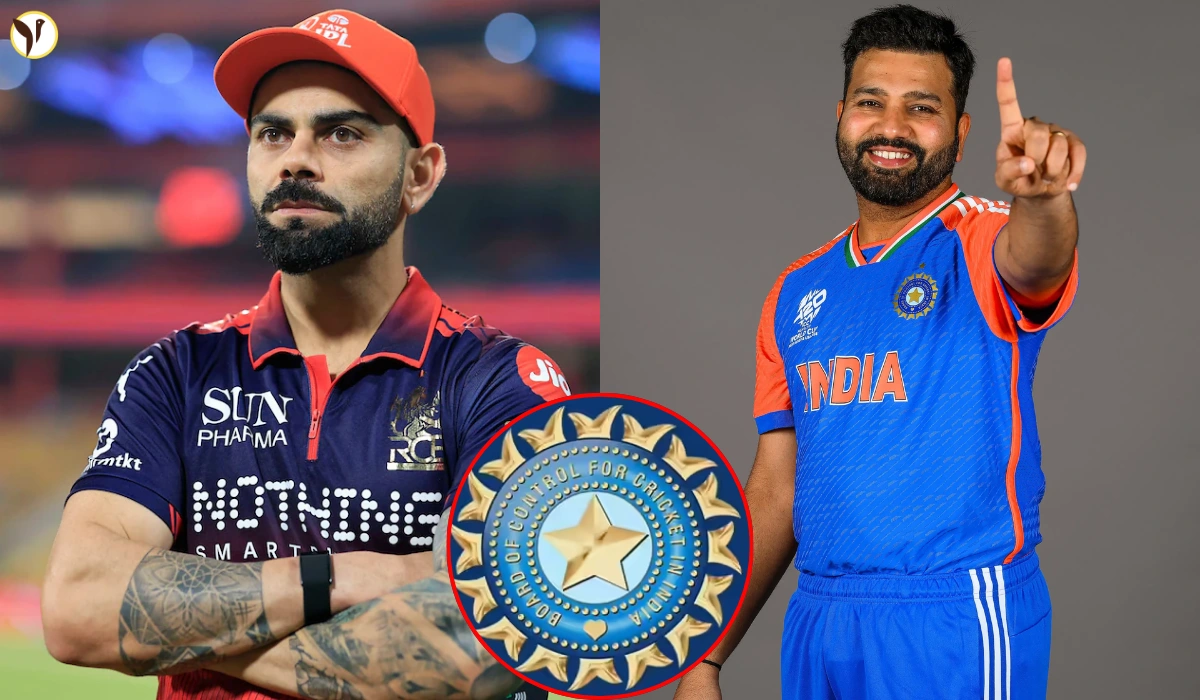


In a series of interlocking decisions that have quietly reshaped how India's biggest names are managed, the BCCI has sent an unmistakable message: reputation is not a policy. Virat Kohli and Rohit Sharma, two of the most decorated cricketers the country has ever produced, now operate under the same fitness mandates, contract frameworks, and domestic obligations as every other contracted Indian cricketer. The era of the untouchable senior — if it ever truly existed on paper — is formally over.
The Three-Front Squeeze
The board's changed stance on its senior stars isn't the result of a single dramatic announcement. It has arrived through three converging decisions, each one individually explainable, but collectively forming something close to an institutional policy reset.
The first came in December 2025. Following India's Test series collapse in Australia — a debacle that triggered a board-level review — the Ajit Agarkar-led national selection committee issued a directive that all current national team players must participate in at least two Vijay Hazare Trophy matches during the gap between international assignments. Not recommended. Not suggested. Mandatory. The only recognised exemption: a fitness declaration from the BCCI's Centre of Excellence. Every other reason — form concerns, personal commitments, rest preferences — was categorically ruled out. A senior BCCI official told PTI at the time: "Playing Hazare isn't optional." Kohli confirmed availability for Delhi. Rohit informed the Mumbai Cricket Association of his intent to play. Two players who had each spent over a decade protected from domestic obligations by their international schedules now had none.
The second decision arrived in February 2026. When the BCCI announced its central contracts for the 2025–26 season, Kohli and Rohit were moved from the now-abolished Grade A+ category — where they had earned ₹7 crore annually alongside Jasprit Bumrah and Ravindra Jadeja — down to Grade B. The A+ tier was scrapped entirely. The new Grade A houses Shubman Gill, Bumrah, and Jadeja. The message embedded in that restructure was deliberate: format availability drives contract grade, not career legacy.
|
|
|
|
|
|
|
|
|
|
|
|
|
|
|
|
|
|
|
|
The third and most pointed signal came in May–June 2026, as India prepared for the Afghanistan ODI series. The selection panel, meeting in Guwahati on May 19, included internal discussions about resting both Kohli and Rohit altogether — a conversation that would have been unthinkable even two years ago. Sports Tak reported that the panel ultimately kept them in the squad, reasoning that since both players now occupy only one international format, match time matters more than rest. The more revealing part came next: when the squad was announced, both Rohit Sharma and Hardik Pandya were listed with fitness conditions attached. Their participation would depend on clearance from the Centre of Excellence. Not a courtesy. A condition.
"Both Rohit and Virat can evaluate their performance and fitness as well in the home series."
Kohli was subsequently ruled out with a hamstring injury sustained during the IPL 2026 final, with chief selector Ajit Agarkar confirming the news at the press conference and Yashasvi Jaiswal named as his replacement. Rohit, nursing his own hamstring trouble from the same IPL season, reported to the CoE in Bengaluru for assessment. His place on the plane to Dharamsala depended on the result.
Kohli was subsequently ruled out with a hamstring injury sustained during the IPL 2026 final, with chief selector Ajit Agarkar confirming the news at the press conference and Yashasvi Jaiswal named as his replacement. Rohit, nursing his own hamstring trouble from the same IPL season, reported to the CoE in Bengaluru for assessment. His place on the plane to Dharamsala depended on the result.
BCCI sent clear message: "Selection shouldn't about what's best for Virat Kohli, Rohit Sharma" - SPORTS LILA https://t.co/VVkJcN5evL
— PRASHANT KUMAR JHA (@PRASHAN02361648) June 25, 2026
What Happens Next: The 2027 Question No One Is Answering Directly
The cleaner reading of all these signals is forward-looking. India enters the 2027 ODI World Cup cycle with a selection committee that has explicitly removed automatic guarantees. The early phase of the Afghanistan series — both Kohli and Rohit absent, Shubman Gill captaining, Yashasvi Jaiswal opening — offered a working blueprint for what an India without its two most established ODI batsmen might look like. That is not a coincidence in scheduling. It is, at minimum, a data-gathering exercise.
|
|
|
|
|
|
|
|
|
|
|
|
|
|
|
|
|
|
|
|
|
Kohli's situation is more stable. His IPL 2026 season — 542 runs from 13 innings at an average of 54.20, strike rate of 164.74, including a century and four fifties — demonstrated that his batting remains elite. The hamstring injury is circumstantial, not structural. Chief selector Agarkar flagged that he could be fit for the England ODIs, and nothing in the board's posture suggests Kohli is facing selection pressure on form grounds.
Rohit's trajectory is less certain. The hamstring issue that limited him to impact-sub appearances in the IPL's latter stages, combined with observations from selectors that his explosive starts at the top of the order have become less consistent, has introduced a question mark over his medium-term utility. A source quoted in an earlier report noted that selectors are uncertain whether Rohit's current approach offers the aggressive foundation India needs at the top of an ODI lineup heading into a World Cup. That is a harder conversation than a fitness clearance.
The Institutional Logic Behind It All
India's domestic cricket has long operated in the shadow of its international programme. Senior players drifting away from Ranji Trophy and Vijay Hazare matches has been a systemic issue for years — one that critics argue contributed to the depth problem India encountered during the 2025 Australia tour. The BCCI's mandatory participation rule is, in part, a structural repair mechanism. It reinforces the domestic system's authority in a cricket economy where IPL franchise cricket and international commitments have made state-level cricket feel optional to established names.
The contract demotion carries similar institutional logic. A pay structure that rewards multi-format availability over legacy encourages players to remain available across formats for as long as possible, and signals to the next generation that the system values current contribution over past achievement. It is a design principle, not a punishment.
What makes this moment feel different is not any single policy but the accumulation of signals arriving at the same time — all of which arrive at the same conclusion. Kohli and Rohit remain India's most consequential ODI batsmen when fit and firing. But they will now earn their places on the same terms as everyone else. In a board that has historically found it easier to manage around its biggest names rather than apply uniform standards, that in itself represents a meaningful change in institutional character.
Other Articles to Read: