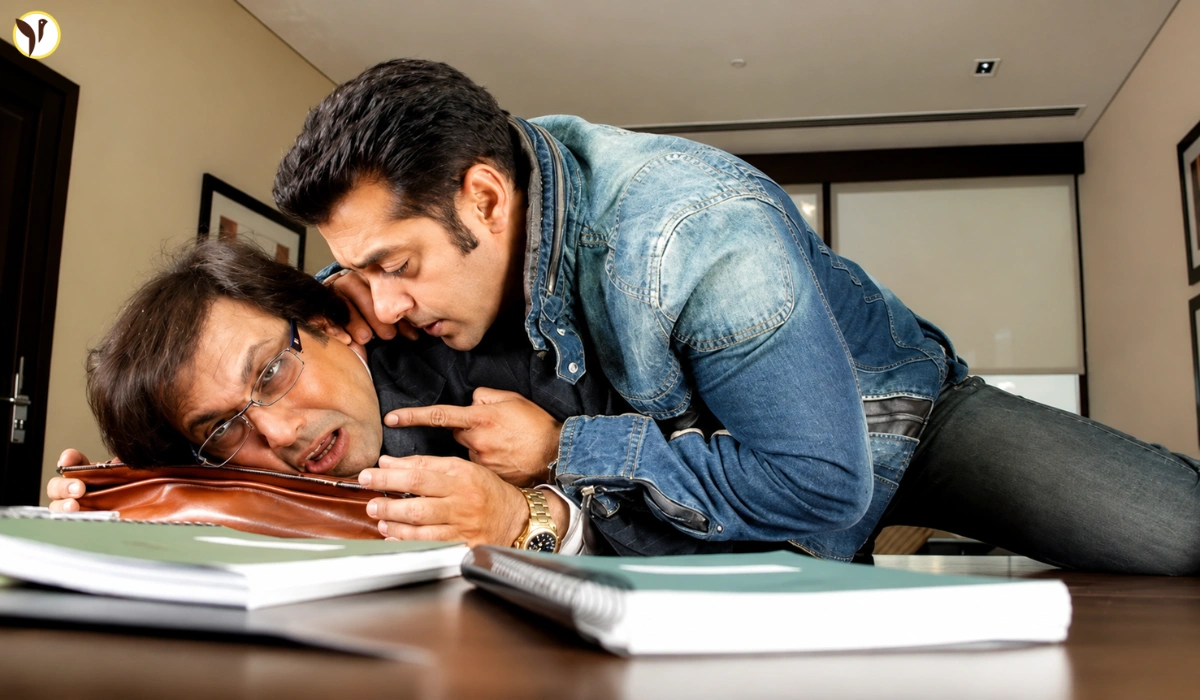



When Rajesh Sharma reported for his regular shift at a peripheral construction site last week, an insect bite was the furthest thing from his mind. Today, the 42-year-old structural helper lies in the intensive care unit of a state-run hospital, battling multi-organ complications triggered by what medical professionals suspect was severe envenomation.
The sudden deterioration of Sharma’s health has sent ripples of alarm through the local labor community. In response, the Regional Construction and Allied Workers’ Union (RCAWU) has formally petitioned the labor commissioner, demanding an immediate, impartial probe into the incident.
For the casual observer, an insect bite may seem like an unfortunate act of nature. However, for occupational health experts and labor rights advocates, Sharma’s critical condition highlights a frequently ignored blind spot in workplace safety protocols: the failure of employers to mitigate biological hazards. This article examines the factual timeline of the incident, the medical science behind such severe reactions, and the systemic labor issues that this tragic case has brought to the surface.
A Timeline of Deterioration
To understand the workers' body's demand for a probe, one must first look at the sequence of events. Based on site logs, medical records shared with the press by the family, and union statements, here is the reconstructed timeline of Sharma’s ordeal.
Timeline of the Rajesh Sharma Incident
|
|
|
|
|
|
|
|
|
|
|
|
|
|
|
|
|
|
|
|
|
|
|
|
|
|
|
|
The critical failure in this timeline is not necessarily the bite itself, but the interim response. The absence of a qualified medical responder on a site employing over 200 workers, and the supervisor's initial decision to delay hospitalization, form the crux of the union's investigation demand.

The Medical Reality: Why an Insect Bite Turns Critical
When a worker is hospitalized for an insect bite, public reaction often oscillates between confusion and skepticism. How can a bug bite cause multi-organ failure? The answer lies in the complex biomechanics of insect venom and the unpredictable nature of human immune responses.
From an entomological and toxicological perspective, "insect bites" are broadly categorized into two mechanisms of harm: envenomation (injection of venom, as seen with bees, wasps, or certain spiders) and vector-borne transmission (injection of pathogens, as seen with mosquitoes or ticks). In Sharma's case, the rapid onset of systemic shock points heavily toward severe envenomation, likely from a hymenoptera species (wasp/bee) or a medically significant spider.
Pathophysiology of Severe Insect Bite Reactions
|
|
|
|
|
|
|
|
|
|
|
|
|
|
|
|
|
|
|
|
Why It Matters: The Workers' Body Demands Accountability
The RCAWU’s demand for a probe is not a knee-jerk reaction; it is rooted in occupational health and safety (OHS) statutes that are routinely overlooked.
Under standard OHS frameworks—mirrored in labor laws globally—employers are mandated to provide a safe working environment. This includes mitigation of biological hazards. Construction sites, particularly those bordering undeveloped land or water bodies, are hotspots for vector proliferation.
The union's petition highlights three specific breaches:
- Failure to conduct a biological risk assessment before clearing the perimeter vegetation.
- Absence of emergency medical protocols, specifically the lack of epinephrine auto-injectors or basic anti-venom on-site.
- Negligent delay in referral, citing the supervisor’s directive to "rest" rather than seeking immediate hospitalization.
"If this were a fall from scaffolding, there would be an immediate stop-work order and an inquiry," stated a union representative during a press briefing. "Because the instrument of harm was an insect, the contractor wants to classify it as a 'natural occurrence' outside their liability. We reject that classification entirely."
Actor Rajesh Sharma was reportedly bitten by a suspected bug or poisonous spider while shooting for Prabhas' upcoming film at Ramoji Film City.
— E24 (@E24bollynews) July 9, 2026
Initially ignoring the bite, his condition later worsened, leading to his hospitalisation in West Bengal.
He is currently under… pic.twitter.com/75vb2v2JhT
The Systemic Blind Spot: Biological Hazards in Unorganized Labor
Rajesh Sharma’s tragedy is a microcosm of a much larger statistical reality. While regulatory bodies track physical hazards (falls, machinery accidents) and chemical hazards (asbestos, silica dust) with rigorous precision, biological hazards in blue-collar environments remain severely under-documented.
Documented Occupational Hazards in Construction vs. Awareness Levels
|
|
|
|
|
|
|
|
|
|
|
|
|
|
|
|
|
|
|
|
|
|
|
|
|
What Happens Next: The Legal and Medical Pathways
As Sharma fights for his life in the ICU, the administrative and legal machinery is slowly beginning to turn. The outcome of this case will likely set a precedent for how biological workplace injuries are handled in the region.
The Regulatory Probe
The labor commissioner's office has acknowledged receipt of the RCAWU's petition. If a formal inquiry is initiated, safety inspectors will examine the site for pest infestations, review the contractor’s safety manuals, and interview the shift supervisor. If found negligent, the contractor could face fines, suspension of operations, or blacklisting from future public works contracts.
The Workers' Compensation Battle
For Sharma’s family, the immediate concern is financial survival. To claim compensation under standard labor welfare acts (such as the Employees' State Insurance Corporation or state-specific welfare boards), the injury must be proven to have arisen "out of and in the course of employment." The union’s legal team is currently gathering medical affidavits to prove that the delay in onsite medical care exacerbated the condition, firmly establishing employer liability.
Medical Rehabilitation
Assuming Sharma survives the acute phase of his illness, his road to recovery will be long. Systemic envenomation often results in lasting renal or cardiac damage. He will likely require prolonged outpatient care, dialysis, or cardiac monitoring—costs that an unorganized sector worker cannot afford out of pocket.
A Call for Structural Reform
The case of Rajesh Sharma critically ill from an insect bite is a stark reminder that workplace safety cannot be a checkbox exercise limited to hard hats and safety harnesses. It must encompass the invisible threats present in the environment.
Contractors must be held to a standard where pre-work environmental assessments include pest control and vector mitigation. Furthermore, onsite labor forces must be trained in basic first-aid responses to anaphylaxis and envenomation. The presence of a trained paramedic or a nurse on sites employing over a certain threshold of workers should be a non-negotiable legal requirement, not a voluntary perk.
The workers' body demanding a probe is doing more than seeking justice for one man; they are attempting to rewrite the narrative of what constitutes a workplace hazard. Until biological risks are treated with the same gravity as a collapsing scaffold, workers like Sharma will continue to pay the price for systemic blind spots.
Other Articles to Read: