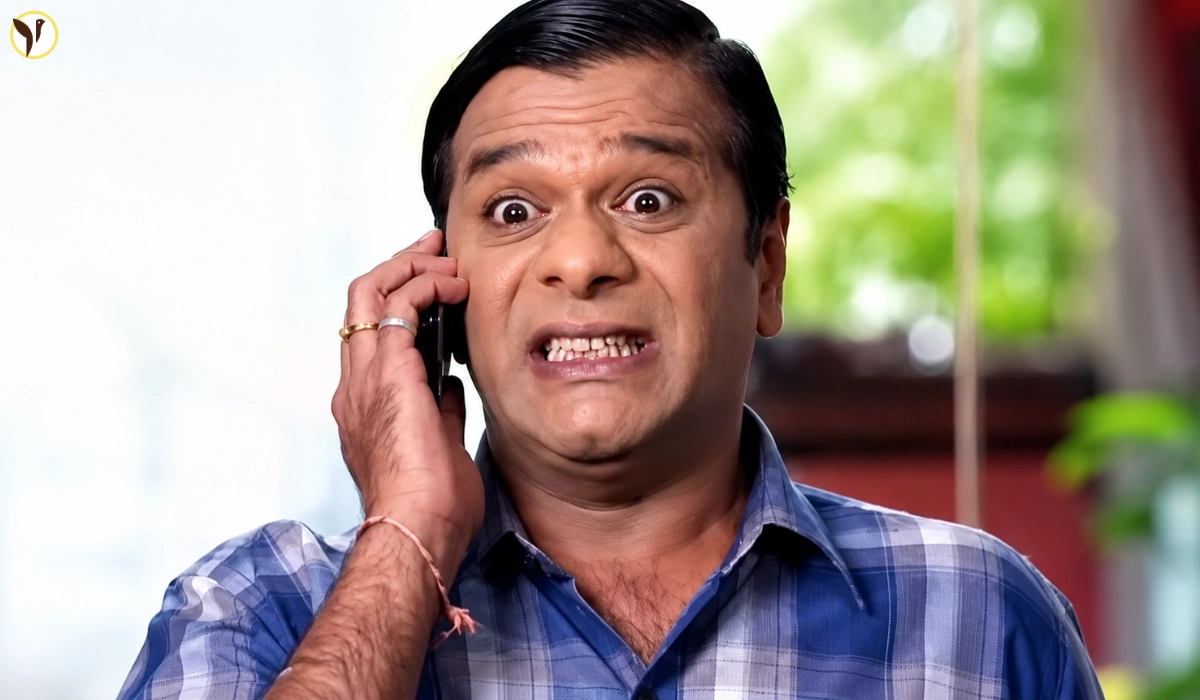


Tanmay Vekaria broke down mid-shoot on the sets of Taarak Mehta Ka Ooltah Chashmah — not from exhaustion, not from a difficult scene, but because the one person who watched him most proudly is gone.
For every actor who has ever stepped in front of a camera, there is usually one person in the audience who matters more than all the rest. For Tanmay Vekaria — the man behind the warm, guileless Bagha on Taarak Mehta Ka Ooltah Chashmah — that person was his mother. She loved watching him. Every evening, when the show aired on Sony SAB, she was there. And now, she isn't.
On the sets of India's longest-running sitcom, Tanmay recently broke down in the middle of a shoot. His co-stars rushed to him. Production came to a stop. It wasn't a disagreement or an injury that caused it — it was grief, surfacing quietly and without warning, the way it often does.
The Moment That Stopped the Shoot
Reports from the TMKOC set confirm that during an ongoing shoot, Tanmay Vekaria was overcome with emotion and began weeping uncontrollably. The trigger, according to multiple accounts, was his late mother — a dedicated fan of the show who, in her lifetime, found immense happiness watching her son on-screen as Bagha. The thought that she would no longer be present to watch him, to see the love audiences pour out for his character, became too much to hold back.
Fellow cast members immediately gathered around him. Makers paused filming to give the actor space to grieve and recover. It is understood that Tanmay did return to complete the shoot — a testament to his professionalism, but also a reminder of the invisible weight artists often carry behind the camera.
"Miss You, Maai, Always and Forever"
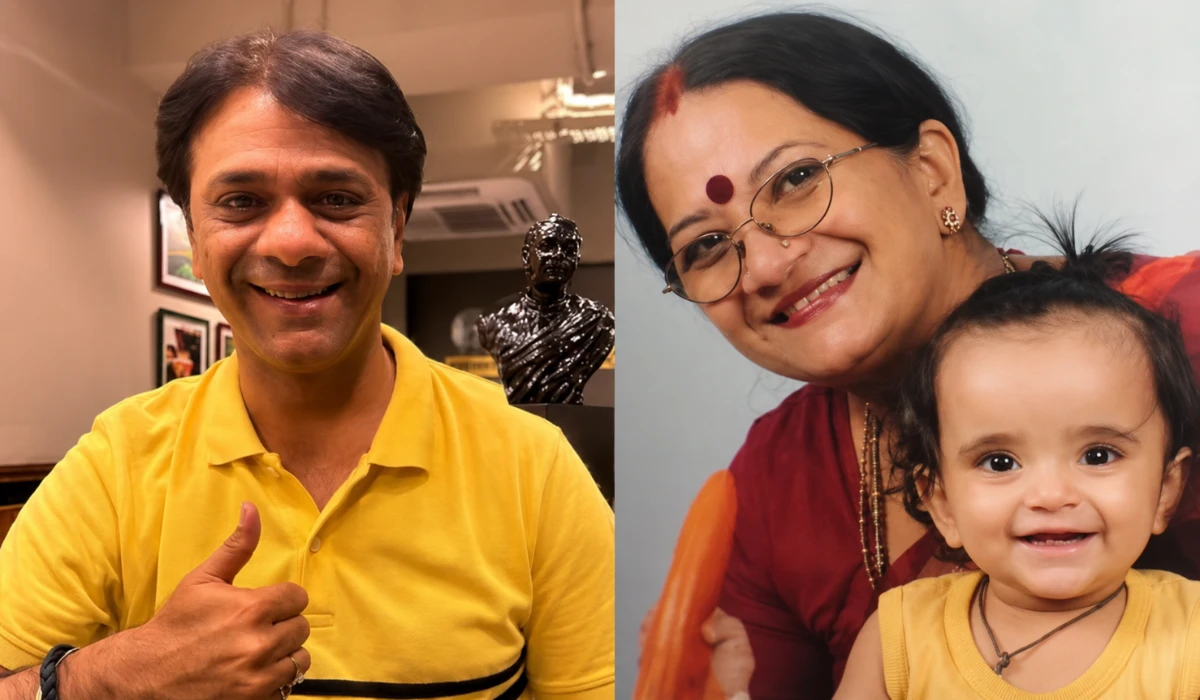
The context for this on-set breakdown stretches back to October 2025. Tanmay publicly shared the news of his mother's passing through a deeply personal Instagram post. He uploaded a series of unseen photographs of her alongside a caption that has since been widely shared:
"The sad part is, you can only see her in pics and feel her in your heart. You can't hug her or ever get to see her in front of you again. Miss you, Maai, always and forever. I know you're in the best place up there."— Tanmay Vekaria, Instagram (October 2025)
The post flooded with condolences from fans, friends, and fellow cast members. Nitish Bhaluni, who plays Tappu on TMKOC, expressed his sorrow via emojis and a heartfelt response. The grief was real, public, and widely felt.
But grief doesn't follow a schedule. Even months after the loss, returning to the set — where his mother once watched him with pride — appears to have brought everything back with fresh intensity.
From Cameo to Cultural Icon: Bagha's Journey
To fully appreciate why this moment carries such weight, one needs to understand what Bagha means — to the show, to its audience, and evidently to Tanmay's family.
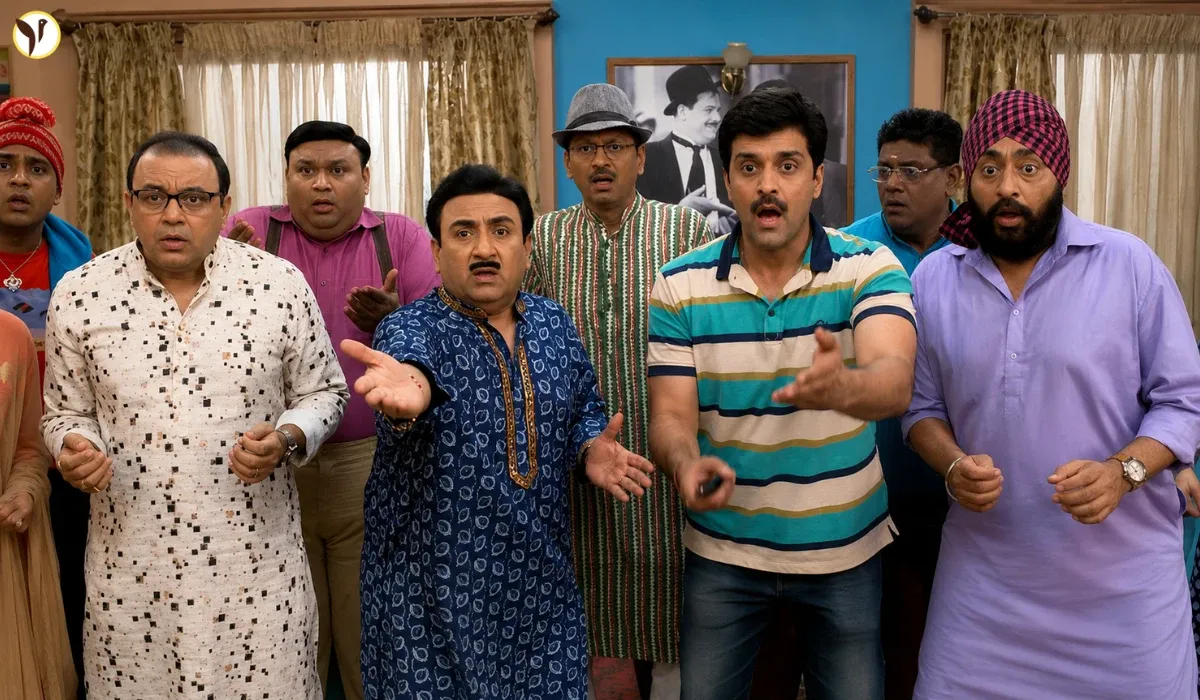
Tanmay Vekaria joined Taarak Mehta Ka Ooltah Chashmah in 2011. What began as a minor supporting role — the simple, loyal, big-hearted nephew of Nattu Kaka — evolved into one of the show's most beloved presences. Bagha is not a character built on sharp wit or grand drama. He is loved precisely because of his simplicity, his earnestness, and a kind of uncomplicated decency that audiences, particularly older viewers, find deeply comforting.
It is easy to imagine why a mother would love watching her son play that role. There is something especially moving about a parent seeing their child embody goodness in front of millions of people, every single evening
|
|
|
|
|
|
|
|
|
|
|
|
|
|
|
|
|
|
|
|
|
|
|
|
|
|
|
|
|
|
|
|
|
The Weight of Performing After Loss
What Tanmay is navigating isn't simply personal grief — it is the specific, rarely discussed challenge of performing comedy while mourning. Television actors in daily soaps work at a pace few entertainment industries in the world demand. The grind is relentless: multiple scenes shot each day, very little time between episodes, and almost no pause built in for an actor's personal circumstances.
For someone in that environment, returning to the exact place where their identity was forged — the place their mother saw them grow — while carrying fresh grief, is an experience that is difficult to fully prepare for. The set does not change when a parent dies. The lights, the crew, the costume, the lines — they all remain. But the person watching from home, the one who mattered most, is gone.
There is something that separates this story from the routine category of "celebrity grieves." Tanmay did not perform grief for an interview. He was in the middle of work — doing his job — when it caught up with him. That unguarded, involuntary quality is what makes the moment register so deeply with people who have themselves continued showing up somewhere after losing someone who loved them.
A Show Built on the Comfort of Everyday Life
It is worth stepping back to consider what TMKOC represents for its audience — and why a parent watching their child on it would carry such significance. The show has aired for over 17 years, has crossed 4,500 episodes, and continues to be one of India's most-watched Hindi language sitcoms on television. Its appeal has never been spectacle. It runs on the warmth of Gokhuldham Society, its recognisable characters, and the reliable comfort of their daily dramas.
For millions of Indian households, watching TMKOC in the evening is a ritual — something that defines a particular hour, a particular chair, a particular companionship. Tanmay's mother was, in this sense, not just a parent who supported her son's career. She was, like many in her generation, a faithful member of that nightly audience. That makes her absence from it something more than personal loss. It becomes a quiet, ordinary kind of grief that many families can recognise — the show still airs, but the person who watched it with you is not there anymore.
What Comes Next
Tanmay Vekaria has not made a formal public statement about this specific on-set incident. Given his history of expressing emotion with restraint and sincerity — as seen in his October 2025 Instagram tribute — it is unlikely he will. What is clear is that he returned to shooting, and that the show, with all the institutional weight behind it, continues.
But moments like this are worth noticing. They remind us that behind the polished absurdity of Bagha — the blank expressions, the comic timing, the loyal buffoonery — is a real man, part of a real family, working through a real loss in a very public setting. The grief doesn't pause for the camera. And sometimes, neither can he.
Other Articles to Read: