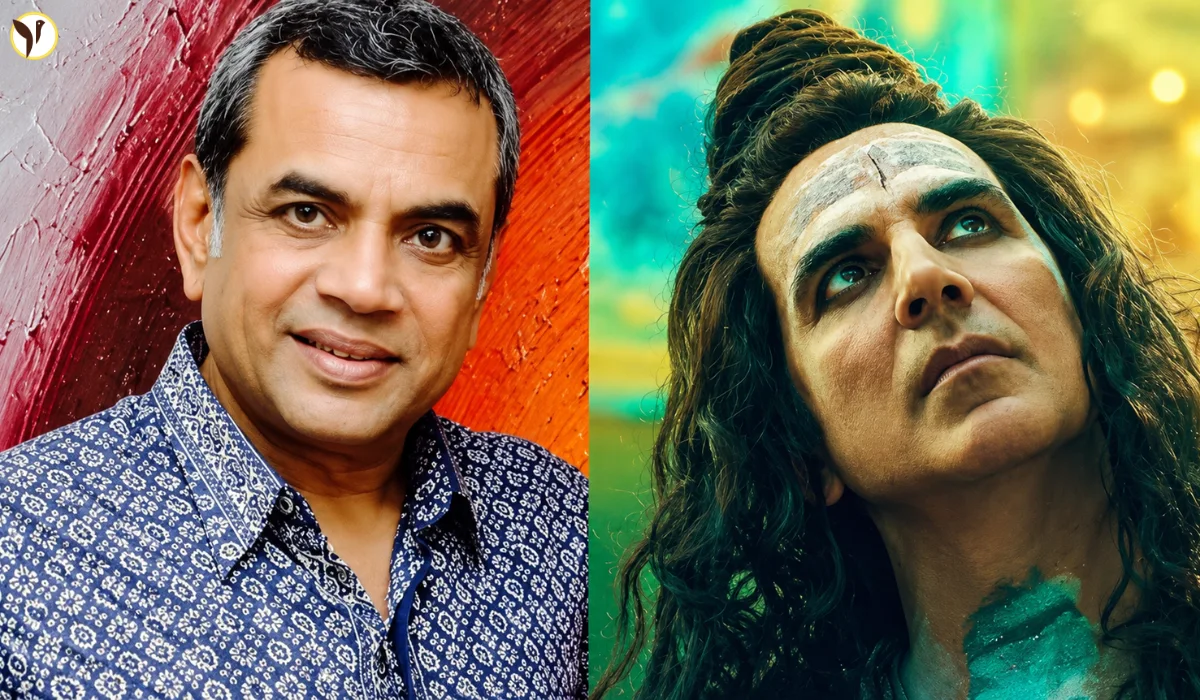


When the credits rolled on OMG 2 last year, audiences and critics alike praised the film for tackling the taboo subject of sex education in Indian schools. The general consensus positioned the movie as a standalone spiritual successor to the 2012 hit OMG: Oh My God!, with Pankaj Tripathi stepping into the shoes previously worn by Paresh Rawal. However, a recent revelation has shifted the narrative surrounding the franchise's origins.
In a detailed interview, Paresh Rawal clarified a long-standing misconception: why did Paresh Rawal claim OMG 2 was his idea all along? The answer does not stem from a bitter dispute over intellectual property, but rather from a fascinating, largely unseen anatomical process of how a Bollywood script evolves over more than a decade. To understand Rawal’s statement, one must look past the surface of casting changes and examine the structural lifecycle of the OMG universe.
The Genesis of the Concept: 2012 vs. 2023
To appreciate Rawal’s claim, we must return to 2012. The original OMG was a satirical takedown of commercialized religion and blind faith. During the promotional circuit for that film, Rawal—known for his deep involvement in the scripting process—floated a premise for a potential sequel.
Rawal’s original pitch was not about sex education. Instead, it revolved around a father who is embarrassed and conflicted when his child asks him straightforward questions about human anatomy and intimacy. The comedic and dramatic tension was meant to arise from a traditional Indian man's inability to discuss basic biology with his offspring, eventually spiraling into a larger social commentary.
By the time OMG 2 was written and directed by Amit Rai in 2023, the landscape of Indian cinema had changed. The superficial pitch of a "father embarrassed by sex education" remained, but the execution was entirely different.
Evolution of the Core Premise: A Comparative Analysis
To provide clarity on how the concept morphed, here is an original analysis of the narrative shift between Rawal’s initial 2012 premise and the final 2023 cinematic product:
|
|
|
|
|
|
|
|
|
|
|
|
|
|
|
|
|
|
|
|
|
|
|
|
As the table illustrates, while the "seed" of the idea belonged to Rawal, the "tree" was entirely cultivated by Amit Rai.
Why Did Paresh Rawal Say OMG 2 Was His Idea?
Rawal’s assertion was not an attempt to strip director Amit Rai of his hard-earned credit. Rather, it was a corrective measure against a growing public assumption that OMG 2 was a completely foreign concept retroactively attached to the OMG brand.
In the film industry, there is a vast difference between a "premise" and a "screenplay." A premise is a one-sentence summary (e.g., "A man sues God"). A screenplay is a 120-page blueprint detailing every scene, dialogue, and character arc. Rawal was staking claim to the premise—the thematic jumping-off point. He clarified that when he and the original producers brainstormed a sequel over a decade ago, the topic of parental reluctance toward sex education was the chosen subject matter.
The Pivot: Why Pankaj Tripathi Replaced Paresh Rawal
If the idea was Rawal’s, the immediate follow-up question is why he did not star in the film. The casting of Pankaj Tripathi was a masterstroke, but it was necessitated by fundamental changes in the script's age dynamics.
In 2012, Rawal’s character, Kanji Lalji Mehta, was established as a slightly older, cynical, urban shopkeeper. If the sex education sequel had gone into production immediately, Rawal would have played a father to a teenage or college-aged son. The comedy would have relied on the clash between a boomer father and a millennial son.
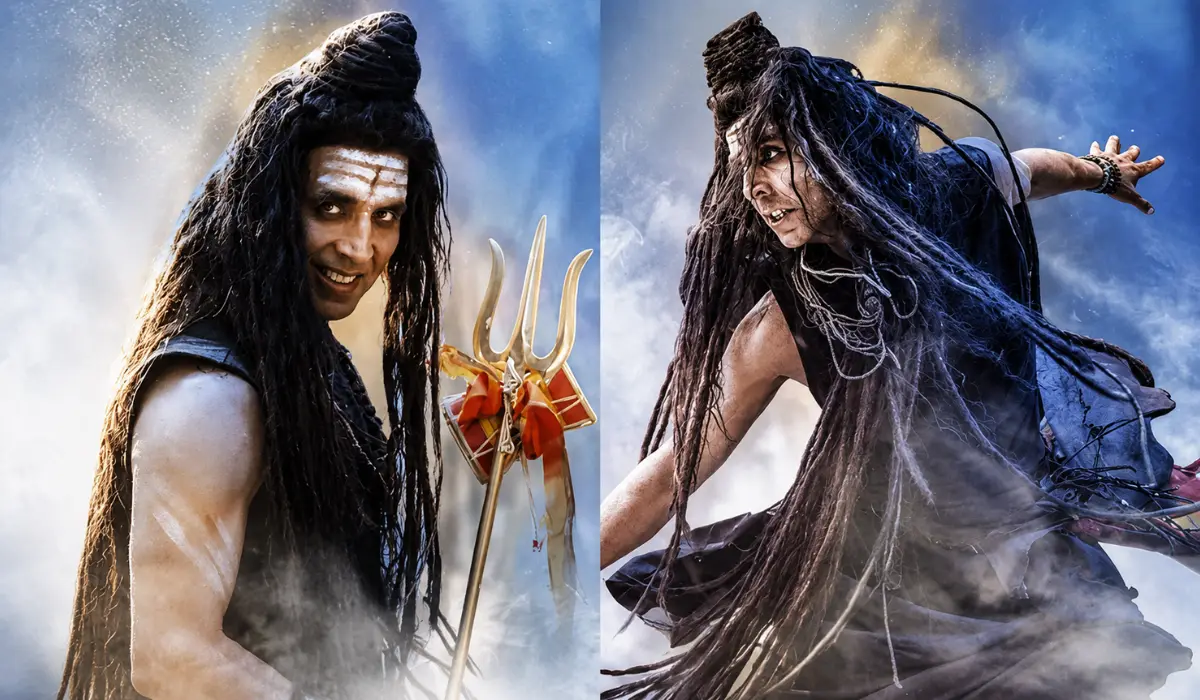
By 2023, the script required the protagonist to be the father of a school-going teenager (roughly 15-16 years old). Casting Paresh Rawal—a visibly older actor at this stage of his career—as the father of a high school freshman would have strained the audience's suspension of disbelief. Furthermore, the character of Kanti Sharan Mudgal was written not as a cynical atheist, but as a devout, humble devotee of Lord Shiva.
Tripathi brought a specific blend of subservience, repressed anger, and middle-class dignity that fit the 2023 script perfectly. Rawal’s absence was a matter of narrative math and character realignment, not a falling out.\
The Screenwriting Reality: From Seed to Harvest
Understanding this dynamic requires acknowledging the collaborative nature of screenwriting. In Bollywood, it is common for an actor's passing thought during a press junket to be filed away by a producer, only to be resurrected years later by a different writer.
Amit Rai, the writer-director of OMG 2, deserves immense credit for recognizing the potential of a decade-old premise and elevating it. Rai transformed what could have been a simplistic comedy of errors into a layered courtroom drama. He wove in the metaphor of the Kamasutra as a cultural text, introduced the legal arguments surrounding the Right to Education, and balanced the tonal tightrope between comedy and social messaging.
Rawal’s claim serves as a reminder that ideas are communal currency in the film industry, but execution is an individual feat. By stating the idea was his, Rawal was simply connecting the historical dots for an audience that assumed OMG 2 was born in a vacuum.
Why This Matters Beyond Bollywood Gossip
This narrative arc is highly relevant to anyone interested in the mechanics of storytelling and intellectual property in collaborative mediums. It highlights a common friction point in creative industries: the gap between conceptualization and execution.
When a journalist or fan asks, "Whose idea was this?", the answer is rarely simple. In the case of OMG 2:
- The Thematic Seed: Paresh Rawal (2012)
- The Narrative Architecture: Amit Rai (2023)
- The Emotional Translation: Pankaj Tripathi (2023)
Disentangling these three elements is impossible when viewing the final product, which is why clarifications like Rawal's are vital for historical accuracy in cinema.
What Happens Next for the OMG Franchise?
The success of OMG 2—which earned over ₹220 crore at the domestic box office despite an 'A' certificate—has virtually guaranteed a continuation of the franchise. However, the franchise's future depends entirely on its ability to pivot away from its established formula.
If a third installment moves forward, the producers face a critical decision: do they return to the courtroom drama format, or do they shift genres entirely? Given that Rawal has publicly reclaimed his connection to the franchise's intellectual genesis, it opens the door for him to return in a new capacity—perhaps not as the lead protagonist, but as an antagonist, a senior advocate, or a mentor figure.
More importantly, the underlying philosophy of the OMG franchise has always been to challenge societal hypocrisy. The next logical step for the filmmakers would be to identify a new, pressing social blind spot. Whether that involves digital privacy, the commercialization of mental health, or the education system's rote-learning culture, the next film will require another decade of gestation, another capable writer, and a fresh perspective.
Final Assessment
Paresh Rawal’s claim regarding OMG 2 is a textbook example of how a cinematic concept mutates over time. He did not make the claim to diminish the work of the 2023 team; he made it to assert his role as the foundational thinker of the franchise's thematic expansion. For the audience, this revelation should not change their appreciation of the film, but rather enhance it. Knowing that a simple idea about a father's embarrassment sat dormant for eleven years before being transformed into a nuanced, culturally significant blockbuster adds a rich layer of context to the OMG 2 viewing experience.
Other Articles to Read: