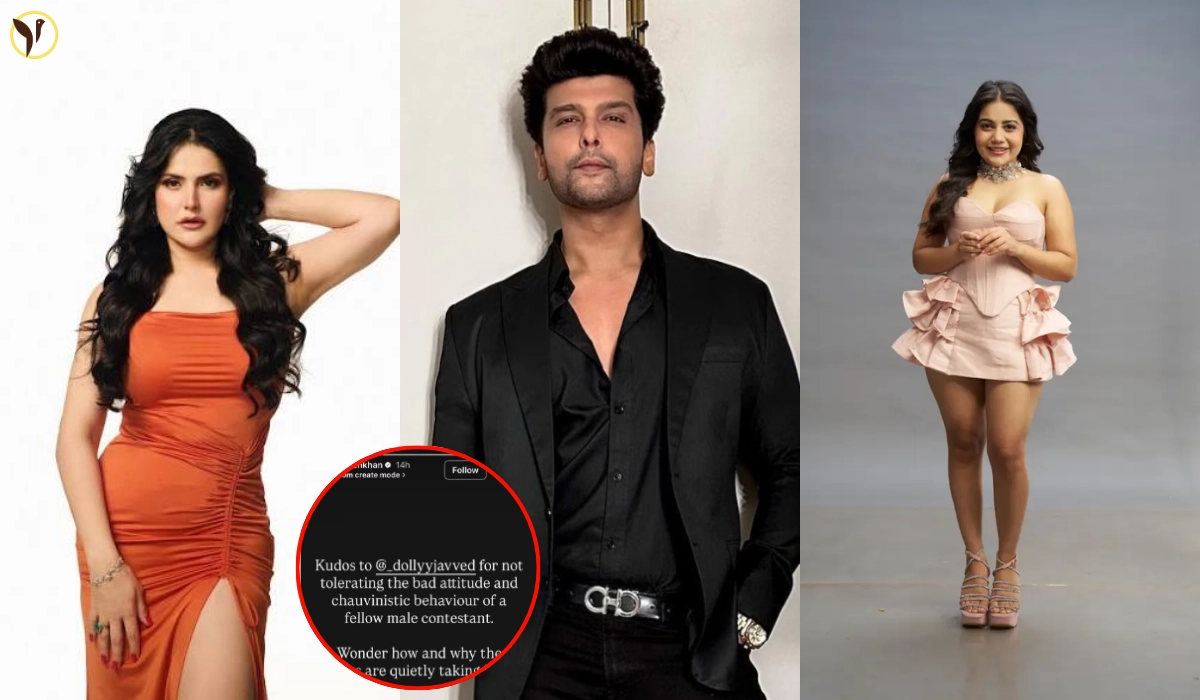


The Indian entertainment industry is no stranger to public spats, but when a disagreement transcends personal jabs and touches on systemic behavioral issues, it demands a closer look. Recently, Zareen Khan called Kushal Tandon chauvinistic, stepping firmly into a brewing controversy to back Dollyy’s stand against the television actor. While social media algorithms thrive on reducing such incidents to mere "drama" or "Twitter wars," the underlying dynamics tell a much more complex story about ego, gender politics, and the shifting boundaries of acceptable public conduct.
Here is a comprehensive breakdown of what triggered this confrontation, why Zareen Khan’s specific phrasing carries significant weight, and what this incident reveals about the current cultural climate of the Indian entertainment sphere.
The Inciting Incident: What Actually Happened?
Public disagreements between digital creators, influencers, and mainstream actors have become increasingly common, largely fueled by the immediacy of platforms like Instagram and X (formerly Twitter). The current friction began when Kushal Tandon made public comments directed at Dollyy, an emerging digital personality.
While the exact origins of their exchange trace back to differing opinions on a social media thread, the situation escalated when Tandon’s tone shifted from a standard disagreement to what observers noted as overtly condescending and dismissive. Dollyy responded by holding her ground, refusing to be bulldozed by the actor's aggressive posturing.
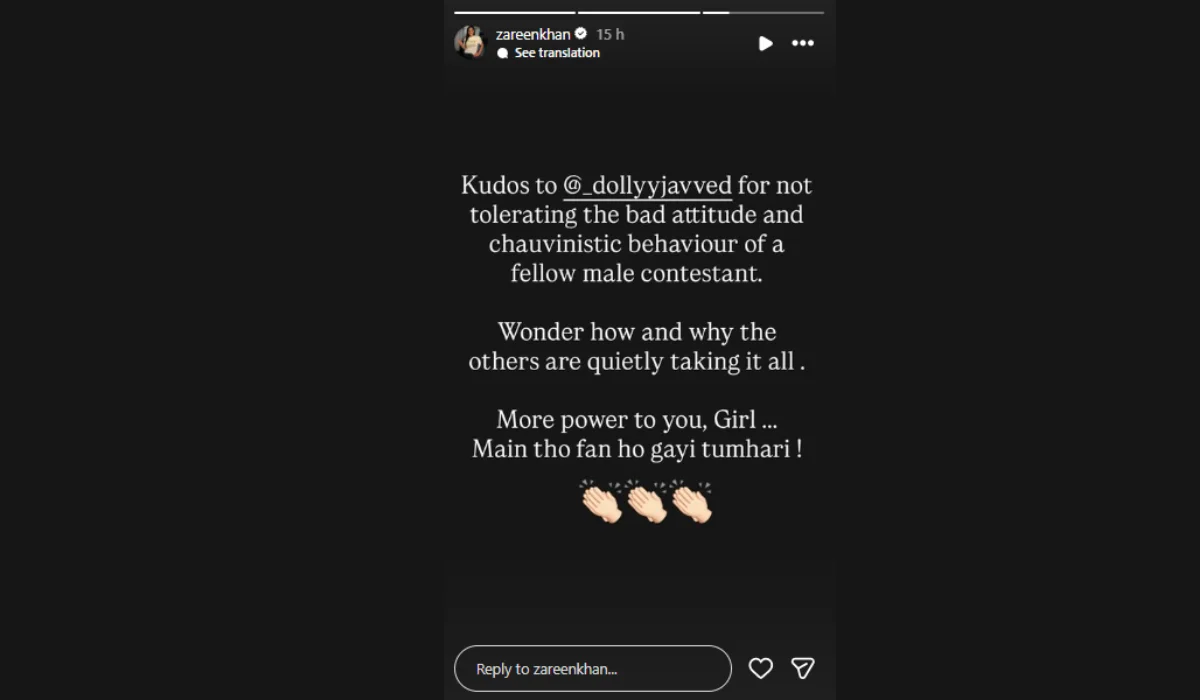
Enter Zareen Khan. Rather than watching from the sidelines, the Veer and Hate Story 3 actor chose to intervene—not to fan the flames, but to label the behavior for what it perceived it to be. By calling Tandon "chauvinistic," Khan shifted the narrative from a "he-said-she-said" feud to a commentary on male entitlement.
Unpacking the 'Chauvinistic' Remark: Why Zareen Khan’s Word Choice Matters
In the realm of public relations and celebrity spin, words are chosen carefully. Khan did not call Tandon "rude," "arrogant," or "unprofessional." She used the word "chauvinistic."
In modern sociological context, male chauvinism refers to the belief in the intrinsic superiority of men over women, often manifesting as behavior that patronizes, dismisses, or dominates women. By deploying this specific term, Zareen Khan provided a framework for the audience to understand Dollyy’s predicament. It wasn't just that Tandon was being loud; it was that his behavior was rooted in a mindset that inherently devalues a woman's voice when challenged.
To understand the gravity of this label, we must look at how public disputes are generally categorized when gender dynamics are involved.
Analyzing the Spectrum of Public Disputes in Entertainment
|
Dispute Category |
Primary Motivator |
Typical Behavioral Pattern |
Public Perception |
|---|---|---|---|
| Professional Disagreement | Differing creative/business views | Firm, boundary-respecting debate | Seen as constructive or standard industry friction |
| Ego-Driven Clout Chasing | Desire for engagement/virality | Hyperbolic statements, personal attacks | Dismissed as "puberty hits different" or cheap PR |
| Chauvinistic Posturing (As alleged here) | Threat to male authority/dominance | Condescending tone, mocking, talking down, attempts to silence | Increasingly called out as toxic; triggers solidarity from peers |
Contextualizing Kushal Tandon’s Public Persona
To fairly assess the situation, one must look at the historical context of the accused party’s public behavior. Kushal Tandon, who rose to fame with Ek Haseena Thi and later participated in Bigg Boss 7, has cultivated a persona that heavily leans into the "alpha male" archetype.
Within the reality TV ecosystem, this persona is often rewarded. Aggression, loud confrontations, and a refusal to back down are translated into screen time. However, as the industry pivots toward more conscious consumption of media, the traits that once made a reality star popular are now being heavily scrutinized. Tandon’s track record includes previous online skirmishes where his tone has been criticized as unnecessarily aggressive.
When Zareen Khan backed Dollyy’s stand, she was indirectly challenging the normalization of this "alpha male" aggression. She highlighted a growing disconnect: behavior that is excused inside the simulated pressure-cooker of a reality show is no longer acceptable in broader public discourse.
Dollyy’s Stand: The Refusal to Be Silenced
Central to this narrative is Dollyy herself. In the digital age, an established actor engaging in a public spat with a smaller creator carries an inherent power imbalance. The actor has a massive verified following, legacy media connections, and the implicit backing of industry clout. The creator, on the other hand, is often left vulnerable to dogpiling and coordinated trolling.
Dollyy’s stand was significant because she did not capitulate to this power dynamic. When confronted with a loud, dismissive response, she maintained her position. This kind of steadfastness is precisely what often triggers escalated aggression from individuals accustomed to easy victories in online arguments.
Zareen Khan’s intervention served to neutralize that power imbalance. By inserting her own industry weight into the conversation, Khan ensured that Dollyy was not isolated. It was a textbook example of peer-to-peer solidarity.
The Shifting Culture of Bollywood’s "Girls' Club"
For decades, the Indian entertainment industry was notorious for its "old boys' club" mentality—a silent consensus where women were expected to endure microaggressions, patronizing behavior, and outright sexism to maintain their careers.
We are now witnessing a structural dismantling of that silence. When an actor like Zareen Khan publicly calls out a peer, it signals a systemic shift. It reflects an environment where women are less concerned about the PR fallout of confronting a powerful man and more concerned about setting a precedent.
This isn't about launching a vendetta; it is about drawing a line in the sand. The implicit message to the industry is clear: if you employ chauvinistic tactics to win an argument, you will be publicly identified as such, regardless of your follower count.
The PR and Reputational Fallout: What Happens Next?
In the immediate aftermath of Zareen Khan’s comments, the digital ecosystem responded predictably. Tandon’s fan base mobilized to defend him, employing the common deflection tactics of calling the situation "overblown" or attacking the credibility of the women involved. However, from a strategic communications standpoint, Tandon is in a precarious position.
Here is what typically happens next in these scenarios, and what we can expect:
- The "Context" Defense: The accused party often releases a statement or video claiming their words were "taken out of context." Given the visual and textual permanence of social media, this defense rarely holds up to logical scrutiny but serves to give loyal fans a narrative to cling to.
- Brand Distancing: While Kushal Tandon is primarily an actor, he also engages in brand partnerships. In the post-#MeToo era, digital marketers are highly risk-averse. Associating with an actor publicly labeled as chauvinistic poses a tangible risk to a brand's female demographic.
- The "Silent Fade": The most likely outcome is that Tandon will allow the news cycle to churn through the controversy and eventually move on without issuing a direct apology. While this saves face in the short term, it leaves the "chauvinistic" label permanently attached to his digital footprint, altering how new audiences perceive him.
Why This Matters Beyond the Headlines
If this were simply two people arguing on the internet, it would not warrant deep analysis. The reason this incident resonates is that it serves as a cultural barometer.
Every time a woman in the public eye is patronized and subsequently defended, it redefines the social contract of the internet. It teaches young, aspiring female creators that they do not have to accept disrespect as the cost of doing business online. It also serves as a cautionary tale for male professionals: the unexamined defense of one's ego through domineering behavior now carries real social and professional liabilities.
Zareen Khan backing Dollyy is a micro-event that reflects a macro-trend. The entertainment industry is slowly but surely transitioning from a space where power dictated truth, to a space where behavior is universally subject to ethical scrutiny.
Other Articles to Read: