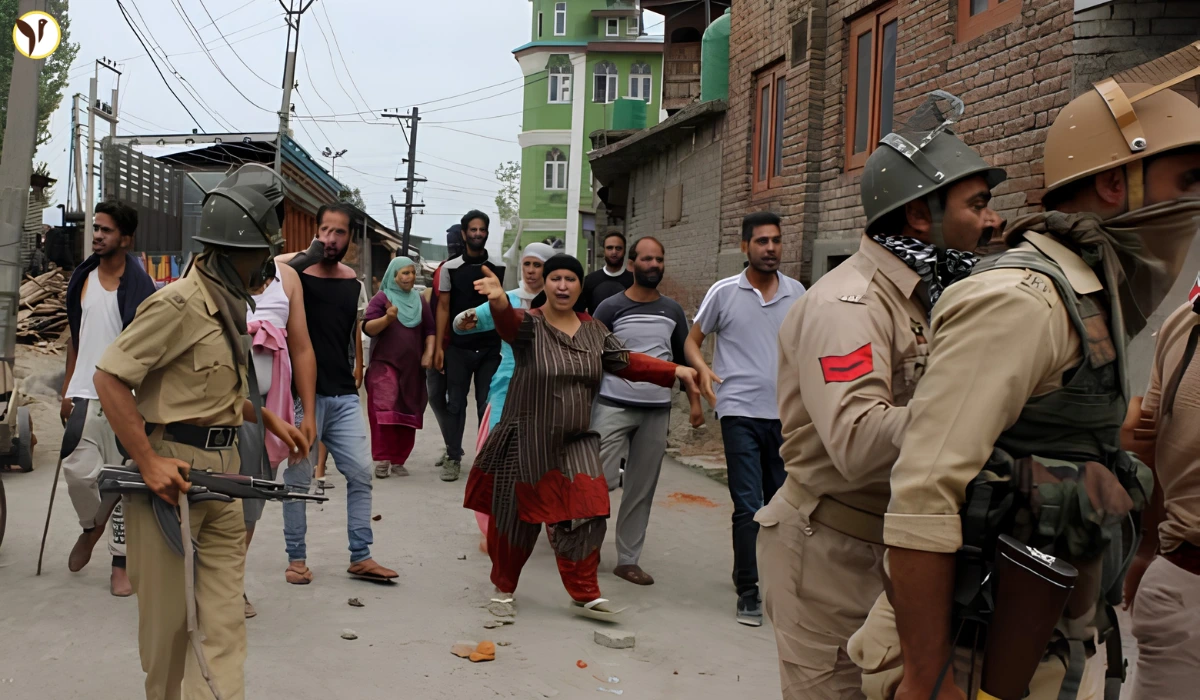
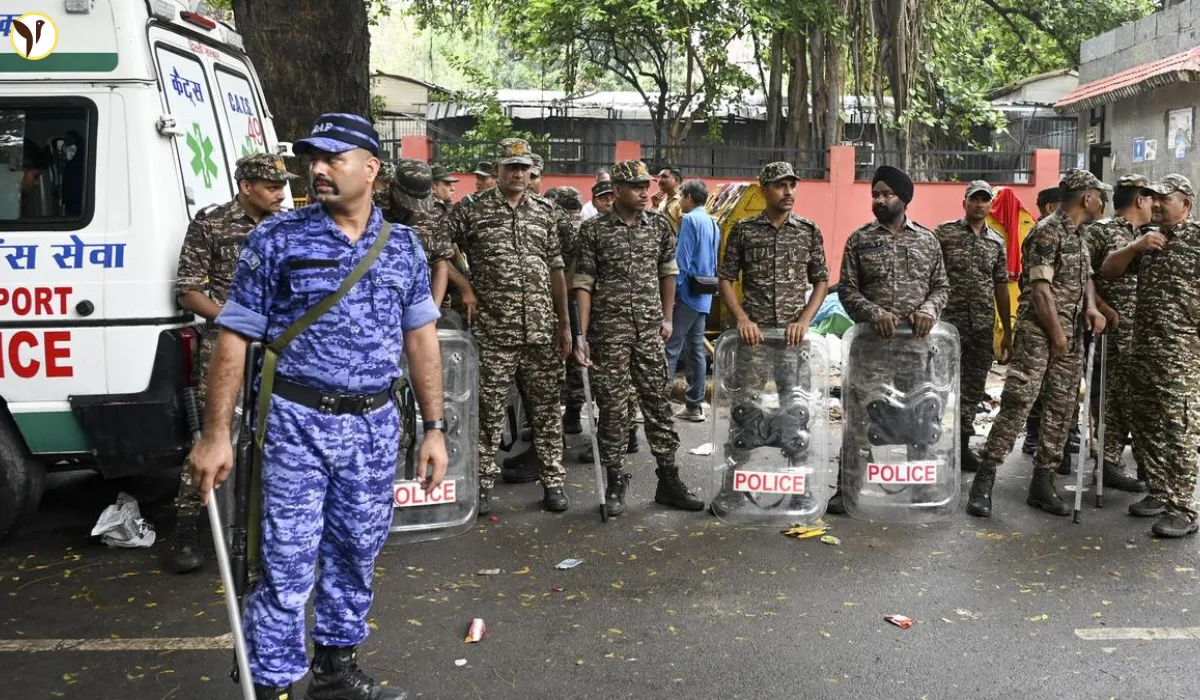


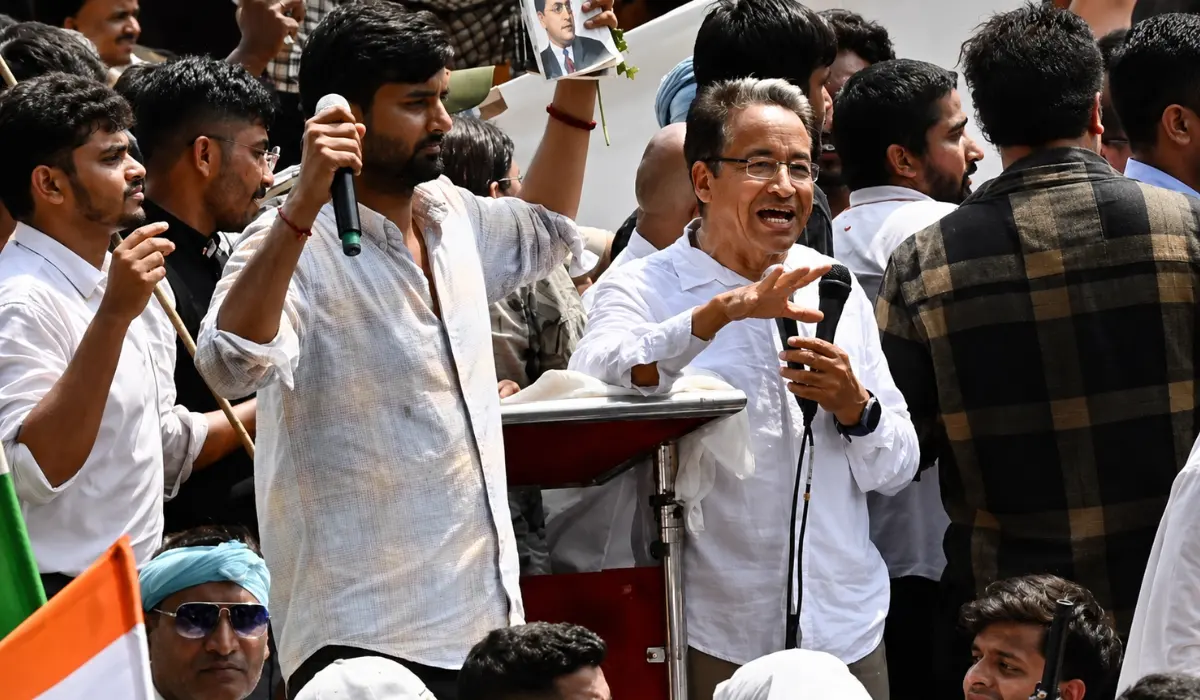
On a humid afternoon in the national capital, the intersection of democratic dissent and state authority was once again laid bare. What began as a planned march by civil services aspirants under the banner of the "CJP Protest Delhi" quickly escalated into a flashpoint, as Delhi Police deployed a lathi-charge to prevent the crowd from advancing toward Jantar Mantar.
For the thousands of young Indians preparing for the Union Public Service Commission (UPSC) examinations, this was not an isolated act of disruption. It was the physical manifestation of months of growing frustration regarding structural anomalies in the examination process, specifically the Civil Services Aptitude Test (CSAT).
However, to view this solely as a student-agitation story is to miss the broader institutional and legal nuances at play. This article breaks down the anatomy of the standoff, the substantive demands of the aspirants, the legal boundaries of police action, and the systemic reforms required to prevent such confrontations.
Anatomy of a Standoff: How the CJP Protest Delhi Unfolded
The timeline of the protest reveals a rapid escalation from a peaceful assembly to a forced dispersal. According to ground reports and eyewitness accounts, the sequence of events was as follows:
- Assembly (Early Afternoon): Hundreds of aspirants gathered at a designated point in central Delhi. The mood was initially disciplined, with organizers reiterating that the march to Jantar Mantar would be peaceful.
- The Barricade (Mid-Afternoon): As the procession moved toward Jantar Mantar—a traditional sanctioned spot for protests in the capital—they were intercepted by heavily deployed Delhi Police personnel. The police stated that no prior permission had been granted for the march to this specific location, citing traffic restrictions and law-and-order concerns in the high-security Lutyens' zone.
- The Escalation: When the students attempted to cross the barricades, asserting their democratic right to peaceful assembly, police used water cannons and subsequently resorted to a lathi-charge (baton charge) to disperse the crowd.
- The Aftermath: Several students reported injuries. Videos circulating on social media showed chaotic scenes, with aspirants running to avoid baton blows, and a few instances of protestors pushing back against the barricades.
The immediate trigger for the police action was a breakdown in negotiation. The state viewed the crossing of barricades as an unlawful assembly, while the students viewed the denial of access to Jantar Mantar as an unconstitutional gag on their grievances.
Beyond the Barricades: The Core Grievances Fueling the March
To understand the CJP protest Delhi, one must understand the pressure cooker environment of UPSC preparation. The protesters were not marching against a single exam paper, but against what they perceive as a systemic bias embedded in the CSAT (General Studies Paper-II).
While the UPSC introduced CSAT in 2011 to assess aptitude rather than rote memorization, it has been a subject of intense debate. The current wave of protests hinges on three primary demands:
- The Language and Comprehension Bias: Aspirants argue that the English comprehension and reasoning sections of the CSAT inherently favor candidates from urban, English-medium backgrounds, placing rural and regional-language-medium aspirants at a stark disadvantage.
- Ambiguous Questioning: Specific questions in the most recent CSAT paper were flagged for having multiple correct answers or poorly translated Hindi versions, leading to arbitrary marking.
- The "Qualifying" Paradox: Although CSAT is technically a "qualifying" paper (requiring only 33% to pass), the difficulty level and negative marking mean that even highly competent candidates sometimes fail to cross this threshold, ending their journey before the Mains examination (which tests actual knowledge).
Data Analysis: The Growing Weight of the UPSC Ecosystem
The sheer volume of applicants makes any structural flaw in the exam a massive political and administrative issue. Below is an analysis of recent UPSC application trends, highlighting the exponential growth in competition.
|
|
|
|
|
|
|
|
|
|
|
|
|
|
|
|
|
|
|
|
|
|
|
|
|
|
|
|
|
|
|
|
|
|
|
|
|
|
|
|
|
|
|
|
|
|
|
|
CJP Protest Delhi / CSAT translation and ambiguity issues. |
The Use of Force: A Legal and Proportionality Check
The most jarring aspect of the CJP protest Delhi was the visual of police batons striking students. From a legal and administrative standpoint, the use of force by state authorities is governed by strict protocols, even when dealing with unlawful assemblies.
The Legal Framework
In India, the right to peaceful assembly without arms is a fundamental right under Article 19(1)(b) of the Constitution. However, it is subject to "reasonable restrictions" under Article 19(3) in the interest of public order and sovereignty.
Furthermore, Section 144 of the Code of Criminal Procedure (CrPC) is often invoked in Delhi to prohibit the assembly of four or more people in sensitive areas. The police argument rests on the premise that the marchers did not have permission to cross into specific zones, turning the assembly "unlawful."
Was the Lathi-Charge Justified?
The critical question is one of proportionality. The Supreme Court of India has repeatedly admonished law enforcement for resorting to a lathi-charge as a first resort rather than a last resort. Standard operating procedures (SOPs) dictate a graduated response:
- Verbal warnings and negotiations.
- Use of water cannons or tear gas.
- Targeted use of batons (lathi-charge) only if the crowd becomes violent or poses an immediate threat to life and property.
If video evidence confirms that students were peacefully sitting or merely pushing against barricades without wielding weapons, the use of a lathi-charge opens the Delhi Police to legal scrutiny for excessive force. Conversely, if protesters began dismantling public property or physically assaulting officers, the police action gains legal defensibility. An impartial magisterial inquiry is the standard democratic tool to ascertain these facts—a demand that the protesting students have rightfully raised.
Hospitalisation Was to Save His Life, Not Confine Him: Delhi HC Declines to Order Transfer of Sonam Wangchuk to Medanta; He Sets 3 Conditions to Break His Fast
— SCC Online (@scconline_) July 20, 2026
Read the full report: https://t.co/38PyLnubCI#SonamWangchuk #DelhiHighCourt #PIL #RightToLife #HungerStrike pic.twitter.com/DQ3FPWFiyk
Historical Parallels: Civil Services Protests in India
The CJP protest Delhi is not an anomaly. The UPSC exam format has historically been a lightning rod for student mobilization.
- 2011-2015: The introduction of CSAT led to massive, sustained protests, particularly in Hindi-speaking states. The government eventually had to intervene, making CSAT qualifying and excluding English comprehension marks from the final merit calculation.
- 2022: Aspirants staged protests over the abrupt normalization of scores across different shifts of the UPSC Prelims, demanding transparency in the equipercentile method used.
Each time the state has reacted with a mix of administrative delays and eventual concessions. The current protests indicate that the 2015 fixes were band-aids rather than permanent solutions to the linguistic and aptitude biases inherent in the exam design.
What Happens Next: The Administrative and Legal Roadmap
The dispersal of a crowd does not equate to the resolution of a problem. In the wake of the CJP protest Delhi, several trajectories are likely to unfold over the next few weeks:
1. Judicial Intervention: Multiple petitions are expected to be filed in the Delhi High Court or the Supreme Court challenging both the CSAT paper anomalies and the police action. The courts typically act as the arbitrator here, often directing the UPSC to provide expert committee reports on disputed questions.
2. Government Committee Formation: The Department of Personnel and Training (DoPT), the administrative parent body of the UPSC, may constitute a committee of experts to review the translation and structural issues of the CSAT. However, given that the Mains examination is imminent, any major structural change for this cycle is highly unlikely. Relief, if any, will probably come in the form of extra attempts or age relaxation for affected batches.
3. Political Fallout: Because UPSC aspirants form a significant demographic in the Hindi heartland, opposition political parties are likely to adopt the issue, raising it in Parliament to pressure the central government.
4. Police Accountability: If formal complaints of excessive force are pursued, the Delhi Police will be forced to justify their use of a lathi-charge through internal reviews and submitted video evidence to oversight bodies.
Why This Demands Structural Reform, Not Just Sympathy
Covering the CJP protest Delhi purely through the lens of "police vs. students" strips the event of its institutional context. India’s civil services are the steel frame of its bureaucracy. When the gateway to this frame is viewed as fundamentally flawed by a significant portion of its participants, it is a crisis of institutional legitimacy.
The reliance on protests to be heard indicates a failure of feedback mechanisms within the UPSC. A modern, transparent examining body must have an in-built, time-bound grievance redressal system for question-paper ambiguity before results are declared, rather than forcing students into the streets after the fact.
Until the government addresses the core friction between an English-aptitude-based screening test and India's deeply multilingual demographic reality, the barricades at Jantar Mantar will continue to be tested, and unfortunately, the batons will continue to fall.