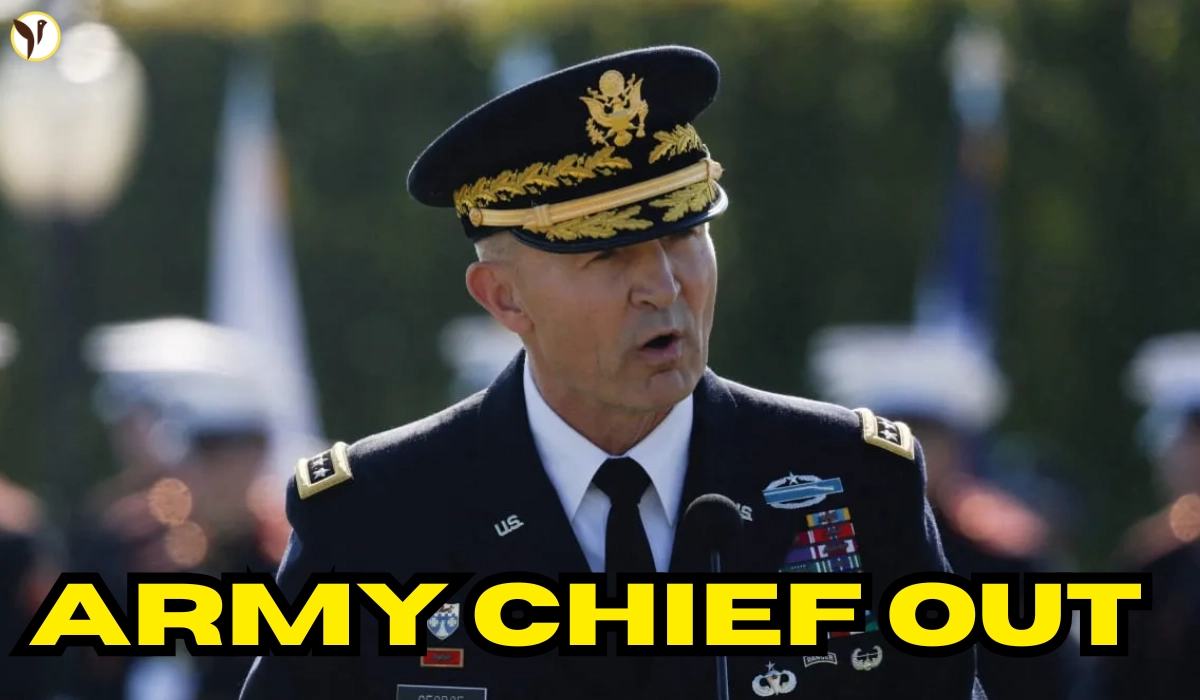


If you follow global military power or US politics, this is a moment you shouldn’t ignore. The Pentagon is facing a sudden leadership shift after US Defense Secretary Pete Hegseth asked Army Chief Randy George to step down.
This is not just a routine retirement request. It signals deeper changes inside the US military leadership at a time when global tensions are already high. For anyone tracking defense policy, geopolitics, or even global markets, this move could reshape decision-making at the top of the world’s most powerful army.
What exactly has happened inside the Pentagon
In simple terms, Hegseth has formally told General Randy George to retire early from his role as Chief of Staff of the US Army.
This is significant because:
- Army Chiefs usually complete fixed terms
- Mid-term exits are uncommon and closely watched
- It directly impacts command over one of the world’s largest military forces
The request signals a shift in leadership priorities rather than a scheduled transition.
Who is Randy George and what did he lead
General Randy George has had a long career in the US Army, including leadership roles in Iraq and Afghanistan. As Army Chief, he focused on modernizing the force.
Key areas he worked on include:
- Introducing AI-driven battlefield systems
- Expanding drone and autonomous warfare capabilities
- Conducting large-scale military exercises
- Managing global troop readiness
He also led the Army during a period when the US was balancing commitments in Europe and the Indo-Pacific.
US Army Chief of Staff Randy George was fired by Defense Secretary Pete Hegseth, sources said, in the latest purge among the Pentagon's most senior ranks https://t.co/k1qEHLlQbR pic.twitter.com/v5e9Nj62nB
— Reuters (@Reuters) April 3, 2026
The bigger picture behind this leadership change
This move is not happening in isolation. It reflects a broader shift in defense priorities.
Focus on faster military readiness
The Pentagon is increasingly emphasizing rapid response capabilities. This includes faster deployment and higher combat readiness levels.
Strategic alignment at the top
Top military leaders are expected to align closely with the administration’s defense approach. Leadership changes often follow when priorities evolve.
US Army Chief of Staff Gen. Randy George has been told to retire immediately by Defense Secretary Pete Hegseth, a Pentagon official told CNN. https://t.co/ZfR3gWqaW2 pic.twitter.com/C2Cg2gueG9
— CNN (@CNN) April 2, 2026
Changing global threat landscape
The US is currently dealing with multiple global challenges:
- Rising tensions involving Iran
- Ongoing conflict dynamics in Europe
- Increasing competition with China in the Indo-Pacific
These factors demand quick and coordinated decision-making at the highest level.
Background context that explains why this matters
To fully understand the situation, you need to look at recent military trends.
Over the past few years:
- The US Army has faced recruitment challenges
- There has been a strong push toward modernization
- Military focus has shifted toward future warfare technologies
General George’s leadership was closely tied to these transformation efforts. Any change at this stage could influence how these plans move forward.
How this affects military operations right now
In the short term, operations are expected to remain stable.
The US military structure ensures:
- Continuity of command through layered leadership
- Ongoing missions continue without interruption
- Strategic planning remains active
However, transitions at the top can lead to:
- Policy adjustments
- New operational priorities
- Changes in long-term planning
Other Articles to Read:
Why global observers are paying attention
Leadership changes in the US Army are not just domestic events.
They matter globally because:
- The US plays a central role in NATO and allied defense systems
- Military decisions influence global stability
- Defense strategies impact international relations
Countries across Asia, Europe, and the Middle East track such developments closely to understand future US actions.
How this could shape future military strategy
A new Army Chief could bring changes such as:
- Different focus on emerging technologies
- Revised troop deployment strategies
- New priorities in training and readiness
- Updated defense partnerships
These shifts may take time to fully emerge, but leadership changes often set the tone.
Final Thoughts
This is not just a leadership change. It reflects a turning point in how the US Army may be guided in the coming years.
The decision to ask Randy George to step down highlights a push toward new priorities at the highest level of military leadership. As more details emerge, the full impact of this move will become clearer.