

Spectacular Spider-Man: Brand New Day #2 arrives at comic shops this Wednesday, and the Lexicon heist that kicked off in Issue #1 is about to get brutally complicated — with Punisher, Mr. Negative, and an army of unkillable Inner Demons all converging on Peter Parker at once.
There is a particular discipline required to walk back into a neighbourhood you once defined and make it feel freshly dangerous. Dan Slott did exactly that with Spectacular Spider-Man: Brand New Day #1 in May — and now, just over a month later, the second chapter locks in its arrival date. Issue #2 of the five-part limited series ships to comic book stores on Wednesday, June 17, 2026. The distributor confirmation, carried through Marvel's official solicitations, removes any remaining uncertainty for readers who had been tracking the rollout week by week.
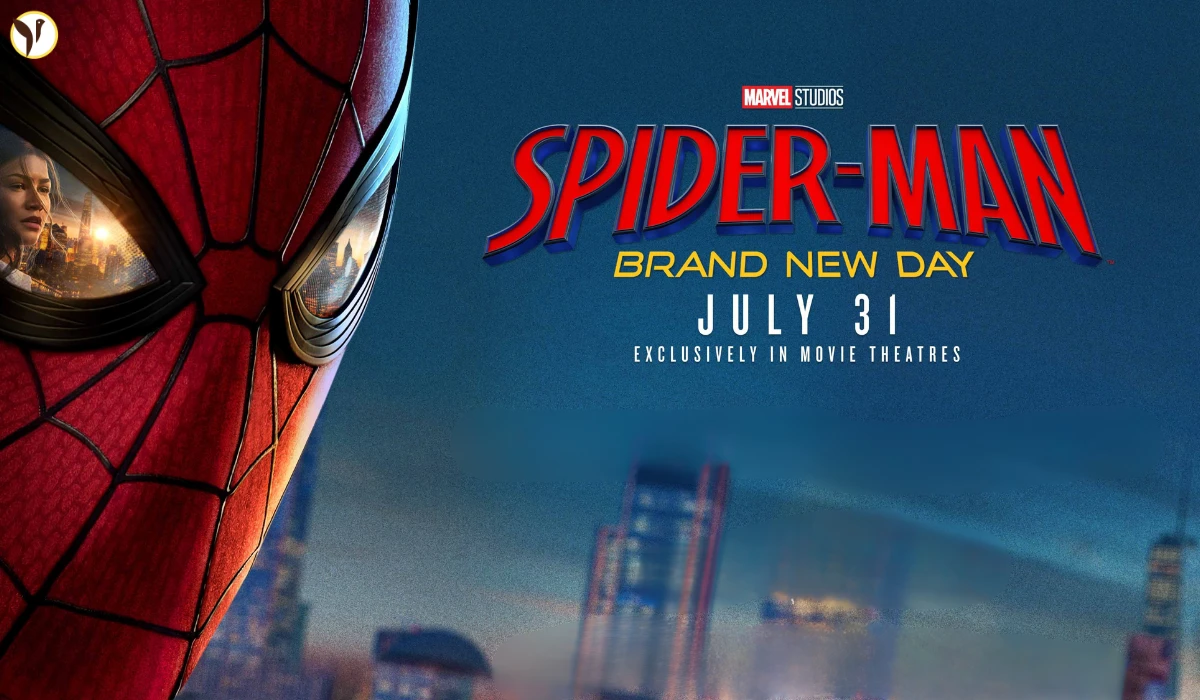
The timing is deliberate in a way that Marvel rarely bothers to disguise. With the Spider-Man: Brand New Day film — directed by Destin Daniel Cretton and starring Tom Holland — confirmed for a theatrical release on July 31, 2026, the publisher is building a comics counterpart designed to run alongside the movie's promotional curve. But what's worth examining is whether Issue #2 earns its place on that curve purely as a piece of storytelling, separate from the commercial scaffolding around it.
The Lexicon Arc: What Has Happened So Far
To understand Issue #2, you need to know what Issue #1 set up — and why readers who came in cold still found it accessible. Slott opened the series inside the Brand New Day era, the period in Marvel Comics continuity that ran from 2008 to 2010, following the controversial "One More Day" storyline that erased Peter Parker and Mary Jane Watson's marriage. Brand New Day was Marvel's attempt to reset Spider-Man as a single, street-level hero navigating a New York that had grown meaner and stranger around him.
This new series revisits that period with a specific caper at its centre: Spider-Man has stolen the Kingpin's Lexicon, a directory that maps Wilson Fisk's entire criminal enterprise — every name, every operation, every buried contact. The logic is sound enough to feel genuinely Spidey: if Fisk's rivals and law enforcement got hold of this, his network would eat itself from within. It is the kind of plan that sounds elegant until everyone else in the room wants the same thing.
"Spider-Man is my favourite character in all of fiction. We're going to reveal hidden secrets and plant explosive seeds that will pay off and affect what's happening in Spider-Man's world today!"— Dan Slott, speaking to Marvel Comics on the series announcement (February 2026)

What Issue #2 Delivers: Three Factions, One Very Exposed Spider-Man
The second issue intensifies the consequence cascade that began the moment Peter Parker walked out with the Lexicon. According to the official Marvel solicitation and preview pages circulating ahead of the June 17 street date, the conflict now has three distinct vectors pulling at Spidey simultaneously.
First, the Punisher arrives — characteristically offering to "help," which in Frank Castle's vocabulary is a concept that requires extensive footnotes. The dynamic Slott sets up between Spider-Man and the Punisher is one the original Brand New Day era understood well: two figures operating in the same city against the same criminal class, separated by an unbridgeable moral distance. Spider-Man does not kill. Punisher has structured his entire existence around doing exactly that.
Second, and more ominously, Mr. Negative — Martin Li, one of the era's defining antagonists — enters the picture with his Inner Demons. Li wants the Lexicon for competitive criminal intelligence: Fisk's secrets would give him a decisive advantage in the power vacuum that Spidey's heist is already creating. Preview materials describe Mr. Negative and his Inner Demons doing something described as "truly horrific" to both Spider-Man and the Punisher — language that suggests the issue pushes into darker physical territory than the first chapter.
What makes this particular triangle of antagonism interesting is its period specificity. Mr. Negative was introduced during the original Brand New Day run, making his return here a structural echo rather than a cameo — he belongs to this chapter of Spider-Man history, which gives the story permission to do things with him that a present-day continuity would hedge around.
The Creative Team: By the Numbers
|
|
|
|
|
|
|
|
|
|
|
|
|
|
|
|
|
|
|
|
|
|
|
|
|
|
|
|
|
|
|
|
|
|
|
|
The structural split between Marcus To handling the main narrative and Marcos Martín providing the "tell-all" short features is particularly worth noting. Martín's pages — rendered with a formalist clarity that references the graphic design sensibility of classic European comics — serve as catch-up primers for readers who may have no familiarity with the 2008–2010 era. It is an elegant solution to the always-awkward problem of continuity accessibility.
Full Series Release Schedule
|
|
|
|
|
|
|
|
|
|
|
|
|
|
|
|
|
|
|
|
|
|
|
|
The cadence is tight by modern Marvel standards — roughly five to six weeks between issues — which suggests the publisher wants the series to complete before the film's theatrical window closes rather than running parallel to its home-release cycle.
Issue #2 Variants and Pricing
|
|
|
|
|
|
|
|
|
|
|
|
|
|
|
|
|
|
|
|
|
|
|
|
How Issue #1 Was Received — And Why #2 Has Earned Its Anticipation
The weight of Issue #2's arrival is partly a function of how warmly Issue #1 landed. Critical consensus around the first chapter was meaningfully positive: reviewers described it as accessible to newcomers without condescending to longtime readers — a balance that is harder to achieve than it sounds when a story is embedded inside a specific historical era of continuity. The integration of the Punisher as a tension-carrying counterweight to Spider-Man's moral code was singled out as a particularly effective structural choice.
The art, too, was noted as a genuine asset rather than functional accompaniment. Marcus To's layouts were described as dynamic where the story demanded movement and detailed where character expressions needed to carry weight. Marcos Martín's short features operated in a visually distinct register — cleaner, more diagrammatic — that gave the issue a formal variety unusual for a standard Marvel monthly.
What Issue #2 has to do is harder: sustain and complicate, rather than simply establish. Adding Mr. Negative and forcing a Spider-Man / Punisher dynamic into contact with an external threat whose Inner Demons are explicitly described as unkillable is a structural escalation that asks a great deal of a 32-page format. Slott's track record suggests he understands pacing at the issue level. Whether the creative team can make the violence feel consequential rather than decorative is the open question going into Wednesday's drop.
The Bigger Picture: Comics, Cinema, and the Brand New Day Machine
It would be intellectually lazy to pretend the comics series exists in isolation from the film. Marvel's synergy releases have a troubled history — often feeling like obligation rather than inspiration, delivering tie-in product that evaporates from readers' memory as soon as the credits roll. This series is different in one significant respect: Slott is not writing a prequel or a primer. He is writing a story set inside a specific, concluded chapter of Spider-Man history, with the explicit promise that its revelations will have consequences reaching forward into present-day continuity.
That is a structurally unusual bet. It means the series has two audiences to satisfy: film-curious readers who want context for the Brand New Day title, and existing comics readers who want the story's promised "explosive seeds" to actually detonate somewhere in the ongoing Amazing Spider-Man line. If Slott delivers on both counts across the remaining three issues, this series will be remembered as one of the more intelligent pieces of MCU synergy publishing in recent memory. If it doesn't, it risks joining the long catalogue of tie-in comics that were forgotten before the popcorn cooled.
Other Articles to Read: