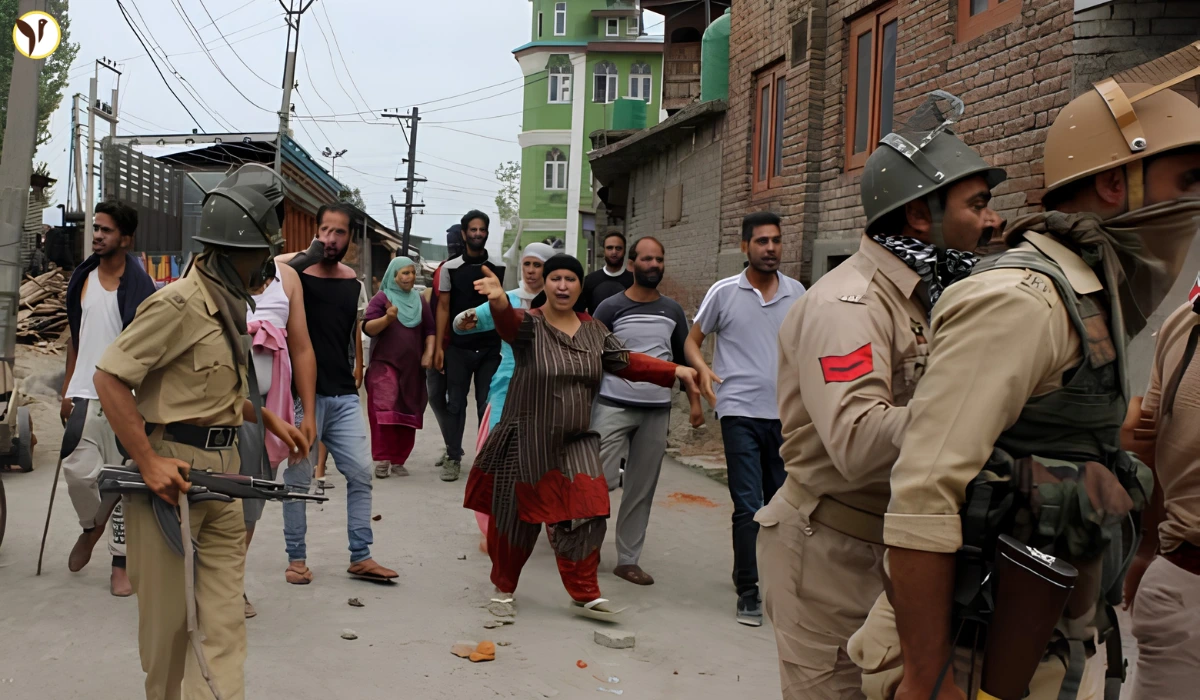
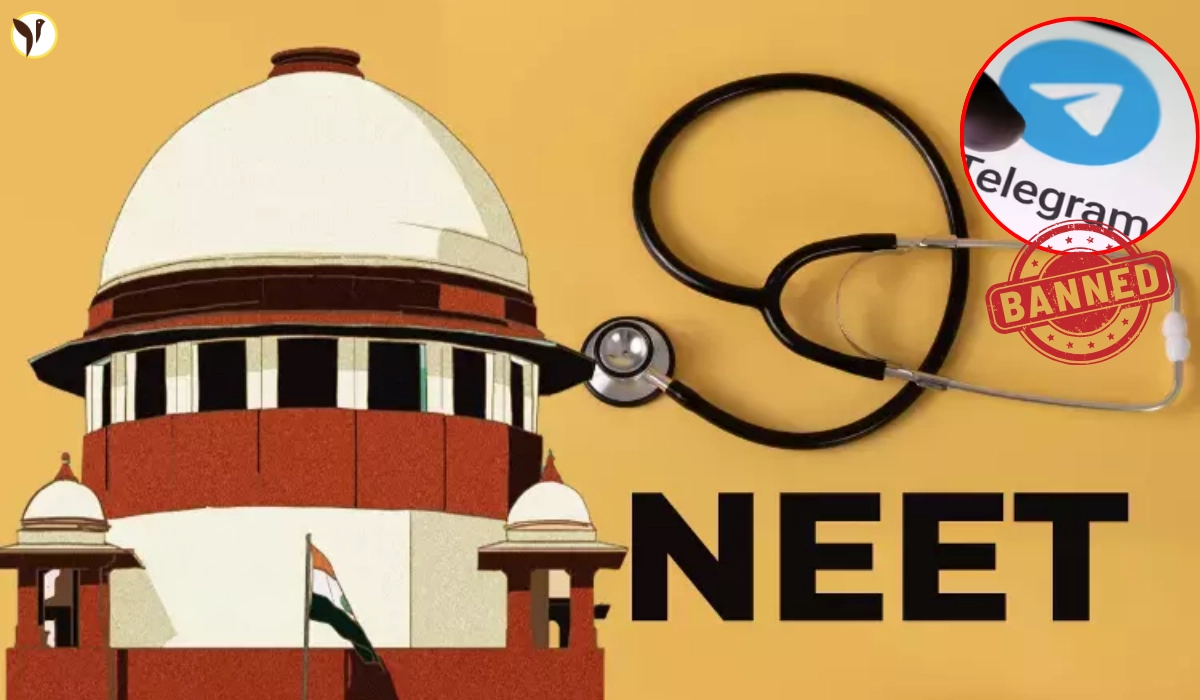


In an unprecedented move timed to protect 22 lakh medical aspirants, the Indian government has blocked all access to Telegram until June 22, 2026 — invoking the same law once used against TikTok. This time, the target is not a foreign adversary but a domestic fraud ecosystem that has turned exam anxiety into a multi-crore extortion industry.
The Order That Shocked 500 Million Users
On June 16, 2026, the Ministry of Electronics and Information Technology (MeitY) issued a blocking directive against Telegram under Section 69A of the Information Technology Act, 2000 — the provision that grants the central government emergency powers to restrict platforms in the interest of national security and public order.
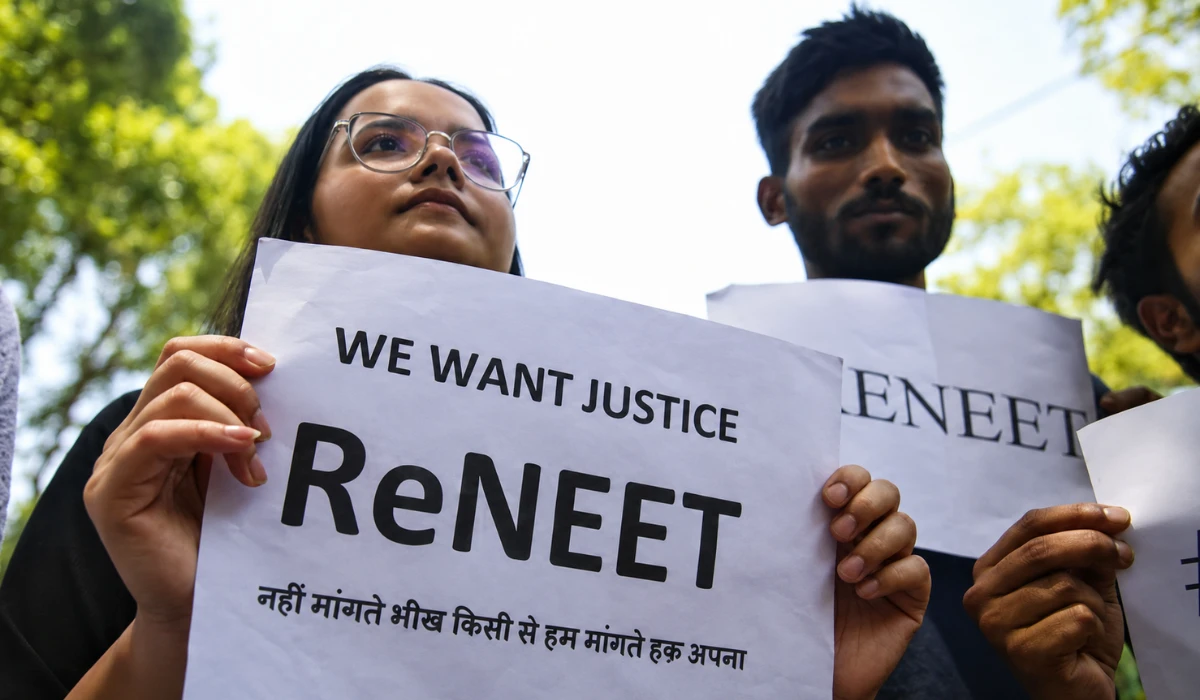
The order, issued on the recommendation of the National Testing Agency (NTA), comes just five days before the NEET-UG 2026 re-examination scheduled for June 21 — a high-stakes test that more than 22 lakh candidates will sit for across thousands of centres nationwide after the original May 3 exam was scrapped due to a major paper leak scandal.
The ban is not open-ended. Access to Telegram will be restored on June 22, the morning after the exam. But a second, parallel order goes further: Telegram's message-editing feature has been disabled for all previously posted content in India until June 30, 2026 — a restriction targeting the specific technical mechanism that fraud rings were weaponising to fabricate fake "proof" of paper leaks.
Understanding the Fraud: How Telegram Became the Cheating Mafia's Favourite Tool
To understand why the government moved this decisively, it is important to understand the specific ways in which Telegram was being exploited — because this is not simply a story about an app being blocked. It is a story about a structural loophole being closed.
Telegram's architecture offers features that most mainstream messaging apps do not: channels with unlimited subscribers, anonymous administration, no Indian office or law-enforcement liaison point, and — crucially — the ability to edit previously sent messages without any visible indicator to readers. Timestamps on edited posts retain the original send time, meaning a message sent days earlier can be altered post-exam to include the actual question paper, creating a false impression that the sender had the paper all along.
Fraud channels operating under names like "PAPER LEAKED NEET," "Re-NEET 2026," and "Private Mafia" were openly demanding anywhere from a few thousand to several lakh rupees from desperate candidates and their parents in exchange for what they claimed was access to the re-examination paper in advance. The Ahmedabad City Cyber Crime Branch arrested members of an inter-state gang found to be running eight such Telegram channels as part of the same coordinated scheme.
Why Channel-by-Channel Takedowns Were Not Enough
The government did not arrive at a blanket ban immediately. In the weeks preceding this order, the Indian Cyber Crime Coordination Centre (I4C) — operating under the Ministry of Home Affairs — conducted a sustained campaign of channel-level takedowns, coordinating with Telegram to pull down specific fraud channels.
The effort failed to produce adequate compliance. Channels were being recreated faster than they could be removed, and Telegram's lack of a physical presence in India made enforcement of individual removal orders slow and unreliable. NTA has officially described the blanket ban as a "measure of last resort" — taken only after the targeted approach was demonstrably overwhelmed by the scale and speed of the fraud ecosystem.
"The ban is described by NTA as a 'measure of last resort,' taken only after channel-by-channel takedowns coordinated by the Indian Cyber Crime Coordination Centre (I4C) failed to produce adequate compliance at the platform level."
— NTA Official Statement
The NEET 2026 Scandal: A Timeline of How It Unravelled
|
|
|
|
|
|
|
|
|
|
|
|
|
|
|
|
|
|
|
|
|
|
|
|
|
|
|
|
|
|
|
|
|
|
|
|
Who Is Being Investigated — and What the CBI Has Found
The Central Bureau of Investigation has moved swiftly since formally taking over the probe on May 12. Among the 13 arrested so far, the profile of accused reveals how deeply embedded the leak network was within the country's medical education ecosystem itself.
Dr Manoj Shirure, a doctor in Latur, Maharashtra, is alleged to have helped three students access leaked Chemistry questions before the exam — one of whom is reportedly the son of a coaching centre owner already in custody. Tejas Harshadkumar Shah, a Physics faculty member at Pune's Dr Abhang Prabhu Medical Academy (APMA), allegedly received leaked Physics questions from a co-accused named Manisha Havaldar. The CBI has identified Chemistry professor P.V. Kulkarni as the alleged kingpin of the paper leak network. A Delhi court has extended the judicial custody of 10 accused until June 29, with CBI permitted to interrogate three of them inside Tihar Jail on June 17, 18, and 19 respectively.
What Does the Ban Mean in Practice — For Students, Users, and Businesses
For the roughly 500 million Telegram users in India, the app will display an error or appear blocked during this window. VPN usage may allow access, though official advisories discourage circumvention. For NEET candidates specifically, NTA has made clear that no legitimate communication about the exam will come through Telegram — all official updates will be via the NTA website and registered candidate portals.
The NTA has also specified that the ban does not affect ordinary messaging activity as a concept — only the platform access during a specific, time-bound window. Once June 22 arrives, Telegram will be fully accessible again for all general-purpose use. The only persisting restriction, the message-editing disable until June 30, is designed to close the forensic loophole that allowed fabricated post-exam edits to look like genuine pre-exam leaks.
Telegram Banned in India Before NEET Re-Exam: Government Takes Unprecedented Step Against Paper Leak Scams https://t.co/atbOKHDPmA #telegramban #telegrambaninindia #neet2026 #neetreexam #neetug #neetpaperleak #telegramrestricted #educationnews #breakingnews #indiastudents #nta
— Preeti Sanodiya (@SanodiyaPr33198) June 16, 2026
The Bigger Question: Can a 6-Day Ban Actually Work?
Critics of the move have pointed out that determined fraudsters will simply migrate to alternative platforms or use VPNs. These are not unreasonable concerns. However, the government's objective appears to be narrower than eliminating all fraud: the aim is to reduce the signal-to-noise ratio significantly during the 48 hours on either side of the exam — particularly to prevent mass panic among candidates who might see fabricated "leak" posts and lose confidence in the integrity of their re-examination.
The message-editing disable may, in fact, be the more structurally significant of the two measures. By closing the backdating loophole, MeitY is not just protecting this exam — it is putting on record that this specific manipulation method is now a known, documented vulnerability that Indian authorities have acted to address.
What Happens Next: The Road to NEET 2027
Education Minister Dharmendra Pradhan has publicly acknowledged a "breach in the command chain" — an unusually candid admission from a government minister about the systemic failure of India's largest entrance examination. More significantly, he has announced that NEET will transition to a computer-based test (CBT) format from 2027, a structural change that would make physical paper leaks — the method used in both the 2024 and 2026 controversies — architecturally impossible.
Cabinet Secretary T.V. Somanathan has personally reviewed re-examination arrangements with NTA officials and warned that the "full might and weight of the law" will be applied against anyone attempting to disrupt or compromise the June 21 test. Enhanced security protocols are in place at all examination centres.
For 22 lakh students who have already sat through one cancelled exam, the Telegram ban is ultimately a secondary detail. What they need — and what the system now owes them — is an examination that holds.
Other Articles to Read: