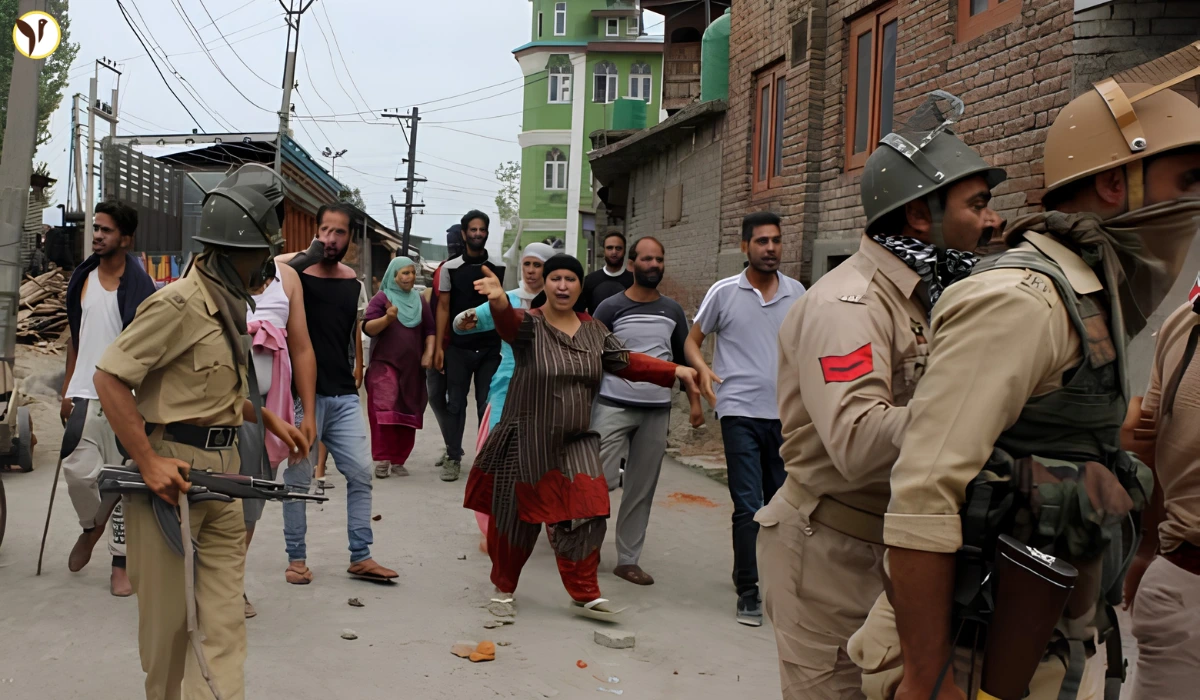


A new video allegedly showing Siya Goyal — the prime accused in the Ketan Agarwal murder case — arguing loudly on a phone call inside a pub has surfaced online, becoming the latest piece of unverified footage to circulate as the Lohagad Fort murder investigation moves toward its custody-hearing phase. The Siya Goyal viral clip, which reportedly dates back to December 2025, shows her holding a drink in one hand and her phone in the other while what sounds like an abusive exchange plays out over loud pub music. Neither Pune Rural Police nor any forensic authority has verified the clip's date, location, or authenticity, and investigators have not commented on whether it holds any evidentiary relevance to the case.
That distinction — viral versus verified — is the story here. As the criminal case against Goyal and her co-accused, Chetan Chaudhary, proceeds through evidence collection and crime-scene reconstruction, a parallel and largely unregulated trial is playing out on social media, one clip at a time.
What Happened
According to multiple regional outlets tracking the case, the newly circulated footage shows Goyal inside what appears to be a nightclub or pub setting, engaged in a heated phone conversation laced with what several viewers describe as abusive language directed at the person on the other end of the call. The clip has been shared widely on X (formerly Twitter) and Instagram, often paired with commentary contrasting it against her family's public statements about her lifestyle and conduct.
This is not the first such video to surface. In the days following her arrest, at least two other unverified clips — one appearing to show her at a private party, another showing her dancing — have circulated with similar intensity. Ketan Agarwal's mother has separately claimed that alcohol was not permitted in her household and that Goyal's drinking habits were allegedly concealed from the family, a claim that has fuelled the reception of these videos but remains a family allegation rather than a police finding.
Crucially, no law enforcement agency has dated, geo-located, or authenticated the pub video. Digital forensic verification — establishing when and where a clip was filmed, and whether it has been edited — is a technical process that takes time and is separate from an investigation's substantive murder inquiry. Readers should treat the clip's contents, including the alleged abusive language, as unconfirmed until officially addressed.

The Case Behind the Clip
Ketan Agarwal, a 26-year-old Pune-based real estate executive, died on June 18, 2026, after a fall at Lohagad Fort near Lonavala — initially treated as a trekking accident. Pune Rural Police later concluded it was a planned murder. Goyal, Agarwal's fiancée, and Chetan Chaudhary, described by police as her boyfriend, were arrested on June 23 and have reportedly confessed to conspiring to kill Agarwal, whom investigators say the pair viewed as an obstacle to their own relationship. Police allege Agarwal was invited to the fort under the pretext of a birthday celebration.
Since the arrests, the investigation has expanded into digital forensics, including scrutiny of Agarwal's phone, which Goyal is reported to have retained after his death, along with deleted WhatsApp records and call logs. On July 1, police took Chaudhary to Lohagad Fort for a crime-scene reconstruction and gait analysis, a standard evidentiary step used to test the physical plausibility of a suspect's account. Both accused remain in police custody, extended by a Pune court until July 3.
Case Timeline
|
|
|
|
|
|
|
|
|
|
|
|
|
|
|
|
|
|
|
|
|
Siya Goyal's mother - Siya was so innocent. She never smoked, drank, or partied. She didn't have a boyfriend.
— ︎ ︎venom (@venom1s) July 1, 2026
Meanwhile, Siya posted this on her Instagram. Her family members followed her and knew everything.
Feminist girls are still defending her. pic.twitter.com/KOWVMmwN9U
Why It Matters
This case sits at the intersection of a live criminal investigation and an unusually aggressive social-media parallel trial — and the gap between the two is widening. Every fresh clip of Goyal, verified or not, is being read by large online audiences as character evidence, even though Indian criminal procedure does not treat social media virality as admissible proof of guilt or motive. Legal commentators cited in recent coverage have cautioned that circulating, unauthenticated material should not be treated as conclusive, a caution that applies as much to this pub video as to earlier clips.
There is also a public-conduct dimension. A dental association in Madhya Pradesh recently suspended one of its office-bearers for five years after she posted comments seen as mocking Agarwal's death, illustrating how the case has become a flashpoint for broader arguments about online commentary, gender, and infidelity — arguments that often outpace the facts actually established by investigators.
For readers following the case, the practical takeaway is this: the murder investigation and the viral-video cycle are two different tracks, moving at two different speeds, governed by two different standards of proof.
What Happens Next
The case now moves into the evidentiary phase. Expect police to formally present the CDR data, forensic phone analysis, and witness statements as part of the chargesheet. Separately, unrelated legal disputes connected to the family have also surfaced in coverage, including reports of a defamation-related demand from an advocate over allegations made by Goyal's brother — a reminder that the case is generating collateral legal activity beyond the murder charge itself. As with the viral clips, such ancillary claims deserve the same scrutiny before being treated as fact.
For now, the confirmed facts remain: an arrest, an alleged confession, and a suspicious call flagged by investigators. Everything else — including most of what's driving the "viral clip" conversation — remains circumstantial until it's tested in court.
Other Articles to Read: