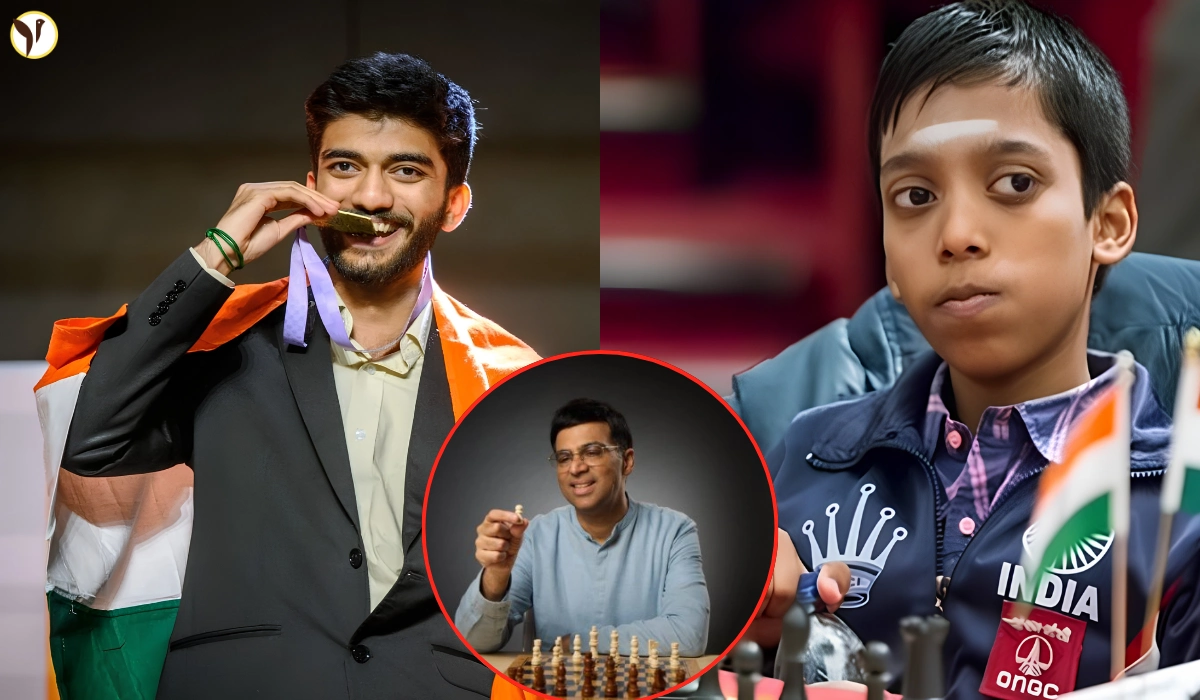


In Oslo, the two Chennai prodigies who grew up on the same streets wrote completely opposite stories. Praggnanandhaa made history. Gukesh went home last. What happened — and what it really means for Indian chess.
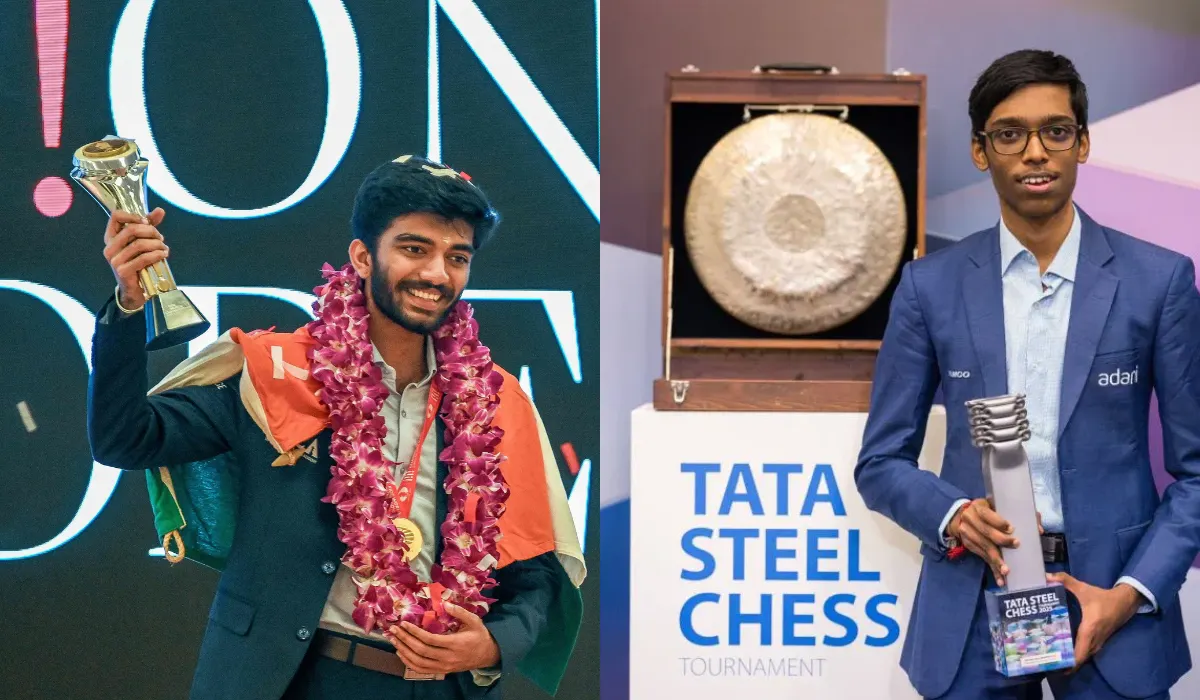
There is a particular kind of silence in chess halls when something historic happens. On the evening of June 5, 2026, at Deichman Bjorvika in Oslo, that silence belonged to a 20-year-old from Chennai. R Praggnanandhaa had just dismantled Vincent Keymer in the final round of Norway Chess 2026 — the tournament that, across 13 previous editions, had always eluded Indian players. With that win, he became the first Indian ever to lift the Norway Chess title, joining a roll of honour previously dominated entirely by Magnus Carlsen.
The Run That Rewrote Indian Chess History
To understand what Praggnanandhaa did at Norway Chess 2026, you have to start not with round ten but with his phone call home before round seven. Speaking to his mother on June 1, he later recalled her telling him: "It's a new month, you'll play well." He laughed it off. Then he won four games in a row.
"She was telling me, 'it's a new month, you'll play well!' It's just one of those things that mum always says, and then these four games I won. She knew something, I guess."
- 18 Pragg's final points
- 4 Consecutive classical wins
- 1st Indian to win Norway Chess
- Last Gukesh's finishing position
|
|
|
|
|
|
|
|
|
|
|
|
|
|
|
|
|
|
|
|
|
|
|
|
|
|
|
|
|
|
|
|
|
|
|
|
Before that streak, Praggnanandhaa was not even in contention. He was sitting in last place himself two rounds before the finish. What followed was one of the most compressed title charges in modern elite chess: four consecutive classical wins, including a second scalp of Magnus Carlsen in the same tournament, and a final-round victory over Keymer where the German's endgame errors proved fatal. When it was over, Praggnanandhaa had 18 points — one clear of Wesley So, who had led for most of the event.
The result was not merely statistical. It ended 13 editions of Indian near-misses at Norway Chess. Viswanathan Anand's best finish here was second (2015). Gukesh had twice finished third, with the 2025 edition ending in a gut-punch — blundering a queen promotion in the final round against Caruana with two seconds on his clock, handing the title to Carlsen. Praggnanandhaa himself finished fourth in 2024. Now, finally, an Indian had won.
India's Best Finishes at Norway Chess
|
|
|
|
|
|
|
|
|
|
|
|
|
|
|
|
|
|
|
|
|
|
|
|
|
|
|
|
|
|
|
|
|
|
|
The Puzzle Gukesh Cannot Crack — Yet
The contrast on the same leaderboard was stark, but it was not sudden. D Gukesh's Oslo campaign was a continuation of a pattern that has been building since his World Championship triumph in December 2024. After defeating Ding Liren to become the youngest undisputed world champion in history, Gukesh has struggled for consistency in the classical circuit in ways that his title win obscures.
At Norway Chess 2026, the numbers were unforgiving. Gukesh finished last, lost to both Magnus Carlsen and Alireza Firouzja in classical play, and dropped 6.3 rating points during the event, sliding to world No. 22 on the live rating list at his nadir. His preparation — including a prepared novelty on move seven in the Ragozin against Firouzja — backfired when he froze for seven minutes on move 11 before making a critical error. Elite tournaments do not tolerate hesitation.
His coach Grzegorz Gajewski, speaking to ESPN earlier this season, offered the most candid diagnosis: that winning the World Championship so young requires a psychological reset that takes time. "When you work all your life for something, and then you get it, you have to find new motivations. It can be difficult for someone so young." The observation rings true — Gukesh's inconsistency across 2025 and into 2026 tracks precisely with this theory of post-peak recalibration.
Legendary chess player Viswanathan Anand hailed R. Praggnanandhaa’s highly competitive style of play, and urged the struggling world champion D. Gukesh to take a leaf out of the book of the newly-crowned Norway Chess champion to script a turnaround.https://t.co/jElXpkZg0B
— The Hindu (@the_hindu) June 9, 2026
Same City, Same Decade — Completely Different Momentum
Both players were born in Chennai, within months of each other. Both are grandmasters before the age of 13. Both came through the same ecosystem of Indian chess that has, in the span of a decade, gone from Anand's legacy to a full generation of elite competitors. And yet, their trajectories since late 2024 have been mirror opposites.
Praggnanandhaa's 2025 was a model of methodical accumulation: 93 classical games played, 31 wins, 16 losses, 46 draws. He won the Superbet Chess Classic Romania, won the Tata Steel Masters 2025 after defeating Gukesh in the playoff, qualified for the Candidates Tournament through the Grand Swiss, and won the 2025 FIDE Circuit. His FIDE rating peaked at 2785 in September 2025. Then came Norway 2026 — the title that completed the narrative.
Gukesh's 2025, by comparison, was defined by the highest high and consistent lows. Finishing 41st at the FIDE Grand Swiss, an early exit from the World Cup, struggles at the Sinquefield Cup and Superbet Classic — the world champion was losing ground on his own peer. The head-to-head since 2025 tilts decisively toward Praggnanandhaa, who defeated Gukesh in the Tata Steel playoff and again at a key stage in Oslo.
Praggnanandhaa vs Gukesh: Key Metrics
|
|
|
|
|
|
|
|
|
|
|
|
|
|
|
|
|
|
|
|
|
|
|
|
|
|
|
|
|
|
|
|
|
|
|
|
What Happens Next: A Title Defence and an Ascent
Praggnanandhaa now exits Oslo as arguably the most in-form elite player not named Magnus Carlsen. His Norway Chess triumph comes after Tata Steel 2025, Superbet 2025, and the FIDE Circuit — a run of achievement that very few 20-year-olds in chess history can match. The question is no longer whether he belongs among the top five in the world, but whether he can sustain the form long enough to build a genuine World Championship challenge.
For Gukesh, the immediate horizon is the World Championship defence against Uzbek challenger Javokhir Sindarov. Whatever tournament form suggests, title matches operate on their own logic — sustained preparation, psychological fortitude, and an ability to perform in one-on-one conditions that classical tournaments do not always test. Gukesh won the 2024 championship as an underdog. He is capable of the same compression of focus when the stage demands it. But his classical circuit results suggest a player who still needs to solve the puzzle of consistency that Praggnanandhaa, right now, appears to have largely answered.
Other Articles to Read: