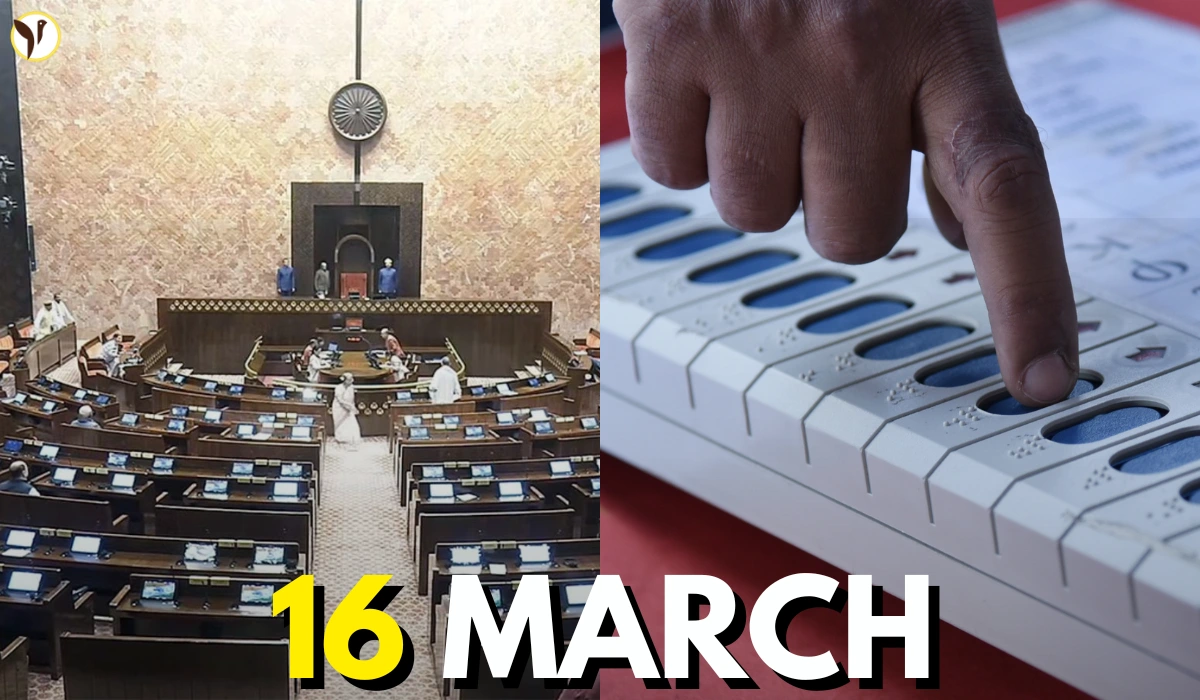


India’s next round of Rajya Sabha elections may look routine on paper, but the March 16 vote for 37 seats across 10 states will quietly shape the balance of power in Parliament for years. These biennial elections decide who enters the Upper House, where key national legislation is debated, amended and sometimes slowed.
Because the voters are elected MLAs, not the public, the outcome reflects the current strength of parties in state assemblies. That makes recent state election results far more consequential than they may appear at first glance.
Timeline Locked In by the Election Commission
The Election Commission has outlined a clear schedule:
-
Notification issued: February 26
-
Last date for nominations: March 5
-
Scrutiny of nominations: March 6
-
Withdrawal deadline: March 9
-
Polling hours: 9 am to 4 pm on March 16
-
Counting begins: 5 pm on March 16
The 37 seats are falling vacant in April as sitting members complete their six-year terms. The Rajya Sabha currently has 245 members, including 233 elected representatives and 12 nominated members.
The States and Seats in Play
This election spans a politically diverse mix of states. The numbers are as follows:
|
|
|
|
|
|
|
|
|
|
|
|
|
|
|
|
|
|
|
|
|
|
|
|
|
|
|
|
|
|
|
|
|
|
|
|
|
|
|
|
|
|
|
|
|
|
|
|
|
|
|
|
|
|
|
How the Voting System Works
Rajya Sabha elections use the single transferable vote system under proportional representation. MLAs rank candidates in order of preference.
A candidate must secure a quota calculated by dividing the number of valid votes by the number of seats plus one. This system ensures that parties receive seats roughly in proportion to their legislative strength.
Ballots are not secret in the traditional sense. MLAs must show their marked ballot to an authorized party agent before submitting it. This open ballot mechanism is designed to prevent cross-voting, although surprises have occurred in past elections.
If the number of candidates equals the number of seats, they are declared elected unopposed.
Other Articles to Read:
- Bill Gates Skips AI Summit: Gates Foundation Reveals Real Reason
- Why Did Christy Carlson Romano Say Cancer Is Everywhere? Emotional Video Goes Viral
- Daniel Radcliffe Backs HBO’s New Harry, Calls Him Better at That Age
- BBC Honors Sir David Attenborough’s 100th Birthday With Special TV
- Lil Poppa Dies at 25 — What Happened to the Rising Rap Star?
- Peter Greene Death Mystery Finally Solved After Two Months
Political Arithmetic and Likely Trends
The ruling National Democratic Alliance holds advantages in several of these states. Maharashtra, Bihar and Odisha are particularly important battlegrounds where recent assembly developments have reshaped numbers.
In Maharashtra, shifting alliances over the past two years have changed the equation significantly. In Bihar, coalition dynamics will determine how seats are distributed between allies and rivals. Odisha presents a different scenario after recent political transitions.
On the other hand, states like Tamil Nadu and West Bengal are considered strongholds for regional parties. The DMK-led alliance in Tamil Nadu and the Trinamool Congress in West Bengal are expected to retain dominance based on assembly strength.
It is important to distinguish between fact and projection here. Assembly numbers provide clarity in most states, but political negotiations sometimes influence final candidate choices.
Current Upper House Balance
A working majority in the Rajya Sabha requires 123 members. The NDA currently operates near that threshold with support from neutral or issue-based allies such as regional parties.
This round of 37 seats is part of a larger 2026 retirement cycle that will eventually see more than 70 seats refreshed. Many outgoing members belong to major national parties, including both BJP and Congress leaders.
Incremental gains or losses in this election will not transform the chamber overnight, but they can improve or weaken legislative maneuverability.
Why This Election Matters for Lawmaking
The Rajya Sabha cannot topple a government, but it can delay or reshape legislation. Bills on labor reforms, economic regulation, federal matters and social policy often face intense scrutiny in the Upper House.
If the ruling alliance strengthens its numbers, legislative processes may move more smoothly. If the opposition retains or expands influence, debate and amendment stages may become more assertive.
Recent parliamentary sessions have demonstrated how crucial Upper House dynamics are in shaping the final form of major bills.
The Everyday Connection
For many citizens, Rajya Sabha elections feel distant because there is no direct public vote. Yet these elections are deeply connected to everyday governance.
The MLAs chosen in state elections cast these votes. That means your state vote indirectly influences the composition of Parliament’s Upper House.
Policies affecting employment, agriculture, taxation and civil rights often undergo critical review in the Rajya Sabha. Its strength balance can affect how quickly reforms move forward.
For politically engaged readers, tracking candidates from your state can offer insight into future parliamentary debates.
Looking Beyond March 16
Counting will begin at 5 pm on March 16, and results are typically declared the same evening. In states with clear assembly majorities, outcomes may be predictable. In states with tighter margins, attention will focus on whether alliances hold firm.
The newly elected members will serve until 2032, making this more than a short-term political exercise.
As the broader 2026 biennial cycle continues, cumulative shifts could gradually alter the chamber’s balance. That makes each round important in its own right.