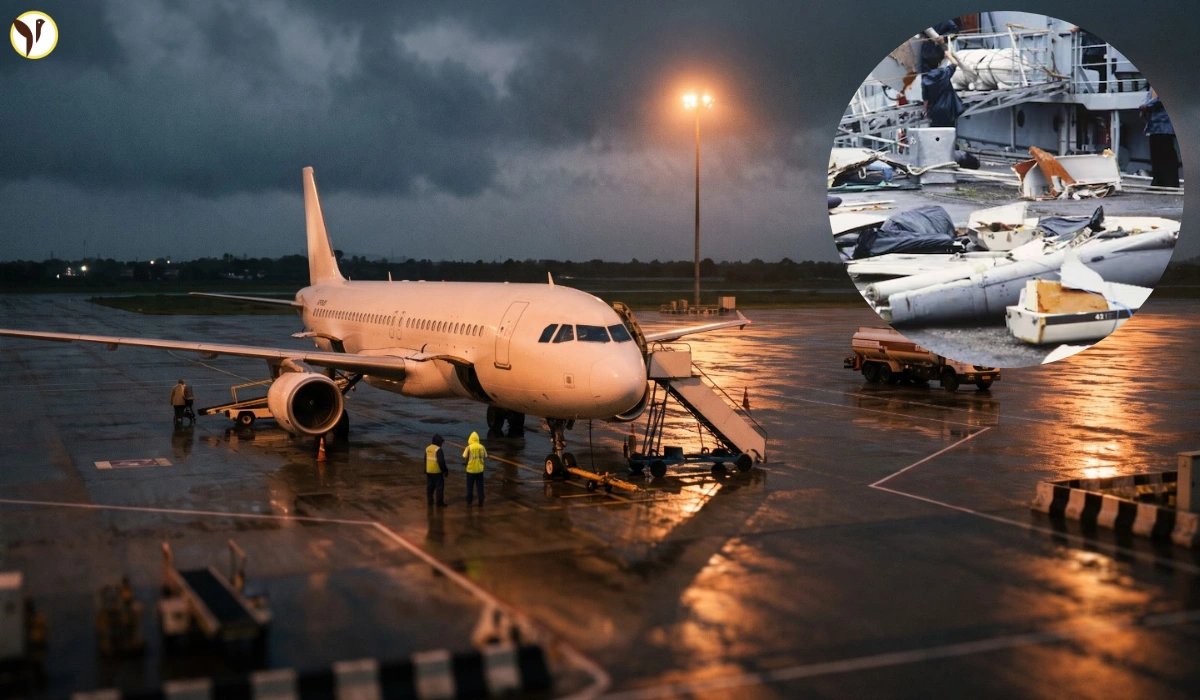
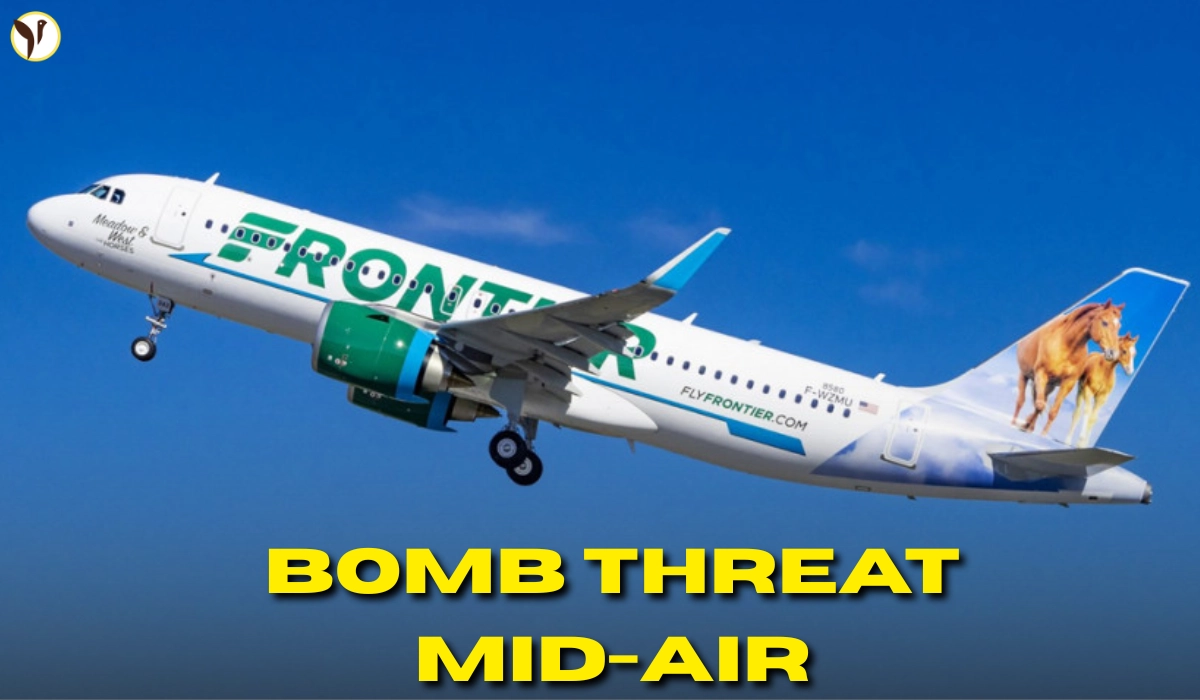


You don’t expect a routine flight to suddenly turn into a full-scale emergency. But that’s exactly what happened when a passenger onboard Frontier Airlines Flight 2539 triggered panic mid-air with a bomb claim. Within minutes, pilots declared an emergency, diverted the aircraft, and activated one of aviation’s most tightly rehearsed safety protocols. The flight landed safely in Atlanta, and every passenger walked away unharmed. Here’s the full breakdown of what unfolded and why incidents like this are handled with extreme precision.
How the Mid-Air Emergency Unfolded
The flight was traveling from Denver to Tampa when a passenger reportedly used the aircraft’s intercom system to claim possession of a bomb. That single moment triggered a chain reaction inside the cockpit.
Within minutes:
- Pilots activated emergency code “7700”
- Air traffic control cleared immediate diversion
- The aircraft was rerouted to Atlanta
- Emergency teams were placed on standby before landing
The plane touched down on a remote runway, far from the main terminal, a standard safety move to isolate risk.
Minute-by-Minute Timeline You Should Know
Here’s how quickly aviation systems respond when a threat is detected:
- 14:32 EST: Passenger makes bomb claim
- 14:35 EST: Emergency declared by cockpit
- 14:48 EST: Aircraft diverted toward Atlanta
- 15:02 EST: Safe landing on isolated runway
- 15:17 EST: Passengers begin deplaning
- 15:45 EST: Aircraft cleared after full inspection
Every step followed global aviation safety protocols without delay.
Who Was the Passenger Behind the Threat?
Authorities identified the individual as a 28-year-old male traveling alone. Early reports suggest:
- Ticket booked shortly before departure
- Cleared standard airport security checks
- No banned items found during screening
- No prior inclusion on watchlists
He is now in custody, and federal charges are expected. Officials are also evaluating mental health factors, which often play a role in such incidents.
Inside the Emergency Response Operation
The response at Hartsfield-Jackson Atlanta International Airport was immediate and highly coordinated.
|
|
|
|
|
|
|
|
|
|
|
|
|
|
|
|
|
|
|
|
|
|
|
|
🚨🇺🇸Frontier flight 2539 from Columbus to Atlanta just reported a passenger threatened to kill the person next to them and claimed to have a bomb on board.
— Mario Nawfal (@MarioNawfal) March 29, 2026
The plane was waiting for a gate assignment at Hartsfield-Jackson when it happened.
Developing.pic.twitter.com/k4PyTR7WYV
Why Flights React So Fast to Bomb Threats
Even a single word like “bomb” inside an aircraft is treated as a serious threat. There’s no room for judgment calls.
Here’s why
- All threats are treated as real until proven false
- Passenger safety is always the top priority
- Airspace coordination allows rapid diversion
- Ground teams are trained for worst-case scenarios
According to aviation safety data, more than 99% of such threats turn out to be hoaxes, but protocols remain unchanged.
Frontier Airlines Safety Record Under Focus
Despite the scare, Frontier Airlines maintains a solid safety record.
- No fatal accidents in over three decades
- Fleet of modern Airbus aircraft
- Regular safety audits and compliance checks
Incidents involving disruptive passengers have occurred before, but security-related threats remain extremely rare.
Impact on Airport Operations
The temporary runway closure caused ripple effects across Atlanta’s busy airport operations.
- Flights delayed by up to 90 minutes
- Several aircraft held mid-air
- Some departures rescheduled
However, operations returned to normal within hours, showing how quickly airports recover from disruptions.
Other Articles to Read:
- Alex Duong Blue Bloods Actor Dies at 42 After Rare Cancer Fight
- Benson Boone Wanted Man Tour 2026 Announced: Check Cities, Dates & How to Book
- Noida International Airport Inauguration: PM Modi Opens Doors to New Travel Hub
- Kash Patel Email Hack Claim Raises Major Cybersecurity Alert
- What Happened to Saba Azad? Viral Hospital Pic Has Fans Worried
- Karan Johar Emotional Reaction to Dhurandhar 2 — What He Said About Ranveer Singh
Why Incidents Like This Are Increasing
Experts point to several underlying reasons:
- Rising cases of in-flight behavioral issues
- Mental health challenges among passengers
- Alcohol or stress-related disruptions
- Social media influence and attention-seeking behavior
There is no evidence linking recent incidents to organized threats or terrorism.
What Happens to Someone Making a False Bomb Threat
The consequences are severe and immediate:
- Federal criminal charges
- Possible prison sentence up to 5 years
- Heavy financial penalties
- Lifetime airline bans
Authorities treat such cases seriously because even false threats disrupt national aviation systems.
Final Thoughts
Moments like these can feel alarming, but they also show how robust aviation safety systems have become. From cockpit decisions to ground response, every step is designed to protect you. Even in high-pressure situations, the system works exactly as intended.