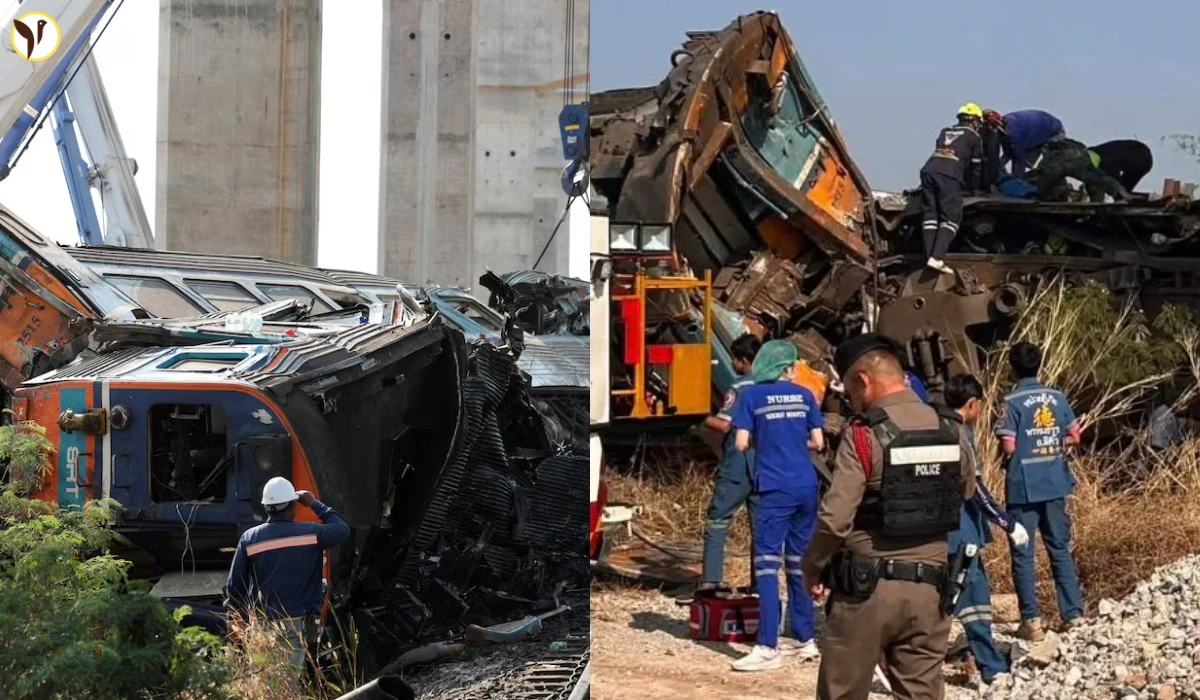


On January 14, 2026, a massive construction crane toppled onto a passenger train in Nakhon Ratchasima, Thailand, causing a devastating accident. The crash killed 22 people and injured 80 others. Rescue teams rushed to the scene to save passengers amid fiery wreckage, while authorities launched a full investigation into the cause.
Nakhon Ratchasima Train Crash Details: Crane Hits Passenger Train
The incident occurred at around 9 a.m. in Sikhio district, Nakhon Ratchasima province, about 230 km northeast of Bangkok. A train carrying 195 passengers from Bangkok to Ubon Ratchathani was struck by a crane working on a nearby high-speed rail project. The crane crushed two to three coaches, flipping the train off the tracks and triggering a fire that was quickly controlled.
Rescue teams arrived within minutes, working through smoke and debris to reach trapped passengers. Local residents reported hearing loud crashes and seeing emergency vehicles rush to the scene. Authorities have cordoned off the area while investigators document the wreckage and ensure passenger safety.
#BREAKING: Major train accident in Thailand
— Gazette. (@Gazette_Report) January 14, 2026
At least 22 people have died after a construction crane fell onto a passenger train in northeast Thailand, derailing the coach and causing multiple casualties pic.twitter.com/vgYSI5H0rP
What Caused the Nakhon Ratchasima Train Crash
Initial reports suggest the crane lost balance while lifting materials for the ongoing China-backed high-speed rail extension. Experts are investigating whether strong winds, unstable ground, or operational errors contributed. The train was moving at a normal speed when the sudden impact derailed several coaches, hitting the middle car the hardest. Preliminary assessments indicate that construction safety protocols may not have been fully followed. Officials are reviewing site operations, equipment maintenance records, and worker procedures to determine responsibility. The incident highlights risks when construction zones are close to active passenger lines and the urgent need for stricter safety oversight.
Thailand Train Crash: How Emergency Teams Saved Passengers
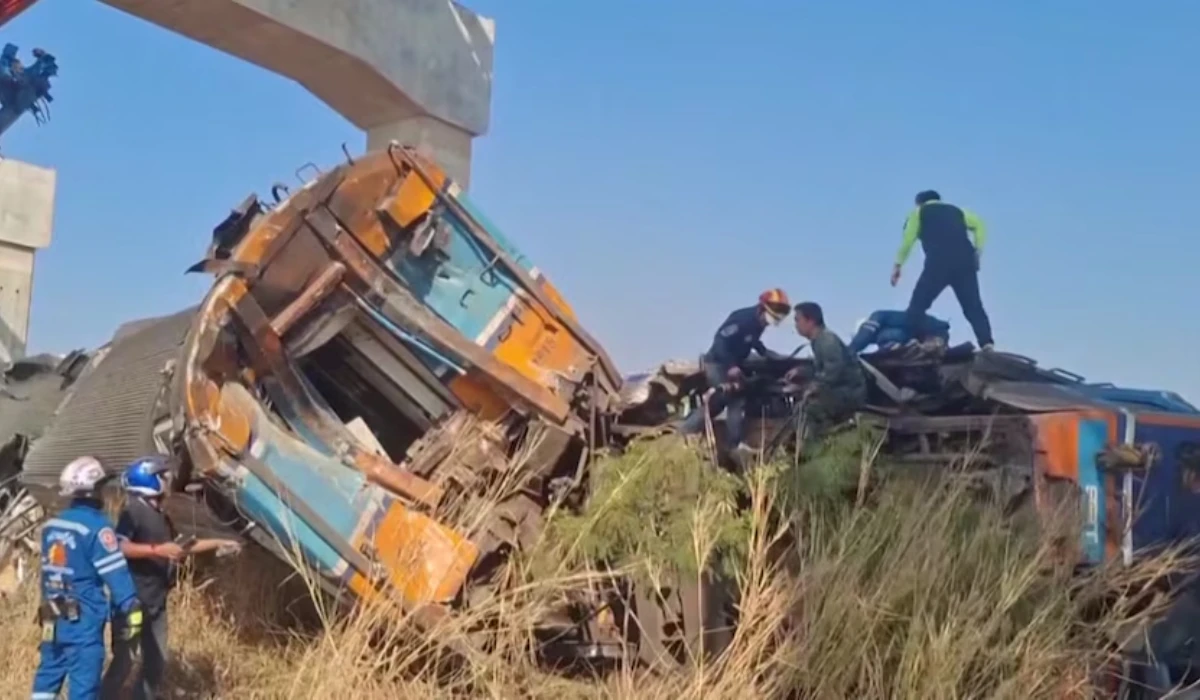
Local authorities, firefighters, police, and residents responded immediately. Injured passengers were rushed to nearby hospitals, with 80 receiving urgent medical care. Ambulances and another crane helped clear debris to reach trapped victims. Families and bystanders assisted with food, water, and moral support.
Thailand High-Speed Rail Safety Concerns Post-Accident
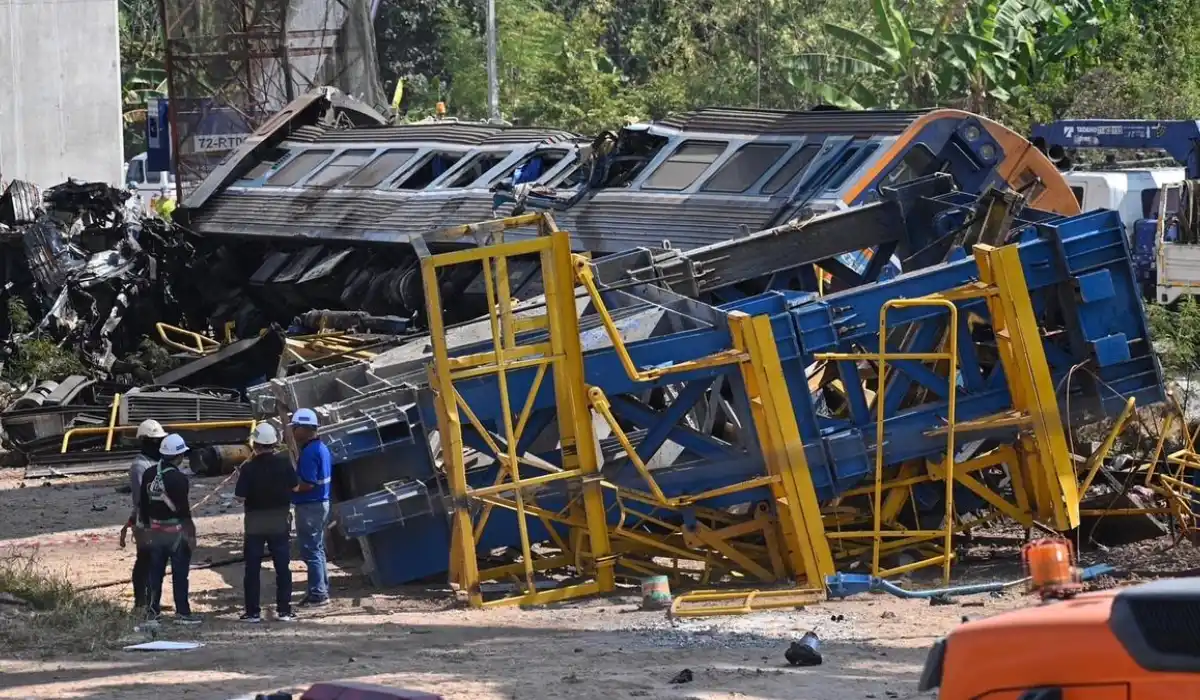
The crash raises questions about safety near active construction sites on Thailand’s high-speed rail lines. Regulations require cranes and heavy machinery to maintain safe distances from passing trains, and authorities are reviewing whether these standards were met. This accident highlights the need for stricter inspections, buffer zones, and real-time monitoring of construction equipment.
Government Response and Investigation into Train Derailment
Transport Minister Piphat Ratchakitprakan vowed transparency and immediate safety audits across all rail projects. The Prime Minister offered condolences and support to affected families and promised full accountability. Authorities are also considering compensation for victims and stricter enforcement of construction safety rules.
Impact on Thailand High-Speed Rail Project After the Accident
Construction near the crash site has been temporarily halted pending a full safety review. The China-Thailand rail partnership continues, but authorities aim to implement stronger safety measures before resuming work. Travelers and local communities are awaiting answers, while economic and logistical delays affect the region.
OTHER ARTICLES TO READ:
- Malaika Arora Reacts to Dating Rumours: Mystery Man or Just a Friend?
- Is Shraddha Kapoor Getting Married to Rahul Mody Soon?
- BTS 2026 World Tour Dates Out – Is Your City on the List?
- Karan Aujla Controversy: Palak Breaks Silence with Romantic Photo
- What Are Questions Being Raised After Trump’s Ford Facility Visit?
- Visa-Free Transit for Indians in Germany 2026 – Here’s What You Must Know
- Blinkit Drops 10-Minute Delivery Promise: What Shoppers Can Expect
- Deepika Padukone Enjoys Bridesmaid Duties at a Friend’s Wedding in New York
- Talwiinder: 5 Top Songs That Are Taking Over the Punjabi Scene!
- Shikhar Dhawan Gets Engaged to Sophie Shine – Everything You Need to Know
- What Happened on Barapullah Flyover? SUV Overturns After Hitting Divider
- Big Trouble for Indian Exports? Trump Announces 25% Tariff Linked to Iran
- Disha Patani & Talwiinder: Are They More Than Just Friends?
- Did Raghav Chadha Really Turn Delivery Partner for a Day? Here’s Why