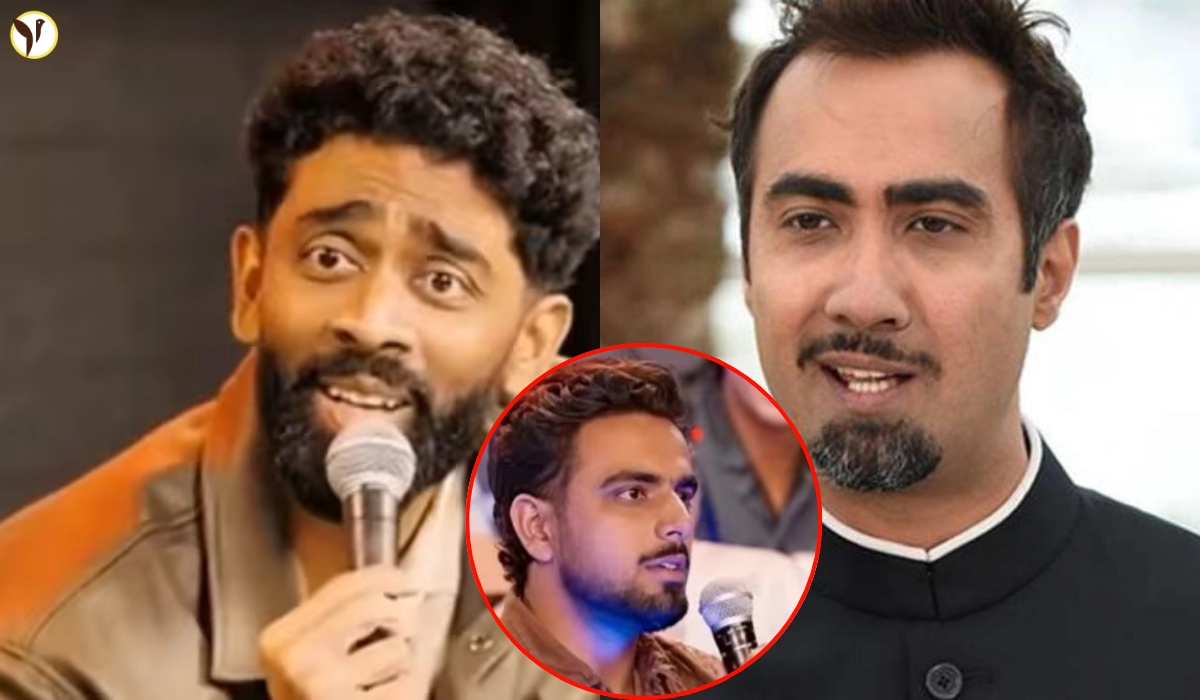


India's internet spent the first two weeks of June dissecting a ₹370 plate of chicken biryani. But when actor Ranvir Shorey stepped into the conversation, the debate stopped being about food — and started being about accountability.
A plate of chicken biryani priced at ₹370. An audience at a Gurugram stand-up show. A 23-year-old web developer who said the quiet part out loud. And a comedian who laughed when he should have spoken up. All of it together produced what became June 2026's most uncomfortable viral moment — and one of Indian social media's most honest conversations about entitlement, consent, and the creeping normalisation of misogyny dressed up as punchlines.
Into that swirling, overheated debate walked Ranvir Shorey — an actor whose currency has always been bluntness. And for many observers, his voice cut through the noise in a way that celebrity outrage rarely manages to.
The Incident: What Actually Happened at Pranit More's Show
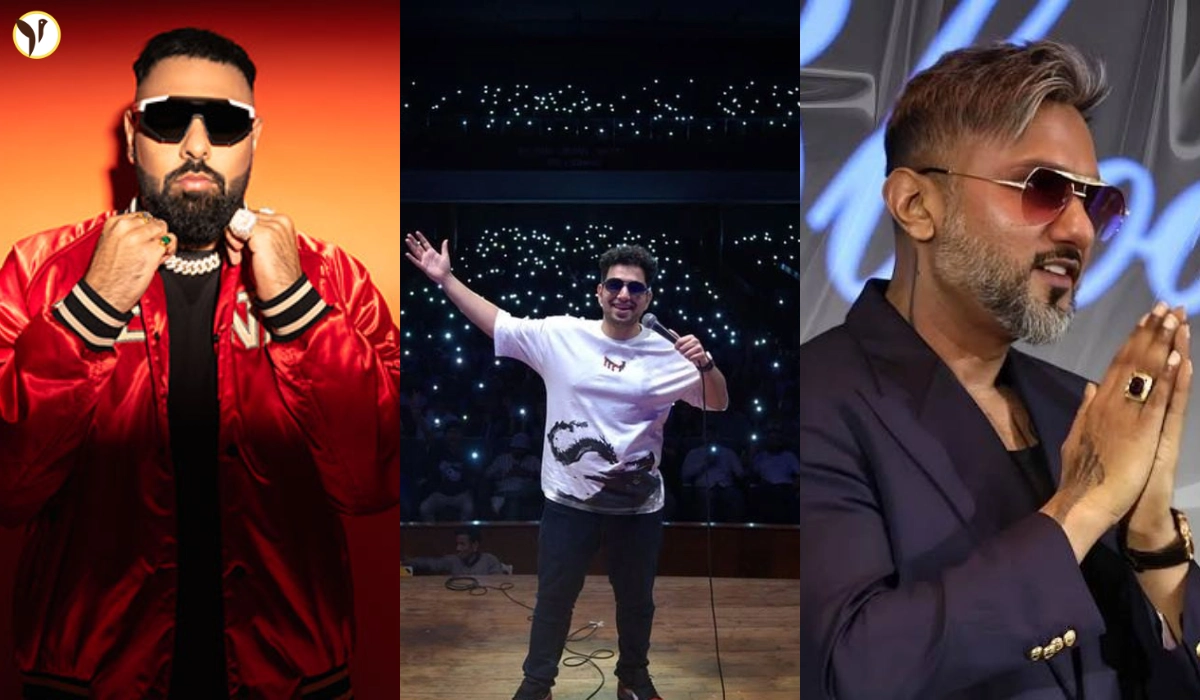
The controversy traces back to a crowdwork segment at one of comedian Pranit More's live stand-up performances, a clip of which began circulating online in late May and early June 2026. Crowdwork, for the uninitiated, is that section of a stand-up show where the comedian steps off the script and improvises with real audience members — a format beloved precisely because of its unpredictability.
What made this particular interaction viral for all the wrong reasons: an audience member, later identified as Himanshu Jangra, a 23-year-old web developer at a Gurugram design company, recounted a recent date. His story involved spending approximately ₹360–₹370 on a plate of chicken biryani and a bottle of water. When his date asked to be dropped home, Jangra suggested — to audience laughter — that he needed to "recover" what he had spent. Further clips that emerged in subsequent days made the situation significantly worse, showing him describing in graphic detail how he physically forced himself on the woman, with More visible in the background laughing along.
Pranit More, in that moment, called it a "Peak Gurgaon moment," handed Jangra ₹5,000 for the "entertaining" story, and moved on. The internet did not.
Timeline of Events
- June 1, 2026
First repost surfaces
A YouTube channel uploads the clip under "Pranit More's Funniest Crowd Work Moments." The video accumulates nearly 300,000 views and 640 comments within a week.
- Early June 2026
Backlash escalates online
The clip spreads across X, Instagram, and WhatsApp. Viewers criticise both Jangra's remarks and More's decision to laugh rather than intervene. The phrase "₹370 biryani = consent?" begins trending.
- June 8–9, 2026
Jangra fired; Pranit More apologises
Himanshu Jangra is dismissed from Starvik Design after his employer states his remarks were offensive and incompatible with the company's values. Pranit More issues a written apology acknowledging a "lapse of judgment" and removes the original clip from his platforms.
- June 10, 2026
More deactivates Instagram; celebrities respond
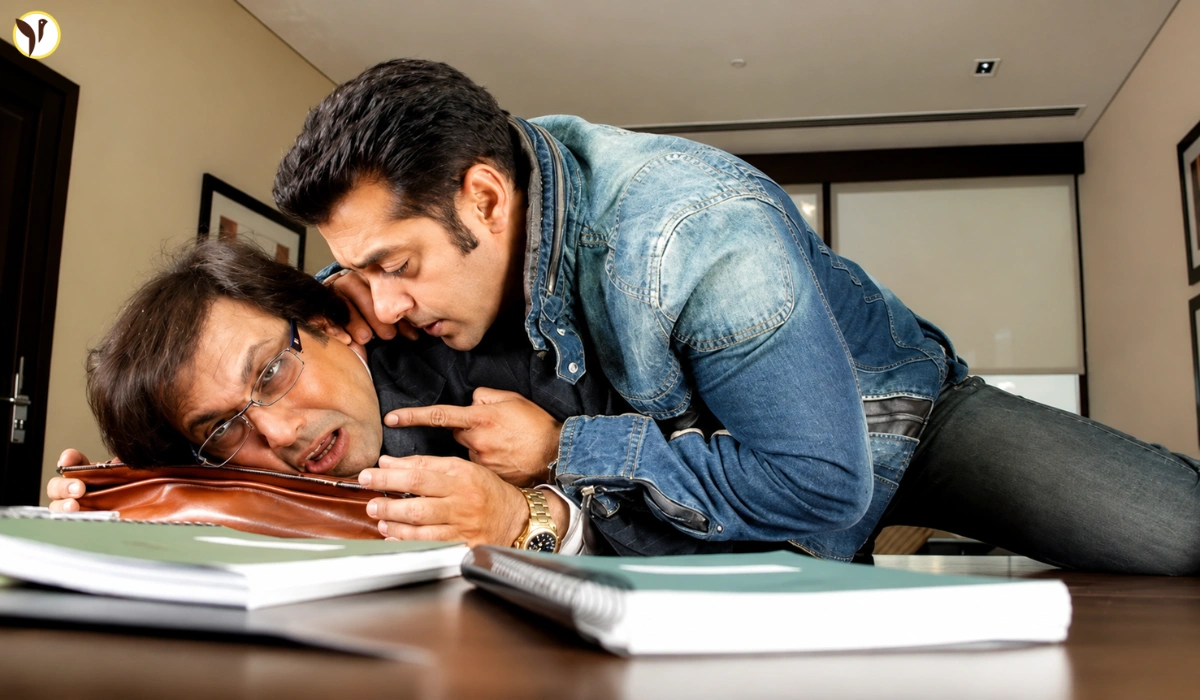
Amid intensifying backlash and the emergence of additional clips, Pranit More deactivates his Instagram account. Kusha Kapila, Reem Shaikh, and other public figures weigh in. Zomato issues a clarification distancing itself from a misleading meme. Old Bigg Boss 19 clips of Salman Khan warning More to not "go below the belt" resurface and go viral.
- June 11, 2026
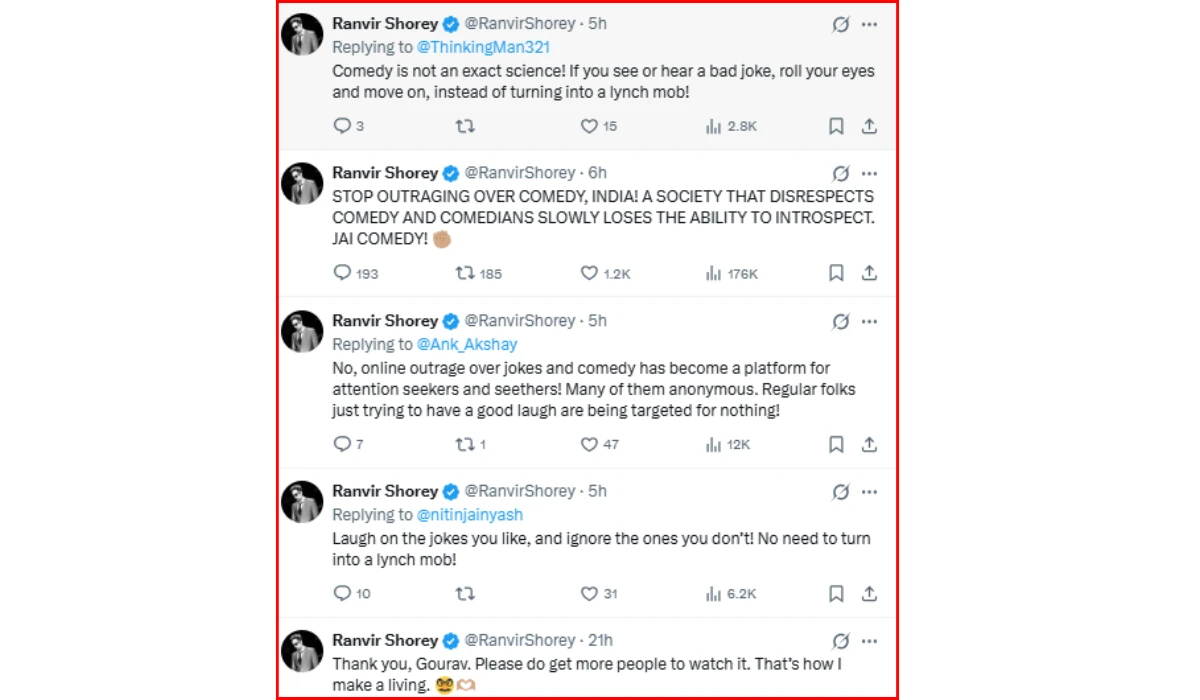
Ranvir Shorey enters the conversation
Actor Ranvir Shorey — one of Bollywood's most consistent straight-talkers on X — makes his position clear, bringing a veteran performer's perspective to what had largely been a social media mob moment.
Why Ranvir Shorey's Voice Matters Here
In an industry where celebrity reactions to controversy are often either performatively outraged or conspicuously absent, Ranvir Shorey occupies an unusual position. The 53-year-old actor — whose career spans Khosla Ka Ghosla, Bheja Fry, Sacred Games, Tabbar, and Tiger 3 — has long used his X presence to say things that his contemporaries leave unsaid. His self-description on Facebook — "Seeker: truth before kindness. Humorist: maybe sad, but always true" — is not just a bio line; it describes how he operates publicly.
That reputation is precisely why his engagement with the biryani controversy carried weight that a hundred generic celebrity statements would not. India's internet knew what kind of take to expect from Ranvir Shorey: not moral lecturing, not brand-safe silence, but something resembling the unfiltered perspective of someone who has been part of the entertainment industry long enough to understand what it does — and what it should not do — to audiences.
The question the biryani controversy asked was deceptively simple: when a platform amplifies harmful attitudes for laughs, who bears responsibility — the speaker, the host, or both?
This is a question Shorey's body of work, ironically, has always circled. The characters he has been most celebrated for — the quietly bitter, morally grey men of Bheja Fry, Titli, A Death in the Gunj — are precisely the types who mistake social permission for personal right. His ability to play those characters with uncomfortable authenticity suggests he understands the psychology from the inside. That understanding is evident in how he engages with moments like this.
Ranvir Shorey Defends Pranit More Amid 'Rs 370 Biryani' Controversy: 'Stop Outraging Over Comedy'#PranitMore #BiryaniRow https://t.co/uWkgqirI1w
— News18 (@CNNnews18) June 11, 2026
The Comedian's Dilemma: What Pranit More Got Wrong
To be clear about what happened on stage: the initial story Jangra told — before the graphic details that emerged in later clips — was the kind of "lads-adjacent" anecdote that has long existed in stand-up. The crowdwork format specifically thrives on this tension; you do not know what an audience member will say, and how you respond defines you as much as your written material.
Pranit More's specific failure was not laughing. Laughter at uncomfortable things is part of comedy's function. His failure was refusing to steer. A comedian with a microphone is never a passive participant. Every choice — to laugh, to escalate, to hand someone ₹5,000, to call their story "Peak Gurgaon content" — is editorial. More made those editorial choices, and then, when the consequences arrived, described them as accidental.
His apology acknowledged the lapse. What it could not undo was the footage itself, and the additional clips that emerged showing a pattern, not an isolated moment.
|
|
|
|
|
|
|
|
|
|
|
|
|
|
|
|
|
|
|
|
|
|
|
|
|
|
|
|
|
|
|
|
A Pattern India's Comedy Scene Cannot Keep Ignoring
The biryani controversy does not exist in isolation. It arrived less than eighteen months after the Ranveer Allahbadia–India's Got Latent episode, in which inappropriate remarks on Samay Raina's show triggered police complaints, NHRC action, and national headlines. That controversy followed years of #MeToo-adjacent reckoning within India's stand-up circuit in 2018–19.
Each time, the cycle is broadly the same: a clip circulates, outrage spikes, an apology emerges, the platform goes quiet, and the conversation fades without structural change. What the biryani moment added to this pattern was something new: professional consequences for a private individual (Jangra's firing), and the meaningful engagement of older Bollywood voices who have the cultural standing to say things that younger comedians' peer networks cannot.
Ranvir Shorey is not simply one celebrity among many. He is, in the context of Indian entertainment, someone whose straight-talk is consistent — not triggered by trending topics. That consistency is precisely what gives his voice a different weight in these moments.
|
|
|
|
|
|
|
|
|
|
|
|
|
|
|
|
|
|
|
|
|
|
|
|
|
What Happens Next — And What Should
Pranit More's immediate future depends on whether his audience chooses memory or forgiveness. India's digital comedy ecosystem has, in the past, proven capable of both — sometimes simultaneously. The deeper question is whether this controversy, like its predecessors, will produce genuine introspection within the stand-up community about what a microphone and a laughing room actually permits.
For Ranvir Shorey, this moment is consistent with a two-decade public persona: show up when something matters, say the thing, move on. The actor, whose work across Tabbar and A Death in the Gunj has explored India's most uncomfortable interiors, has always been a more interesting figure off-screen than Bollywood's promotional machinery accounts for.
The biryani controversy, in retrospect, was never really about biryani. It was about what we laugh at, who gets to hold the microphone, and what we are prepared to demand from people who use entertainment to shape culture. One actor saying so clearly, in the middle of the noise, was — as the title suggests — enough to change the game.
Other Articles to Read: